
"Prime, You Can't Die!"
The fortieth anniversary of Transformers: The Movie

Tonight I learned that Transformers: The Movie (1986) - the only Transformers movie as far as I’m concerned1 - is being rereleased in theaters.
I think it deserves a second look, even though I won’t be buying a ticket. I don’t want to pay to sleep, and I’ve been able to watch the movie at home ever since it was released on tape in 1987.
I do want to write about it here, not because I think talking cartoon robots are important, but because I think the reaction to the movie tells us something about American culture which has wider consequences.
The Transformers Wiki writes (emphasis mine),
The film opens with characters who had been featured in the first two years of the toyline and associated media (cartoons, comic books, etc.), but quickly introduces new characters and kills many of the old ones to make room—a shock to young viewers who were used to their heroes driving off into the sunset at the end of every adventure.
The biggest shock for some was the death of the heroes’ leader, Optimus Prime.
Prime, you can’t die!
But he did.
Events such as the death of Optimus Prime are widely reported to have reduced many kids to tears.
I wasn’t one of those kids. I didn’t know any kids who cried. My best friend, also a hardcore Transformers fan, didn’t cry. And like me, he didn’t express any surprise at the many deaths in the movie.
The reason? He and I had grown up with Japanese TV in Hawaii. Death is normal in Japanese fantasy for heroes and villains alike.
I had been moved by the death of Riderman in the climax of Masked Rider V3 (1973-1974) in a rerun on Honolulu’s KIKU-TV in 1980. A “Pluto Rocket” aimed at Tokyo …
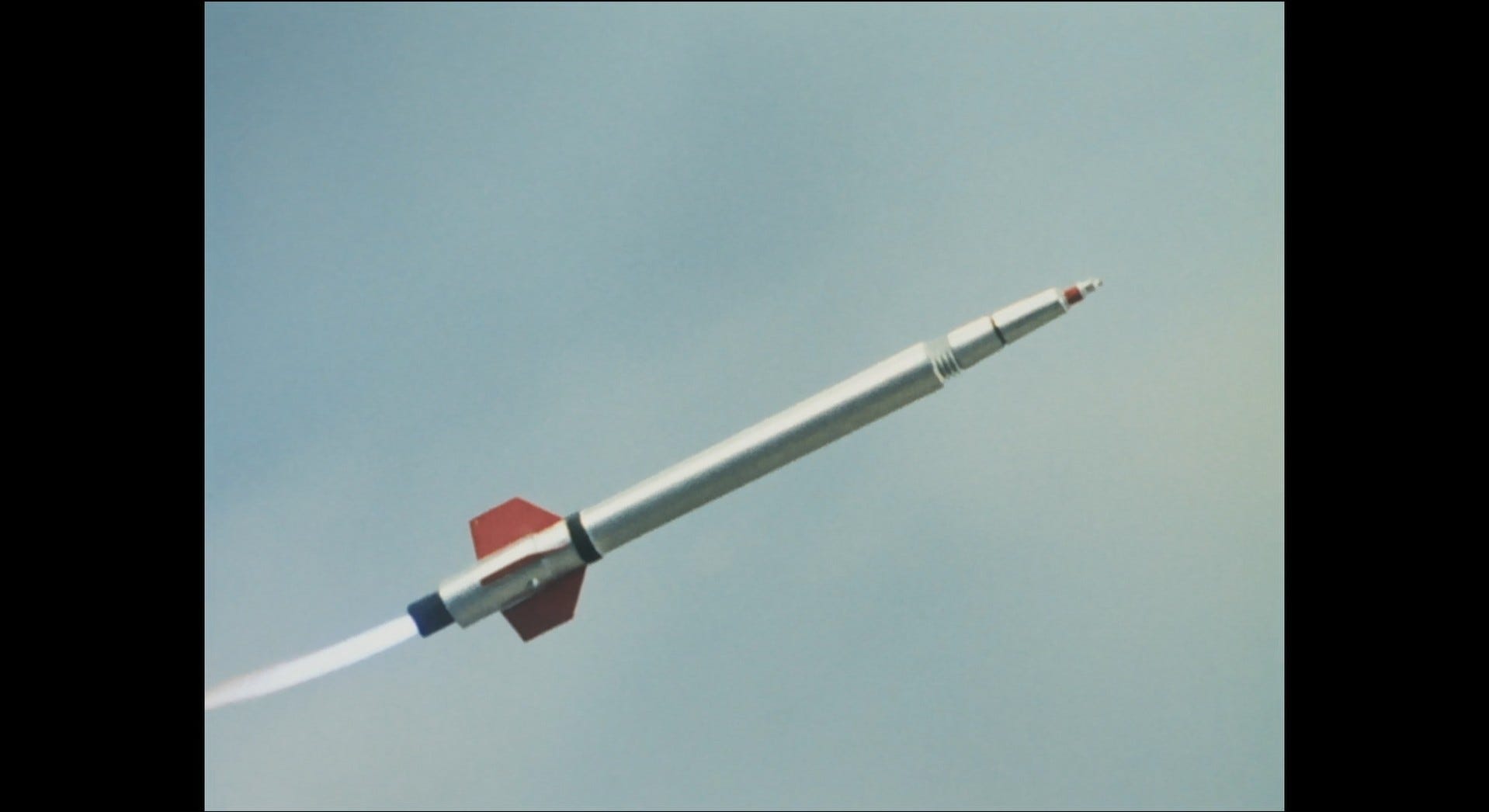
… was steered away from its target by Riderman (who knew missiles had cockpits?) …
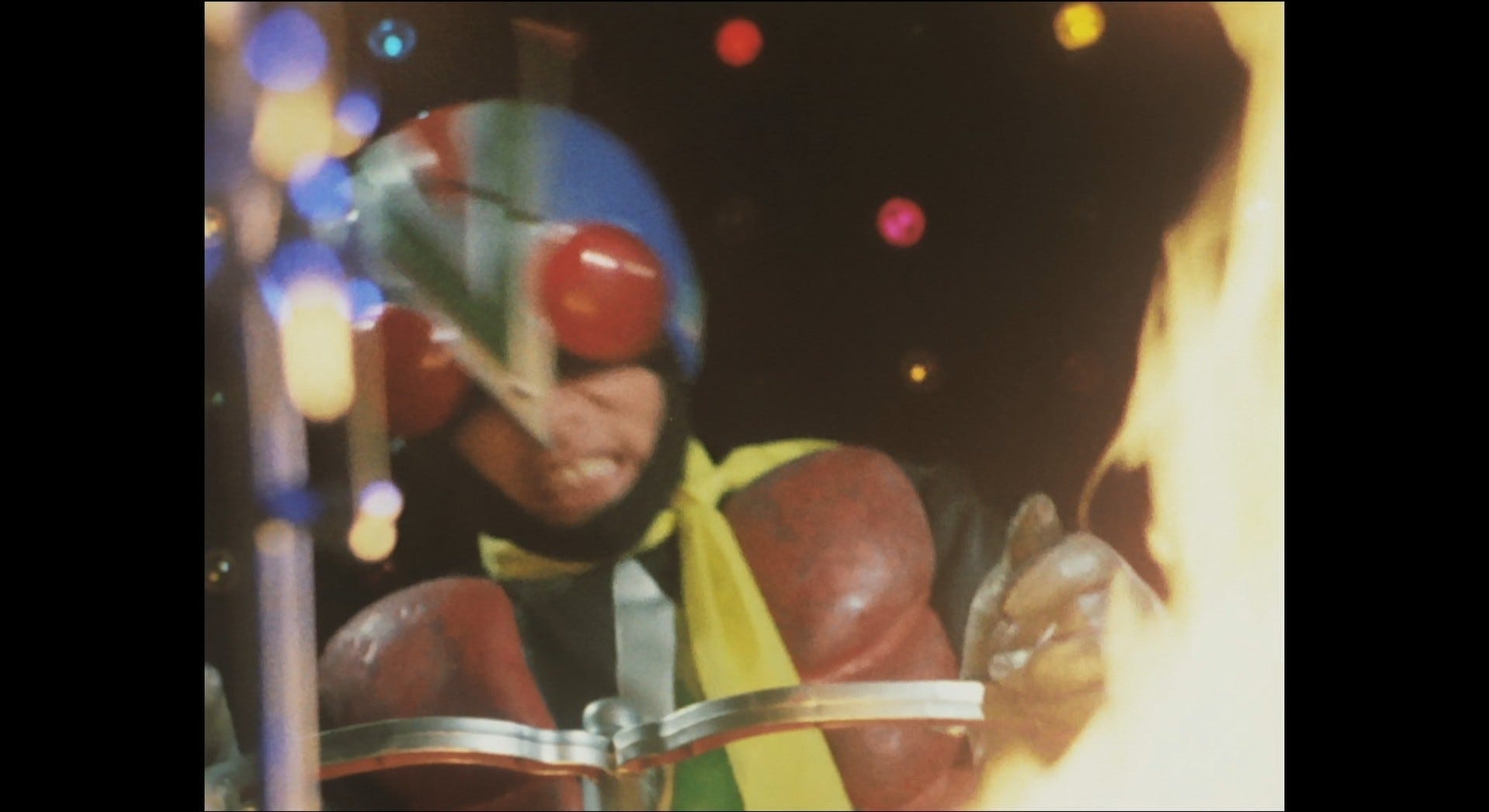
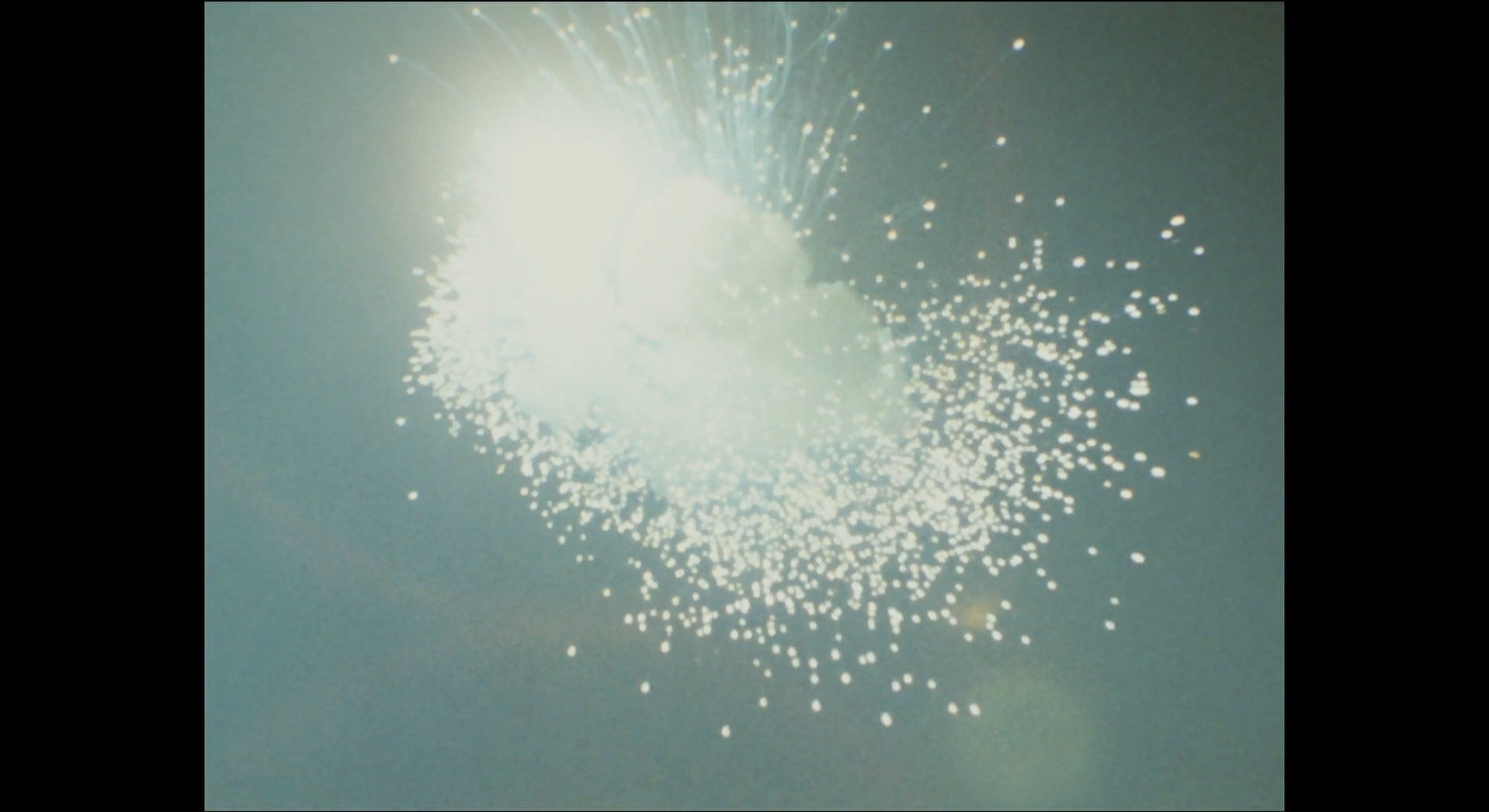
… and exploded with him still inside!
I recorded that episode on audio cassette tape - I didn’t even know VCRs existed - and played it over and over again.
Months earlier, I had seen the death of Sarah in episode 46 of Zeta Gundam (1986).
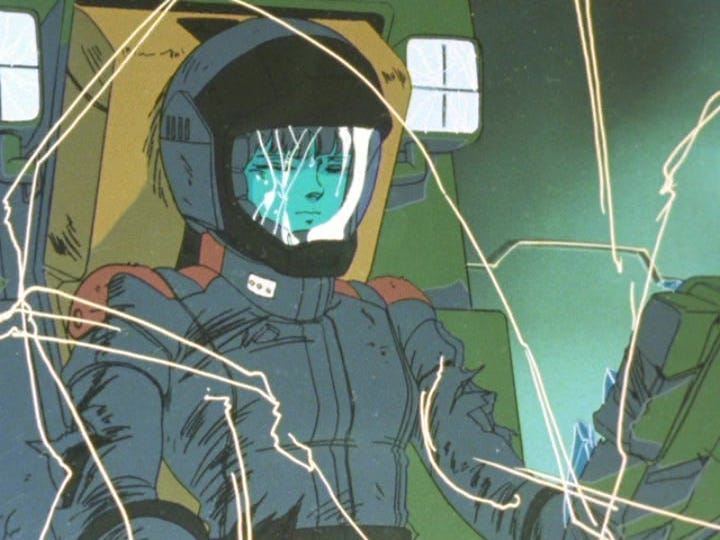
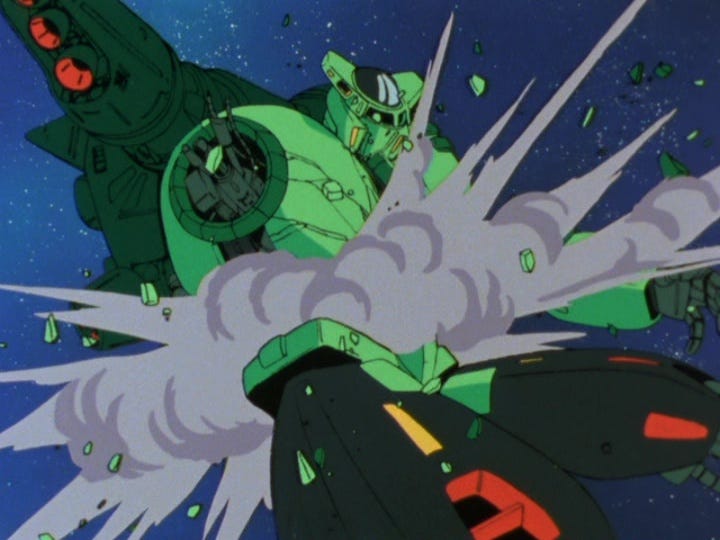
Sarah’s cockpit was next to the epicenter of the explosion that destroyed her giant robot. There was no way she could have survived. There was no ‘Sarah’s back’ episode.
Many such examples. The Japanese feel comfortable having their children see death.
In Golion (1981-1982), the cartoon repurposed for the lion part of Voltron (1984), everyone on Earth died in a nuclear war …
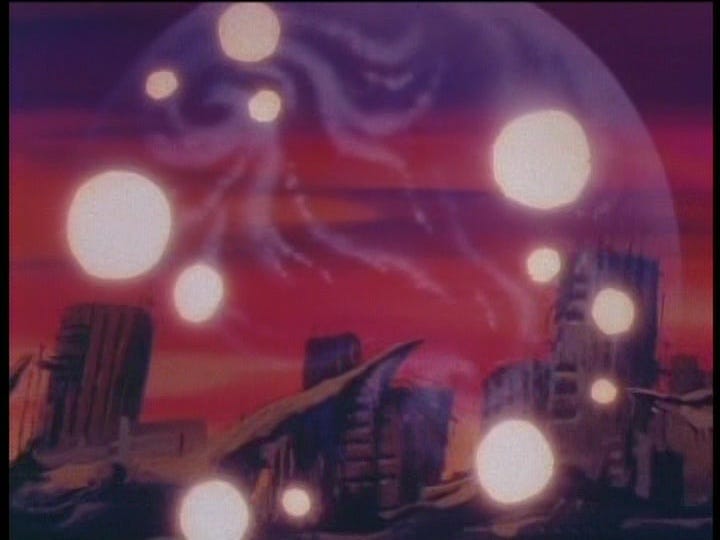
… and even one of the survivors who was lucky enough to be off-planet got enslaved and later killed.
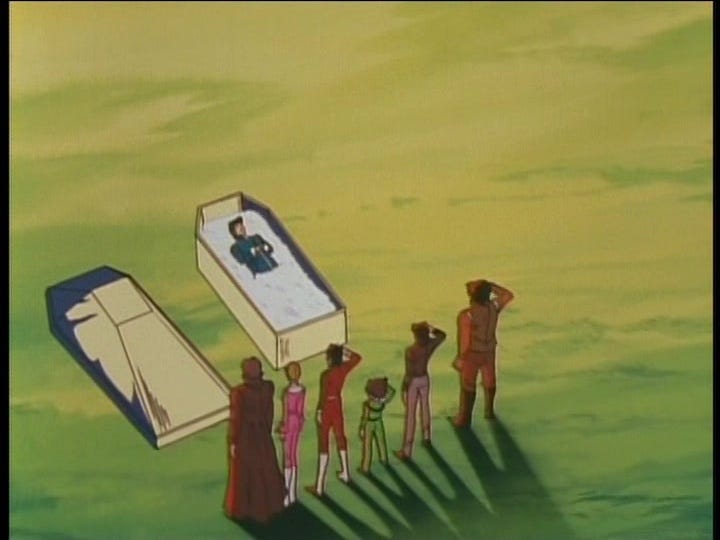
That simply wouldn’t be acceptable on American TV, so Voltron cut out the nuclear war and had the survivor survive.
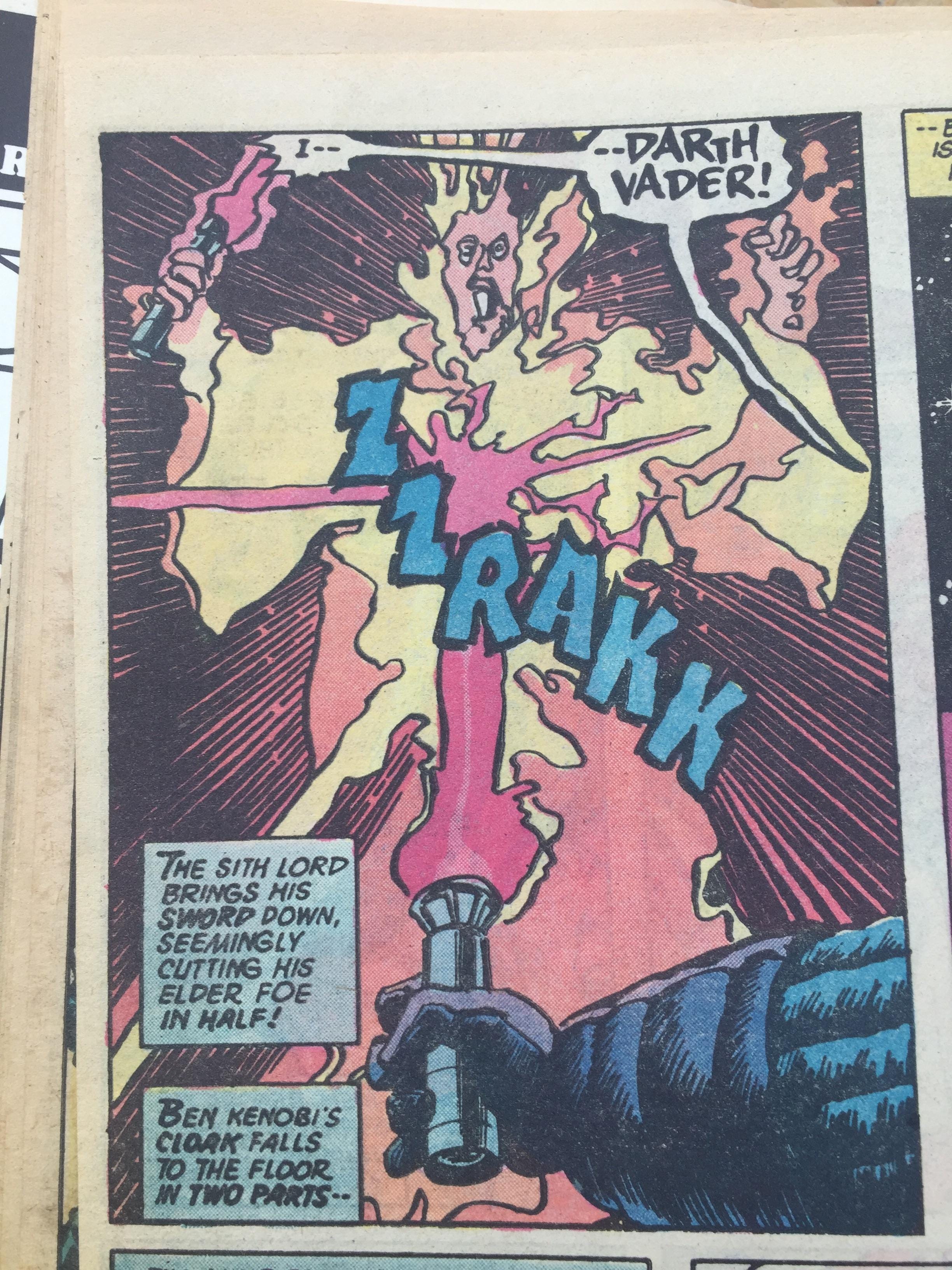
However, clearly the Americans behind the Transformers movie must have thought death would be acceptable on the big screen. As a child, I went to the theater and saw Obi-Wan Kenobi die in the original Star Wars.
I’ve never heard of anyone objecting to that. I read and reread the Marvel Comics adaptation of Star Wars - there was no videotape of it in 1977 - and had no problem with this scene:
GI Joe writer Buzz Dixon got permission to have Joe team leader Duke - the equivalent of Optimus Prime - die in the GI Joe movie which was simultaneously under production. The death of Duke set a precedent for the death of Prime.
Which sounds like the end of an Amazon feature. I need to get my brain back into 1986 mode.
But I can’t go into American 1986 mode. These recollections on Reddit … wow:
Dad had to take me out of the theatre for a few minutes while I cried? Yes.
I was so shocked that I cried in my bed that night and prayed to god to bring back prime.
As a kid back then, seeing your hero die on the big screen is a big deal, especially since Prime often portrays as the big daddy heroic figure that we all love, so yeah, it was almost traumatic to me, the scene hit me so hard, when I finally got over it, superman's death was almost nothing to me, and yet I hold him high up there with Prime. So yeah, some were traumatized, but not all, it was the shock that affected most kids back then.
I was 4 when I watched it in the 80s.
Yes, it was a scarring experience.
You got to understand how things were back then. Adult media and kids media were REALLY separated. A kid knew when Terminator or Predator or Jason Vorhees were for adults and big kids, while things like Ninja Turtles or Care Bears were clearly for a kid like you. Outside of some outliners like comics, the line was clearly drawn for these things.
It wasn’t like today where everything is a bit more blended, where adult matters can be handled in a sensitive and age appropriate way or had easier access.to more mature content. You weren’t as desensitized by things as much as you were in the 80s, though not from a lack of trying on a kid’s part.
And while Transformers were war-like, it came off as pretty kid friendly. Optimus was a father figure, the plot for every episode was stupid and fun, you get the idea. And a LOT of kids loved Optimus as the big dude you could rely on and look up to.
Then he dies in battle, slowly, from his wounds, cause of some idiot Autobot, after we just watched all these other characters we grew up with get wasted in a fairly graphic and brutal method.
Kids weren’t just hurt and scared by that, it was the fact that we then had to watch heroes we liked be cheaply replaced by characters that weren’t as likable. You had the sadness of Optimus dying AND the realization that he wasn’t coming back.
It sucked like high hell. I didn’t sleep properly for a couple of days after watching it and didn’t get back into Transformers until Beast Wars.
To be fair, not all American kids felt that way, and I’m not just talking about me and my friend:
As a kid, I saw Transformers: The Movie in the theater when it first released. […] The death of Optimus Prime hit an emotional chord for me, but it wasn’t deeply disturbing. In fact, I thought it made the movie so much better. It felt “grown up” to me. I didn’t have the words for it back then, but in retrospect, I think I liked the idea that there were consequences - that the things that happened in the film actually mattered to the overall narrative.
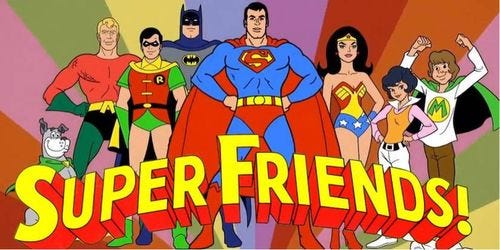
American productions like Super Friends always bothered me as a child because there were no consequences.
[t]he heavy backlash resulting from Optimus's death would in turn affect Duke's fate in the G.I. Joe film, with the character being written as falling into a coma rather than dying.
The Joe film was meant to be a twin of the Transformers film - a blockbuster - but the latter was a bomb …
An August 30th, 1987 Los Angeles Times article on the decline and fall of the DeLaurentiis Entertainment Group listed The Transformers: The Movie as grossing $2.6 million in the United States on a $5 million budget.
… and hence the Joe movie was released straight to video under the “Just for Kids” label … ugh.
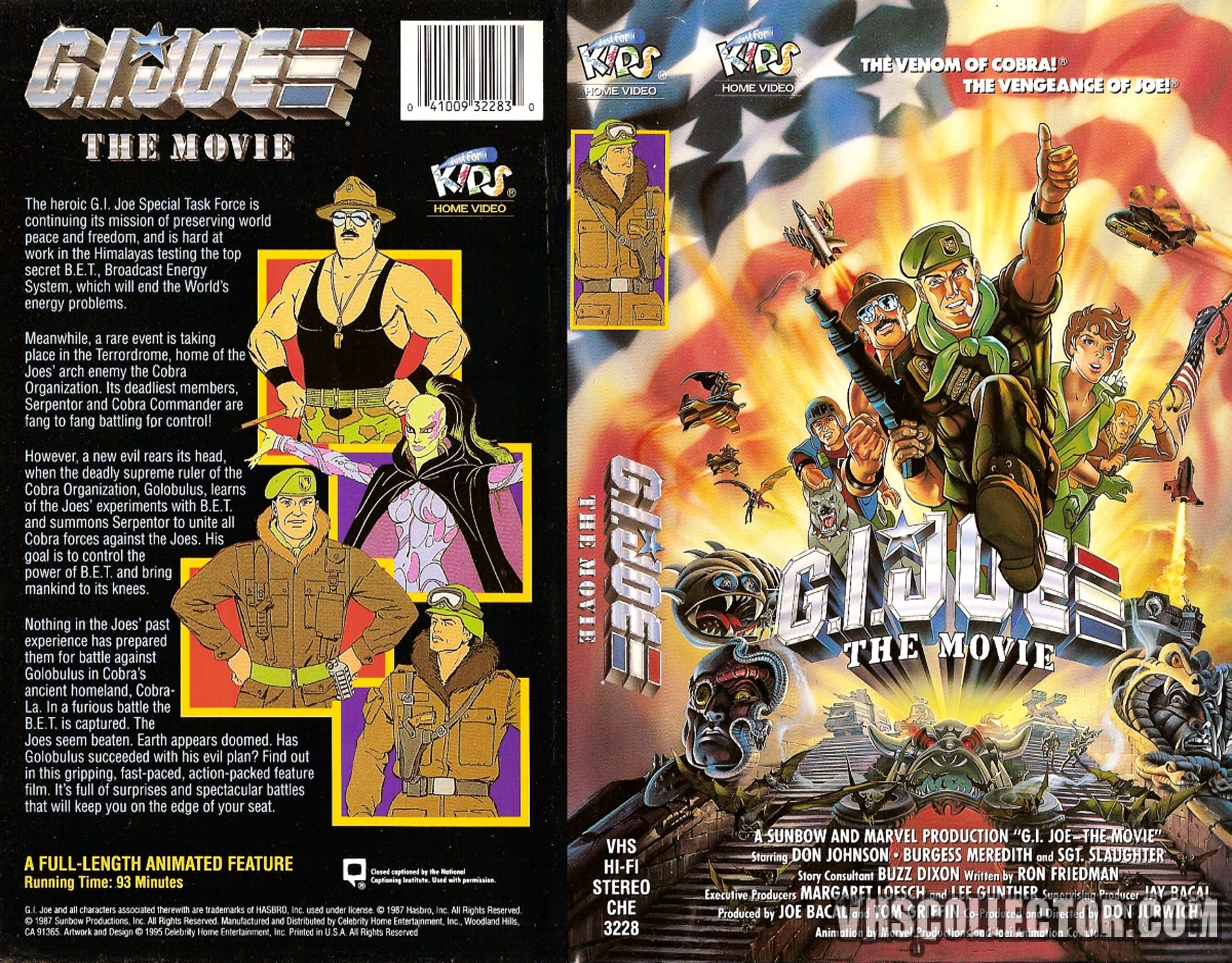
Despite a lot of effort, the Joe movie did not have the impact of the Transformers movie, partly because of the dialogue added at the last minute to cover up Duke’s onscreen death:
Scarlett: He's gone into a coma.
General Hawk: Falcon, don't worry. We'll do everything we can for Duke.
At the end of the movie, the Joes hear this over the radio:
Doc: Great news! Duke’s come out of his coma!
We never actually see that happen, as it was too late to animate any new footage. So we just have to believe the new Joe leader:
General Hawk: Duke’s gonna be A-OK!
A similar audio Band-Aid was added to the Transformers movie:
In some versions (notably the European version) the film ends with a narrator reassuring the audience that Optimus Prime will return.
Would European children have reacted the same way as the more sensitive Americans above?
Why were those American kids sensitive in a way that Japanese kids aren’t? That’s not a question I can really answer in the few minutes I have left.
I will just say that Japan had experienced a massive defeat in World War II, and that loss and the deaths that accompanied it may have left echoes in later generations. Many of the people who worked on the shows I watched grew up during the war or its aftermath.
The United States, on the other hand, had the opposite experience in World War II. It developed an image of itself as an invincible hero - an image that has somehow held up despite not-so-glorious performances in subsequent wars. America tells itself, We are the good guys, and good guys don’t die.
But that’s a lie.
When will America stop lying to itself?
And what will make it face the truth?
I loathe the first Michael Bay Trashformers movie. I have never seen any other modern Transformers movies other than a few minutes of Transformers: Age of Extinction (2014) which I stumbled on while flipping channels in a Third World hotel.
I cried when prime died but more because they set us up to cry. I didn't actually believe he was gone for a variety of reasons. I realized it was a tragic story beat but I didn't think much beyond that. I was actually more worried about the whole planet unicron ate. And I wondered who the hell the judge dudes were. I really wanted a toy of them.
Later on when I got an ultra Magnus at a garage sale I thought it was ghost prime XD
It's crazy how far off the path you can get when you're the only kid around and school comprehensively shuns you.
To me transformers were all just friendly AI. I never really accepted the energy woo elements. I completely didn't get the matrix Unicron interaction.
It was all just end of episode stuff for me.
Joseph Heller and Kurt Vonnegut would like to disagree that Americans were the good guys and could not die.