
Noble Silver
Was not long for this world

I ran out of time to go beyond the first episode of Hundred Beast King Golion (1981-1982), the source show of the ‘lion’ part of Voltron, in my last post.
Here’s more of Golion that was cut out of Voltron.
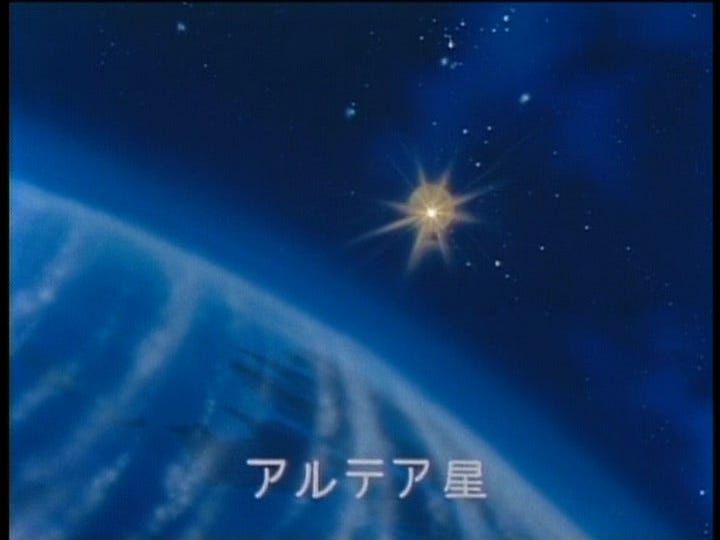
After the first episode, the five lead characters from Earth - perhaps the only Terrans left after World War III - landed on the planet Althea …
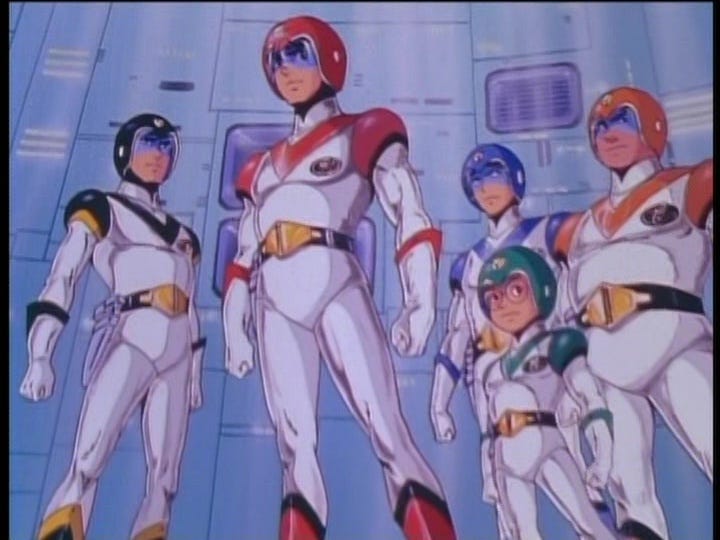
… where they became the pilots …
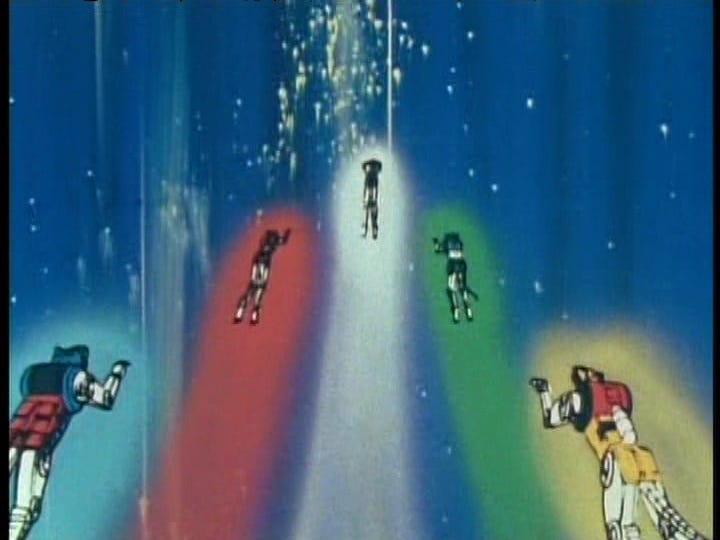
… of the five robot lions …
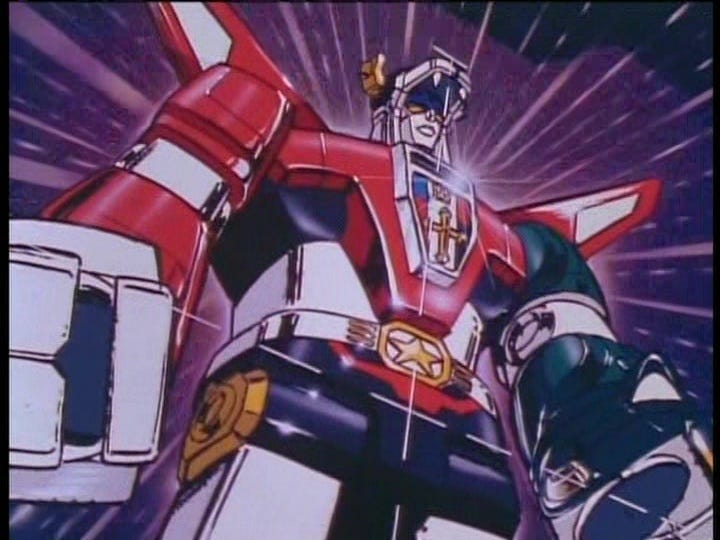
… that combined to form Golion (go means ‘five’).
In episode 6, 銀貴 Shirogane Takashi (lit. ‘white-metal [i.e., silver] high [i.e., noble]’1), the archetypal Japanese male hero …
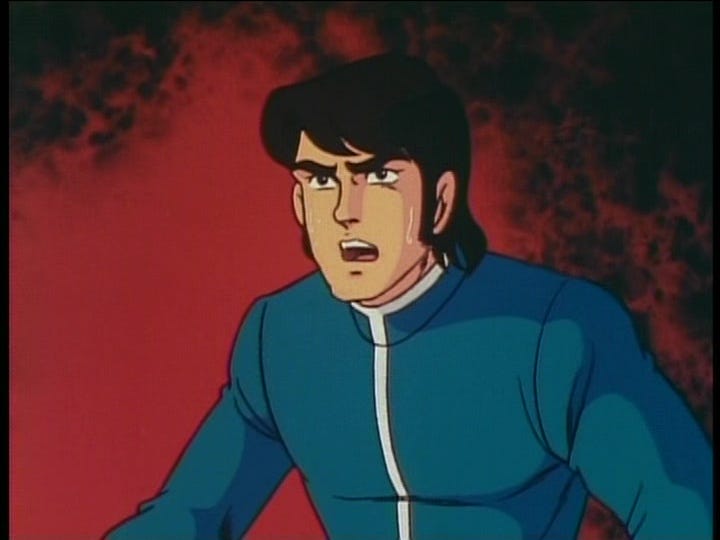
… pilot of the Blue Lion …
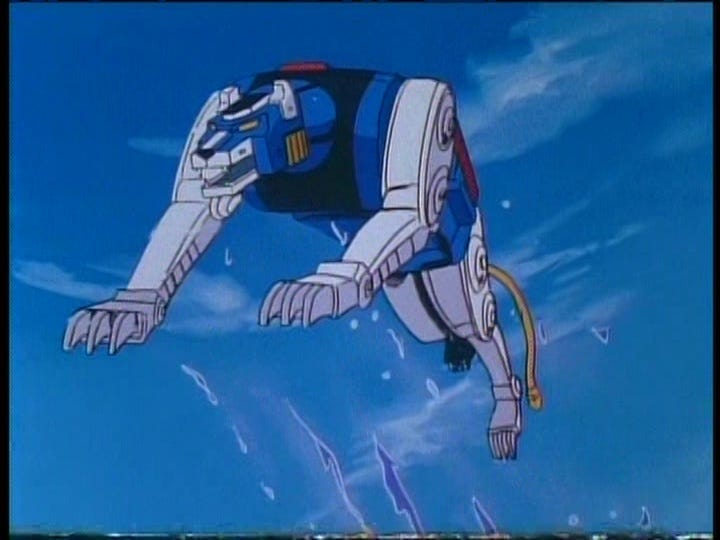
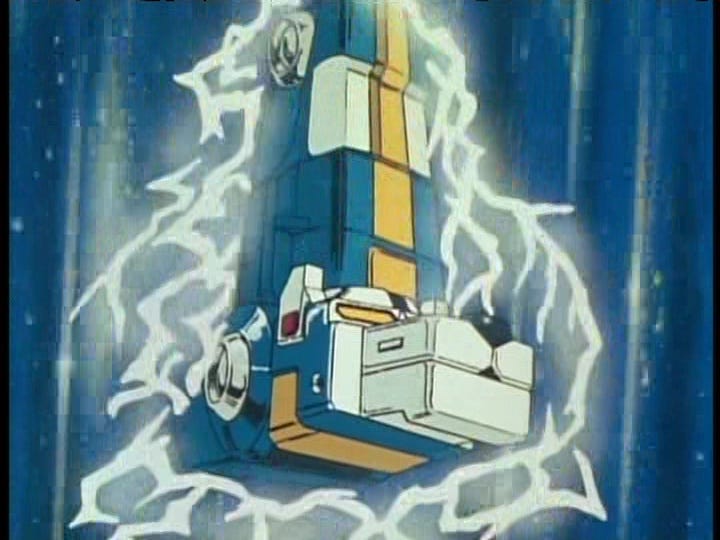
… that formed the right leg of Golion …
… fought a duel with the Galra Empire witch Honerva (< hone ‘bone’ + Minerva).
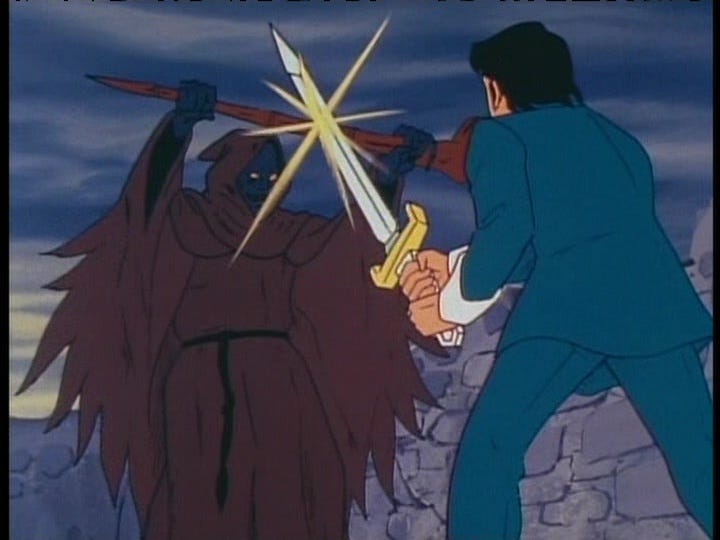
Honerva unleashed her cat Yaga (as in Baba) …
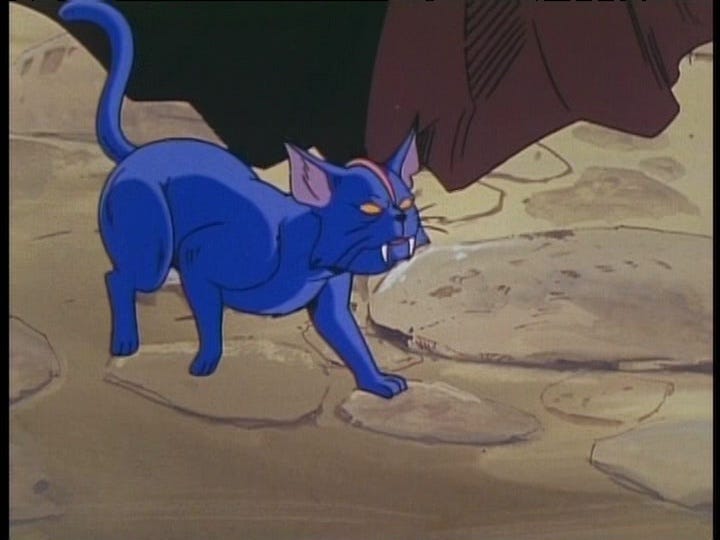
… on Takashi …
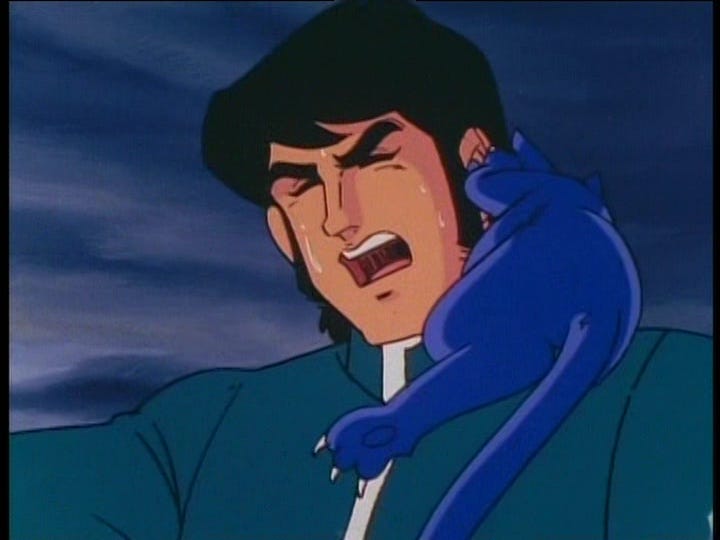
… who was then struck from behind …
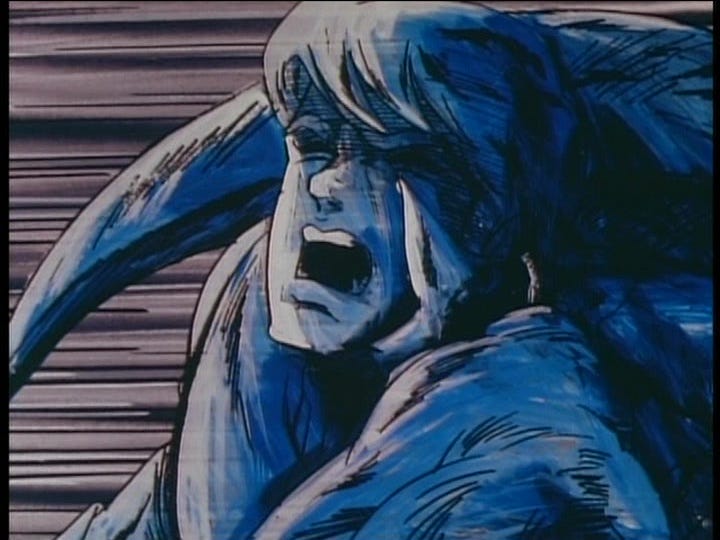
… by a cyborg alien slave …
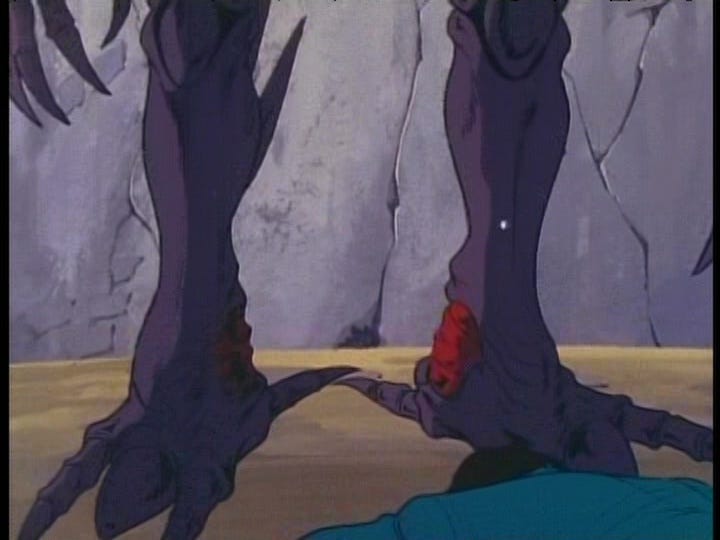
a deathblack beastman.
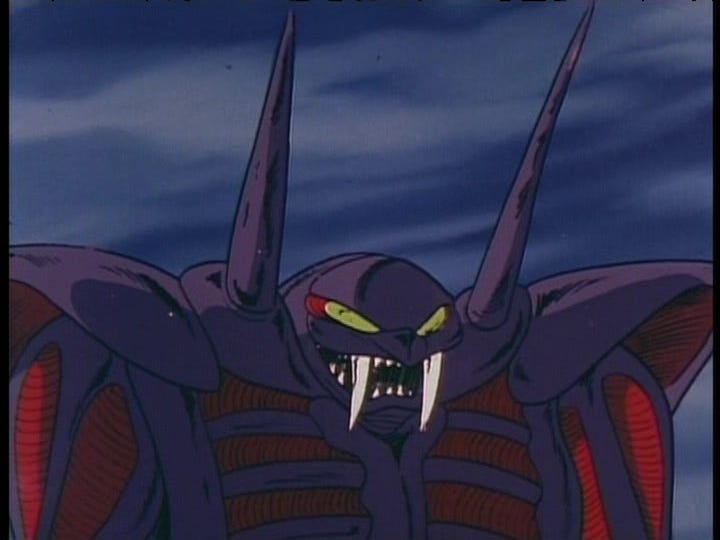
The monster struck a second, fatal blow.
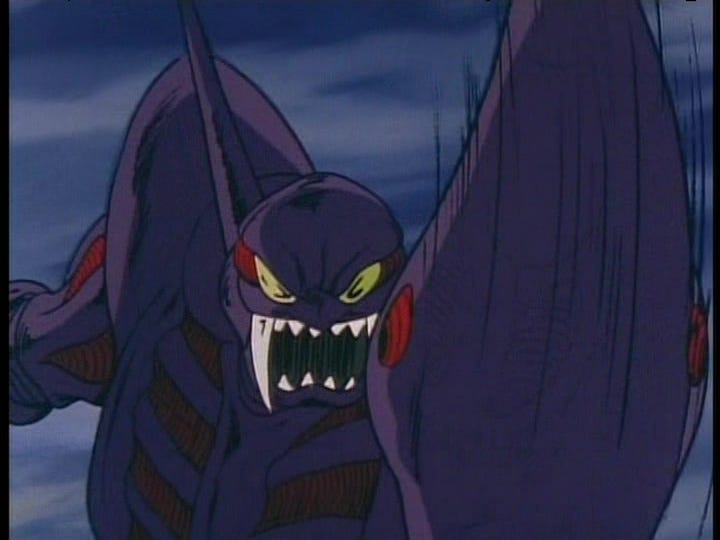
Not even the Japanese could show where Takashi was struck.
His fellow pilots spotted him dying from afar.
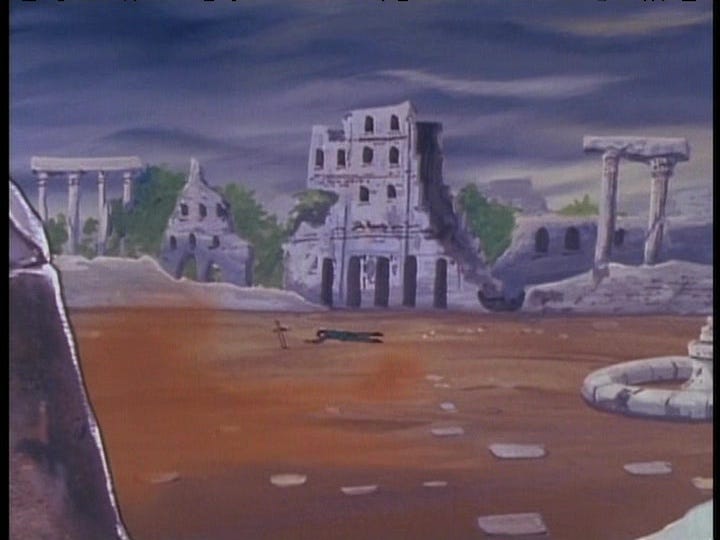
They cried as he breathed his last.
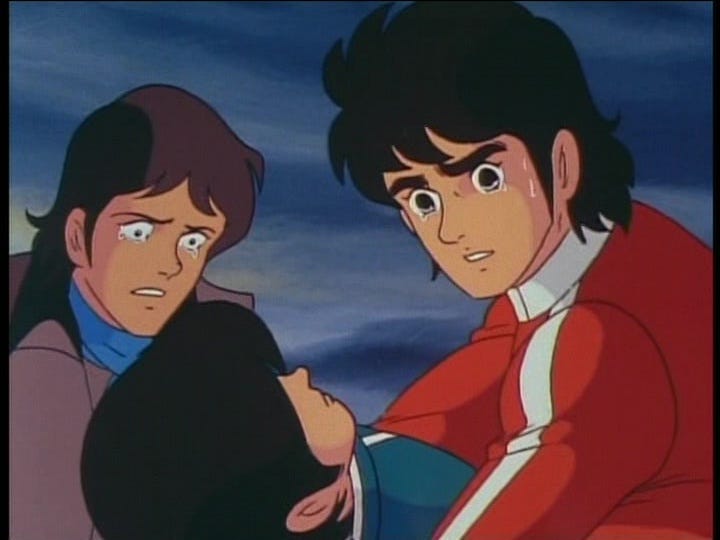
Those tears made less sense in Voltron because “Sven” (= Takashi) was merely seriously injured.
I like the symbolism of how Takashi’s sword …
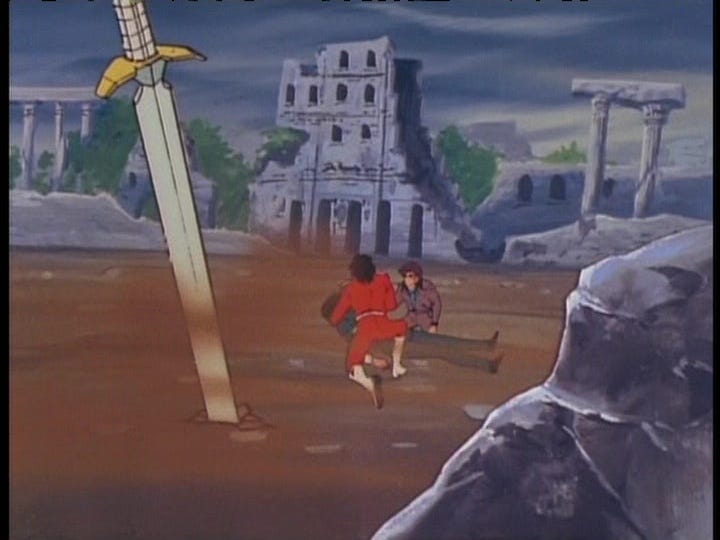
… fell, presumably at the exact moment of his death.
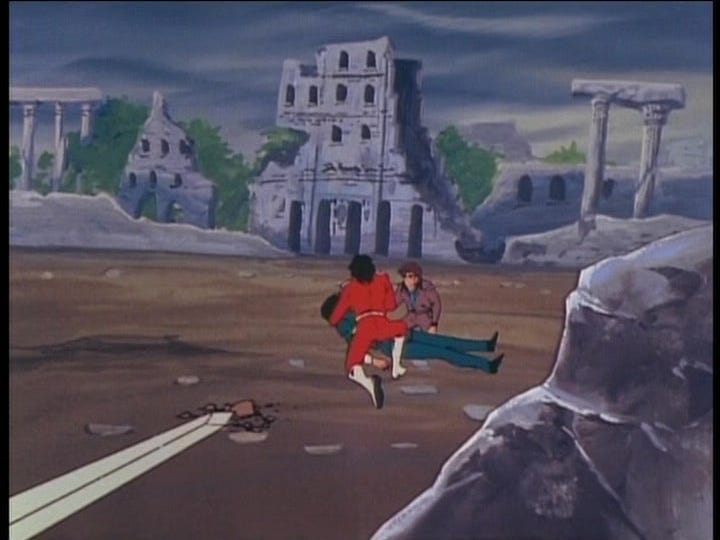
In Voltron, we were told that “Sven” went to another planet (offscreen, of course) to recuperate, whereas Golion depicted Takashi in a coffin:
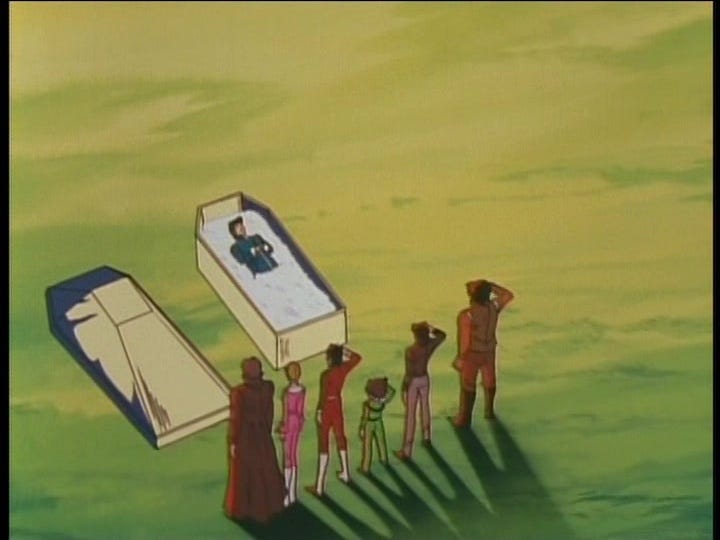
Unlike “Sven”, Takashi was gone for good. Now there were only four Terrans left - all males. All saluting him.
The two people standing to their left were natives of Althea.
In the next episode, the Althean woman in pink, Princess Pharla, became the new pilot of the Blue Lion. She wasn’t initially very good at her new job.
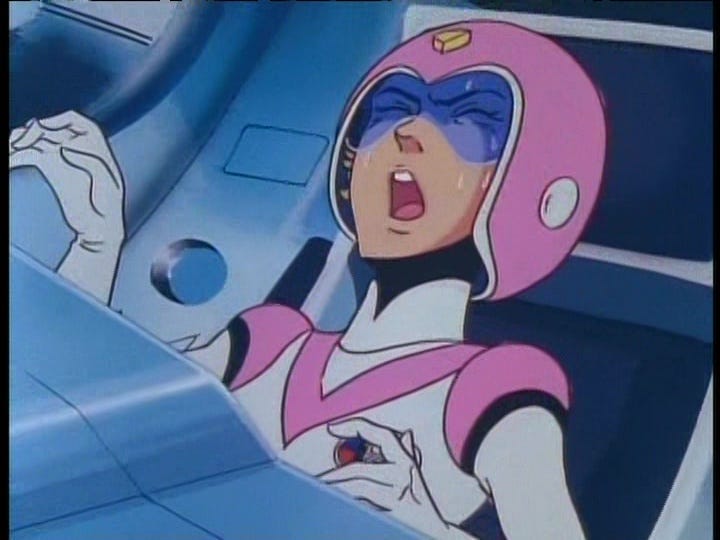
But by the end of the episode, she saved the day …
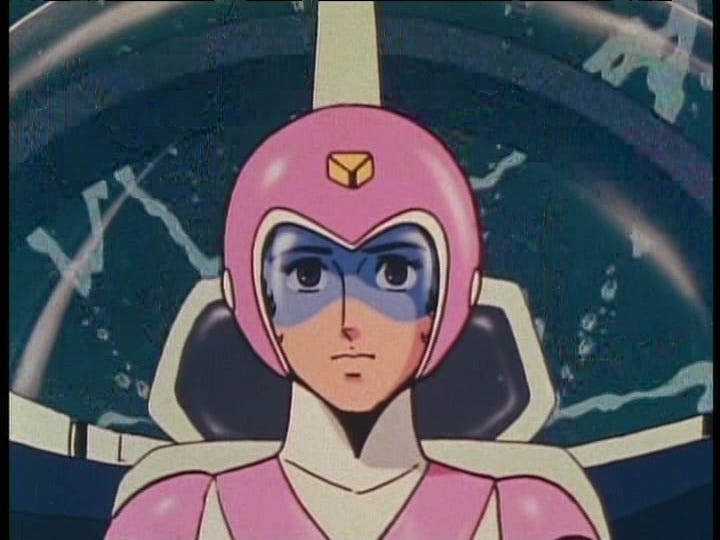
.. having quickly mastered the machine that Takashi had only briefly controlled.
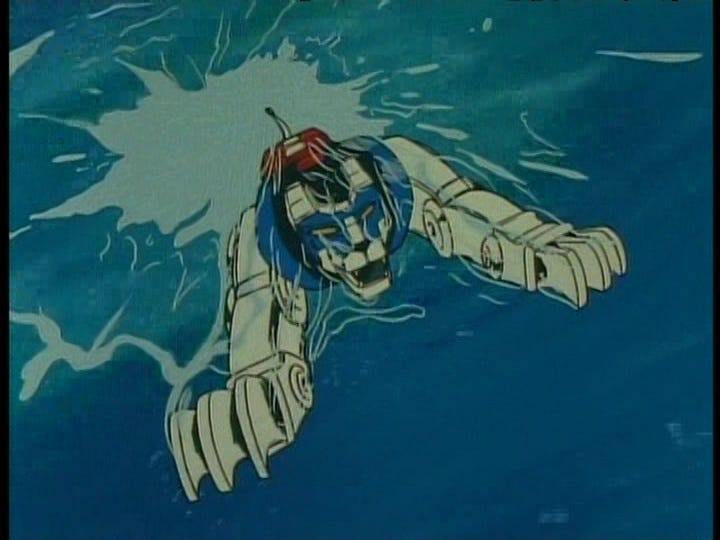
Yay for plot-driven competence.
Let’s fast forward to episode 522, the series finale.
Crown Prince Sincline of the Galra Empire …
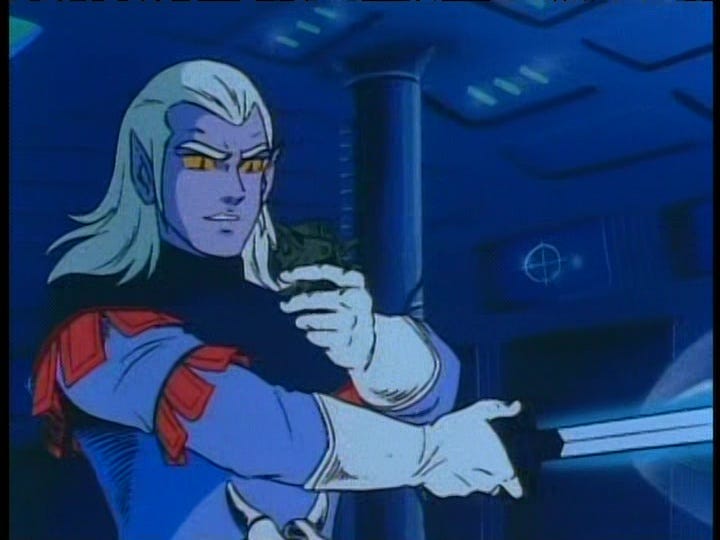
… held Takashi’s brother 銀亮 Shirogane Ryō (lit. ‘white-metal [i.e., silver] bright’) hostage at swordpoint.
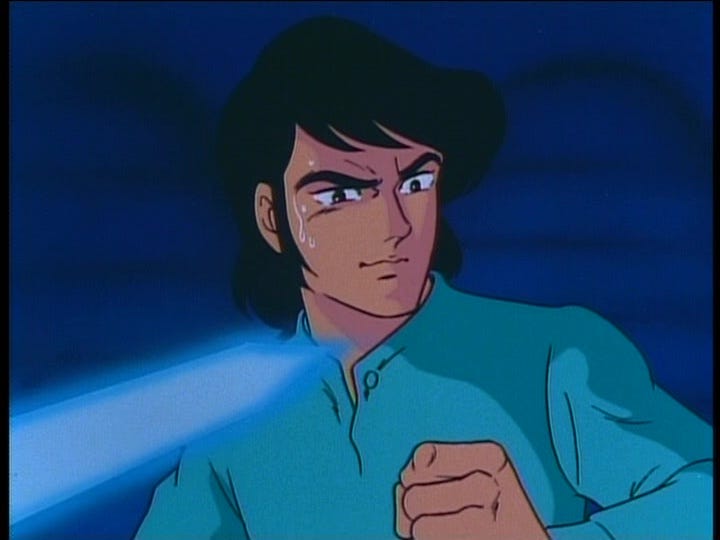
Ryō looked just like his brother Takashi - Voltron’s “Sven” - so Voltron claimed that Ryō was “Sven”.
In footage cut out from Voltron, Ryō stabbed Sincline in the chest, and Sincline sliced open Ryō’s belly.
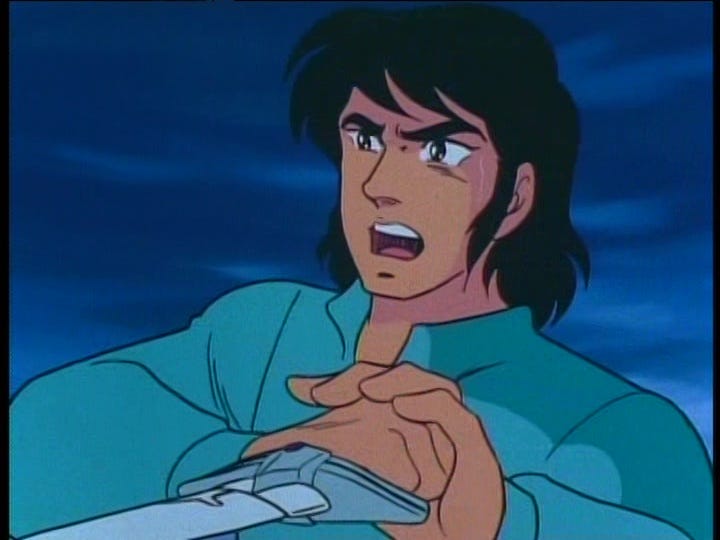
The two fell …
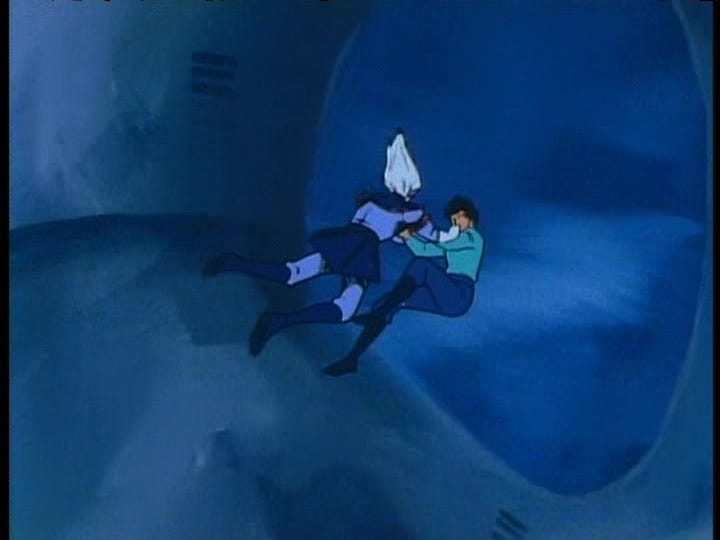
… from Sincline’s crumbling castle …
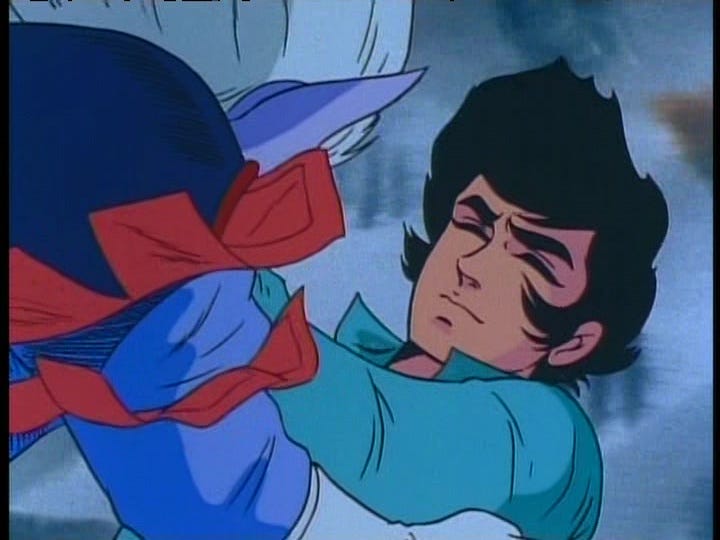
… to their deaths …
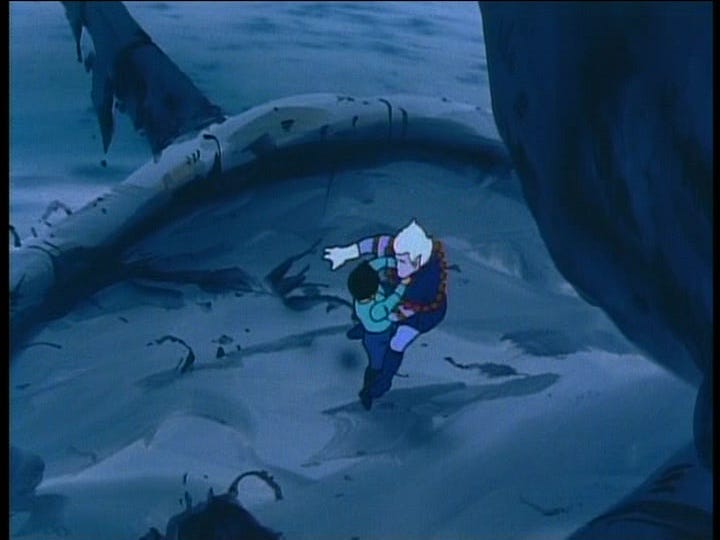
… when they struck hard ground.
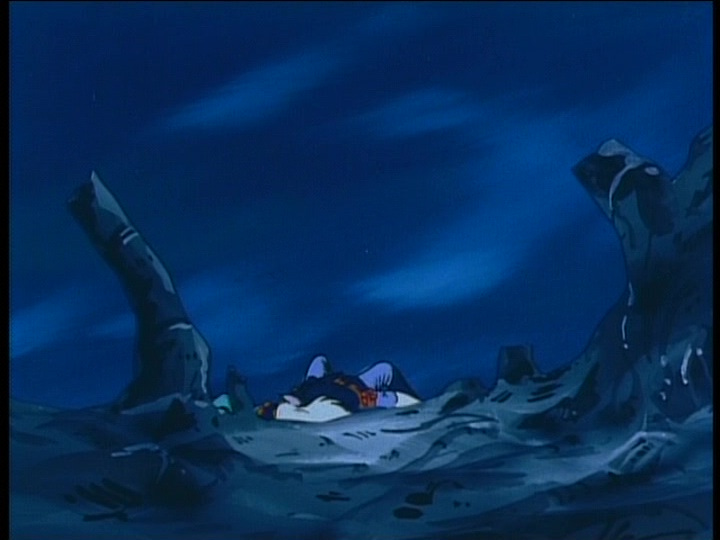
The editors of Voltron omitted that scene and claimed the duo survived by landing in water. Do you see any water?
The Voltron editors managed to find old footage of a submarine …
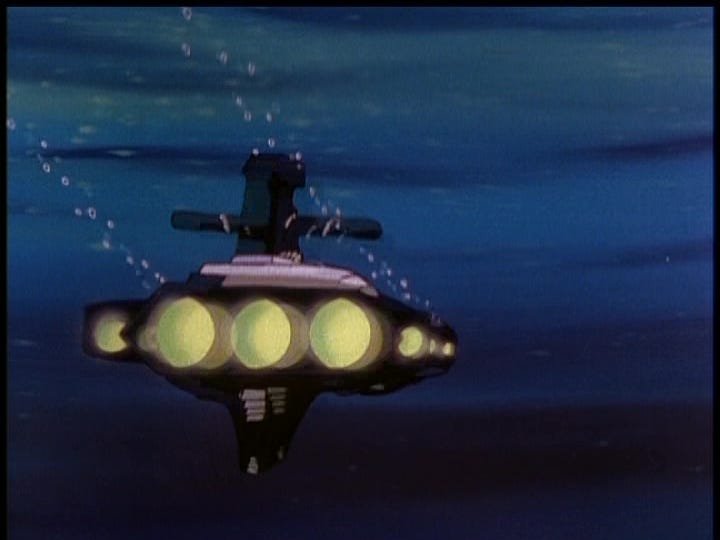
… and of “Lotor” (= Sincline) supposedly aboard …
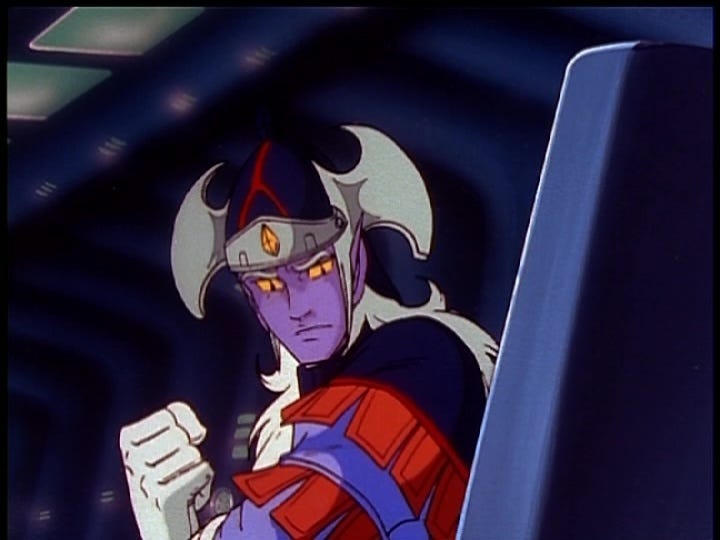
… giving him new dialogue:
When they have left Planet Doom [= the Galra homeworld in Golion], I will return and rebuild everything exactly as it was!
Undoing everything in the final story arc! ARGH.
Three years after producing the conclusion of Golion, Tōei made twenty Voltron episodes for broadcast in the US market in fall 1985.
Those episodes reverted to the status quo. So “Sven” (= Ryō) was back …
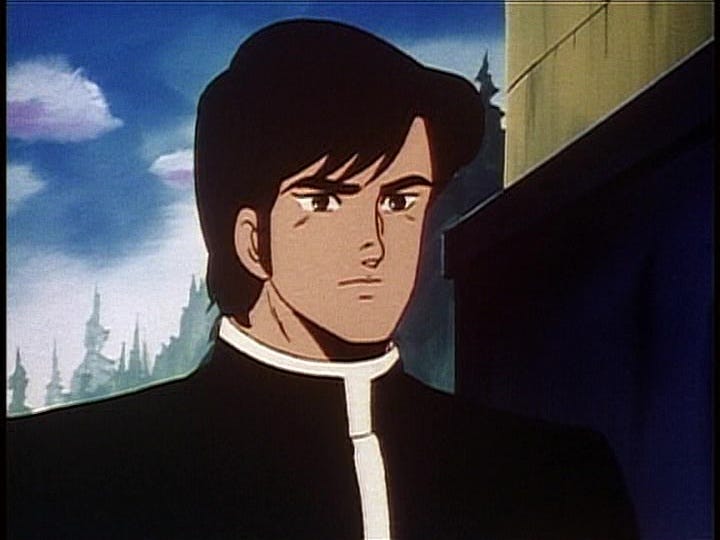
… as was “Lotor” (= Sincline) and other characters killed in Golion.
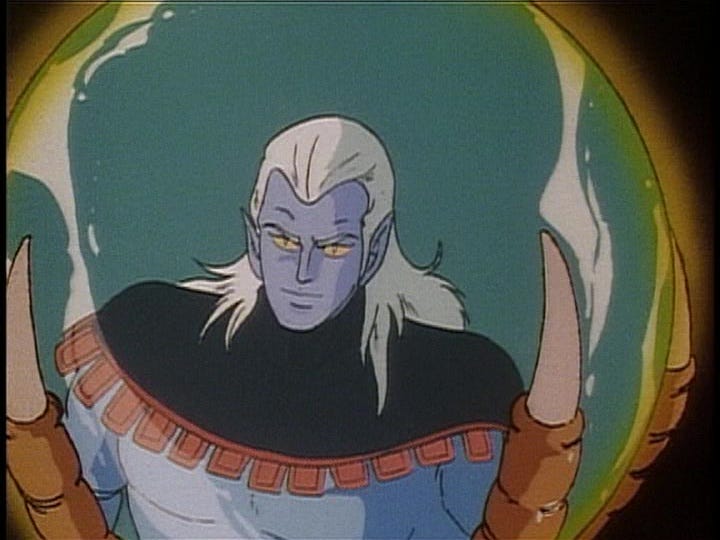
Double ARGH. Needless to say, I didn’t care for those additions, though at least they were visually consistent with the earlier footage.
Here’s one last bit of that earlier footage. The Golion pilots saluted Ryō after his death.
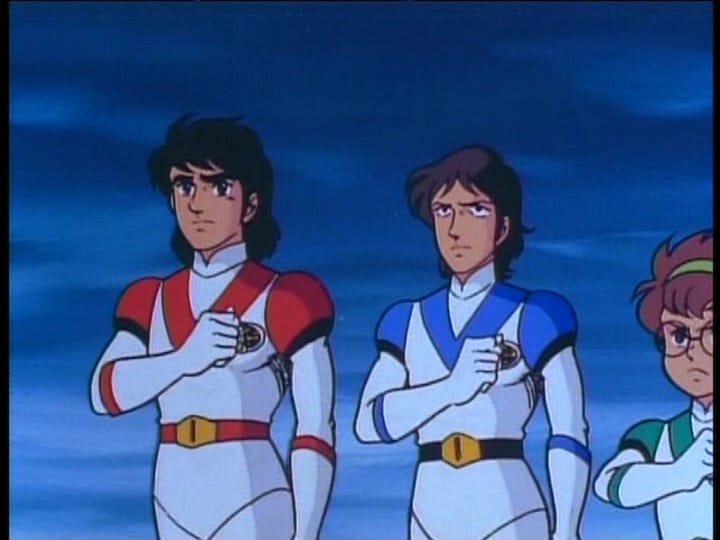
I salute the Japanese for their willingness to depict death in children’s television. To prepare viewers for a world where the good guys die - even not long after their adventures had just started. Where death is permanent - rather than merely transient or, worse yet, nonexistent.
Some children growing up on death-free American cartoons were unprepared for The Transformers: The Movie (1986):
Hasbro's exclusively toy-focused agenda demanded a product refresh, to be contrived by the on-screen deaths of several prominent starring characters, at the protest of some creators of the film and TV series.
Apparently even the adult creators were uncomfortable with death!
The decision to kill off many established characters, especially the Autobot leader, Optimus Prime, prompted outcry from fans and a letter-writing campaign.
In 2019, the film was called "The Great Toy Massacre of 1986" which "traumatized a generation of kids with a string of startling deaths".
I was in that generation, but I wasn’t traumatized, because I grew up watching Japanese television in Hawaii in the seventies and eighties. I was accustomed to death in fiction at a young age. I recall being told my first word was 死ね shiné - Japanese for ‘die!’ Villains were often telling the heroes to shiné!
And on occasion, the heroes did just that.
All the Japanese characters in Golion have transparently meaningful names embedding names of metals and colors. Interestingly, the colors in their names don’t match the colors of their lions or the theme colors of their uniforms:
黄金旭 Kogane Akira (‘yellow-metal [= gold] bright [morning sun]’) - Black Lion, white and red uniform
銀貴 Shirogane Takashi (‘white-metal [= silver] high [= noble]’) - Blue Lion, white and black uniform
黒鋼勇 Kurogane Isamu (‘black-metal [= steel] brave’) - Red Lion, white and blue uniform
青銅強 Seidō Tsuyoshi (‘blue-copper [= btonze] strong’) - Yellow Lion, white and orange uniform
錫石宏 Suzuishi Hiroshi (‘tin-stone [brown-black cassiterite] wide’) - Green Lion, white and green uniform
All the personal names are standard classical Japanese men’s names - words for positive attributes.
In the early eighties, successful Japanese cartoons typically ran a full year - 52 episodes, one per week without any reruns.
"episode 52^2" 52 squared?! Jesus that's a big jump :P
"I recall being told my first word was 死ね shiné - Japanese for ‘die!’ "
That is adorably metal XD
Japan had agenda reason to feed death to kids. They want drones willing to die for the empire. The american version wants drones who think only OTHER people die, for the empire.
Every working society in shithole deathworld earth is/has always been required to traumatize its young in some exploitable way.