
Before Voltron
My four hundredth post: the roots of the five lions on their forty-fifth anniversary

Hundred Beast King Golion turns forty-five today.
Golion is best known as ‘Lion Voltron’, part of Voltron: Defender of the Universe, a sanitized American repackaging of two originally unrelated Japanese cartoons both produced by Toei.
I may write about Armored Fleet Dairugger XV, the source of ‘Vehicle Voltron’, when it turns forty-five next year.
Voltron was originally not supposed to contain Golion:
The Japanese series Future Robot Daltanious was originally planned to be adapted by World Events Productions as part of Voltron. When requesting master tapes from Toei Animation for translation purposes, the World Events Productions producers requested "[the] ones with the lion." Mistakenly, Toei then proceeded to ship World Events copies of Beast King Go-Lion, another "combining-robot" cartoon which featured lion-shaped fighting robot starships. Because the World Events producers greatly preferred Go-Lion to Daltanious, the Go-Lion episodes were adapted instead, going on to become the most popular portion of the original Voltron run.
Let’s take a closer look at …
Future Robo Daltanious (1979-1980)
I don’t think this show could have been credibly grafted onto Dairugger XV or been accepted in the US market as part of Voltron.
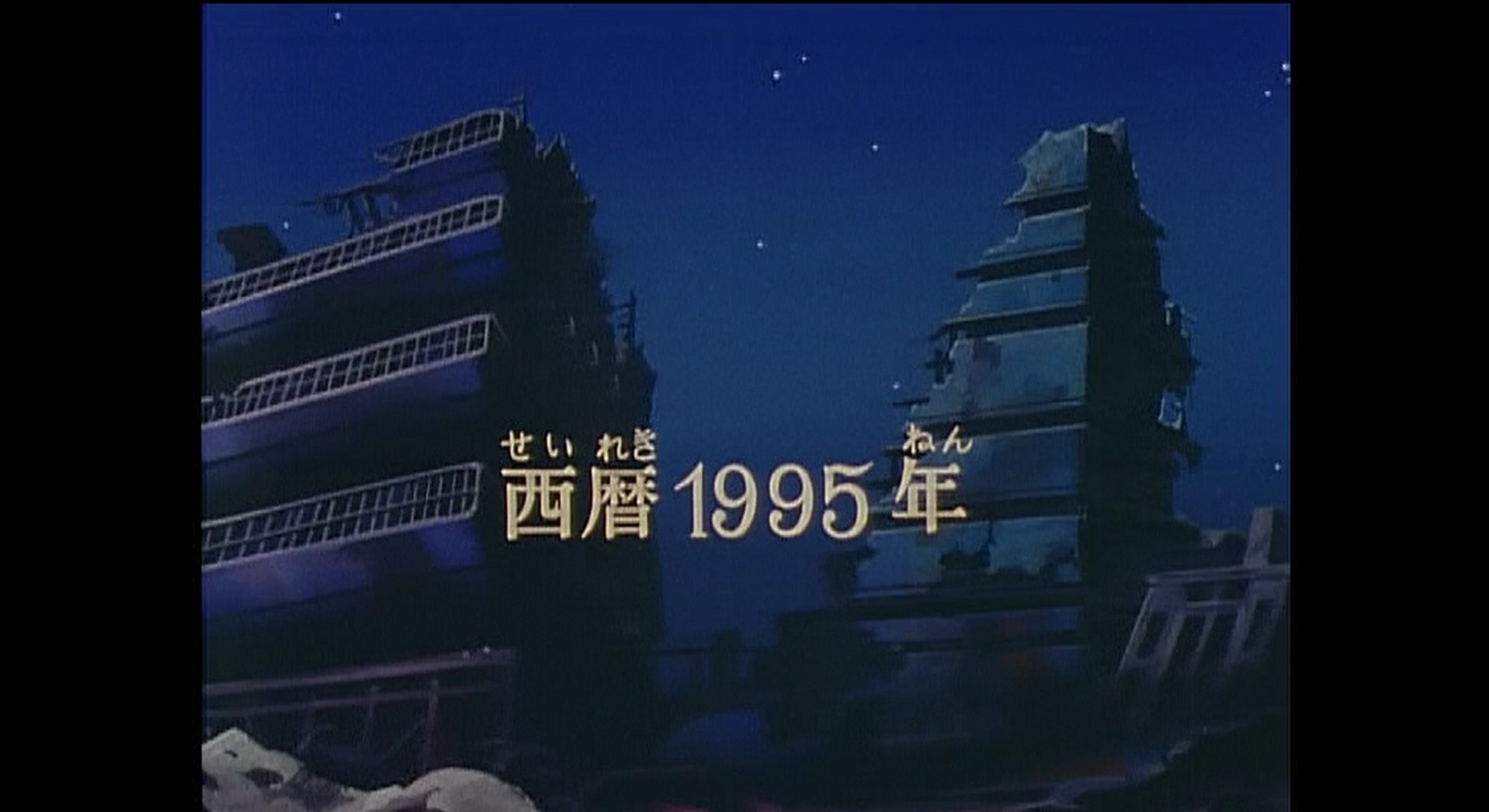
Daltanious was set in 1995 …
… when the alien Zarl Interstellar Empire …
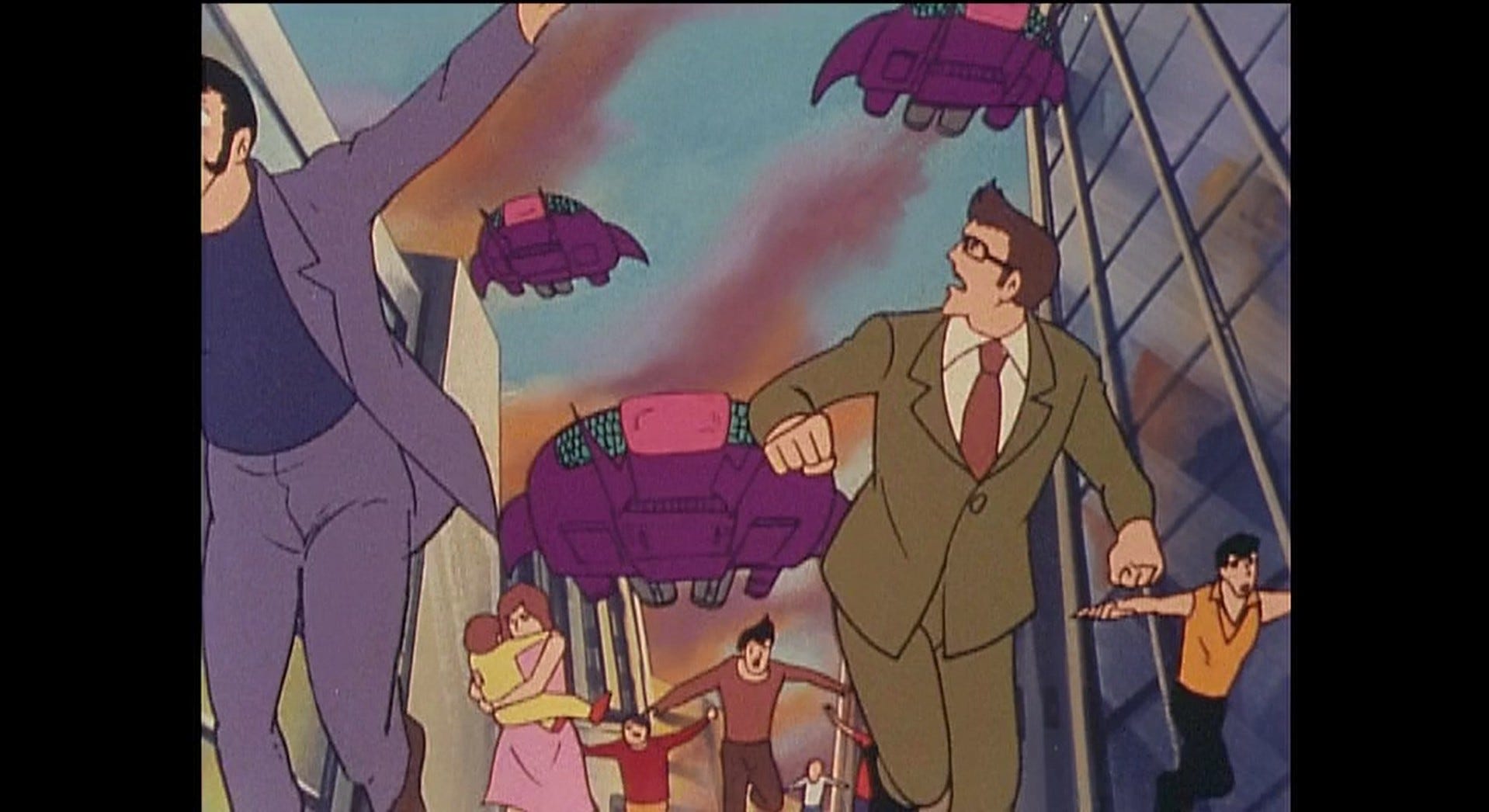
… had devastated almost all of Japan.
The Japanese government had fled south to Okinawa - the equivalent of the US government relocating to Hawaii.
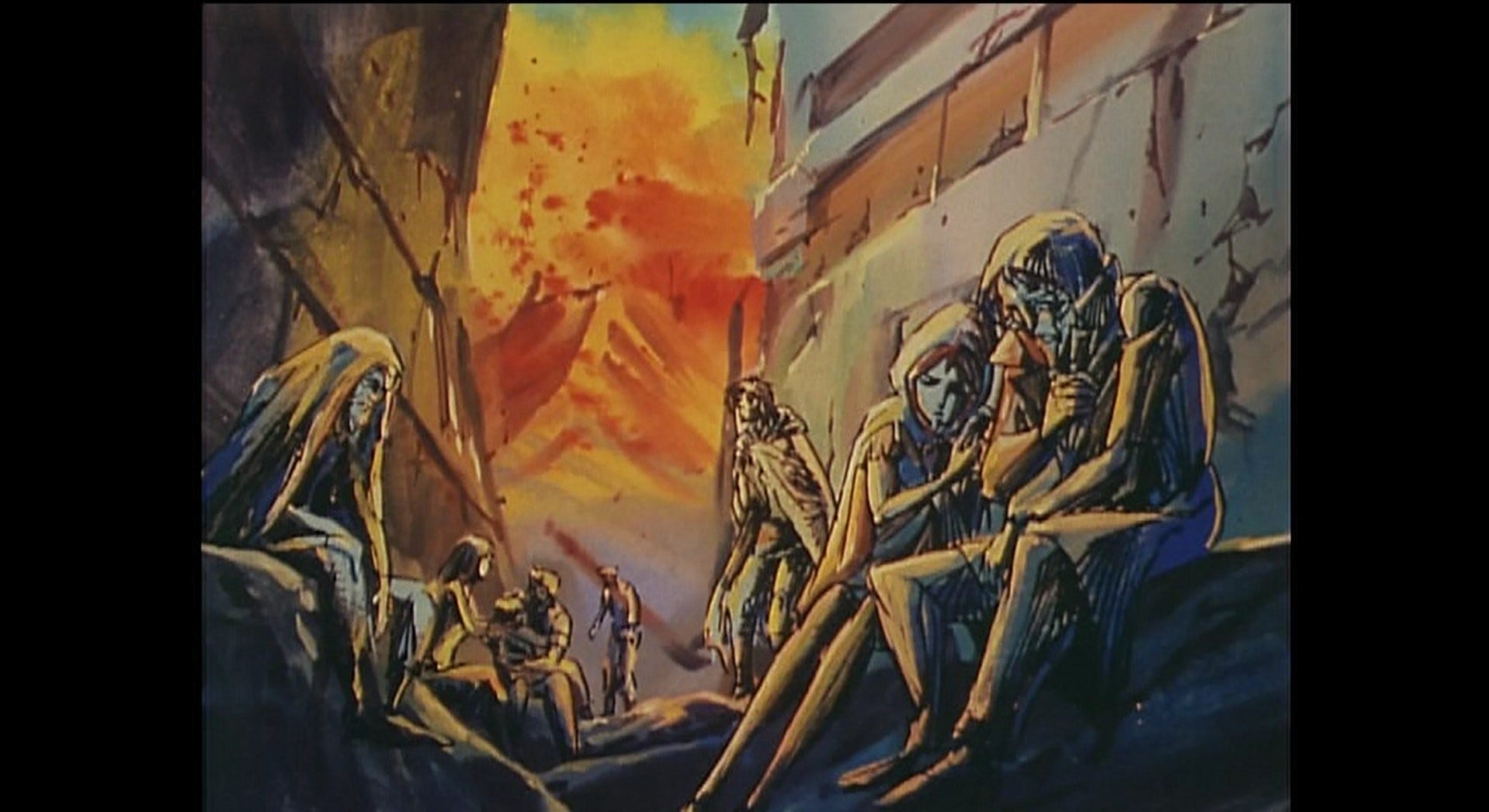
Everyone else in the main islands had to fend for themselves … like these war orphans.
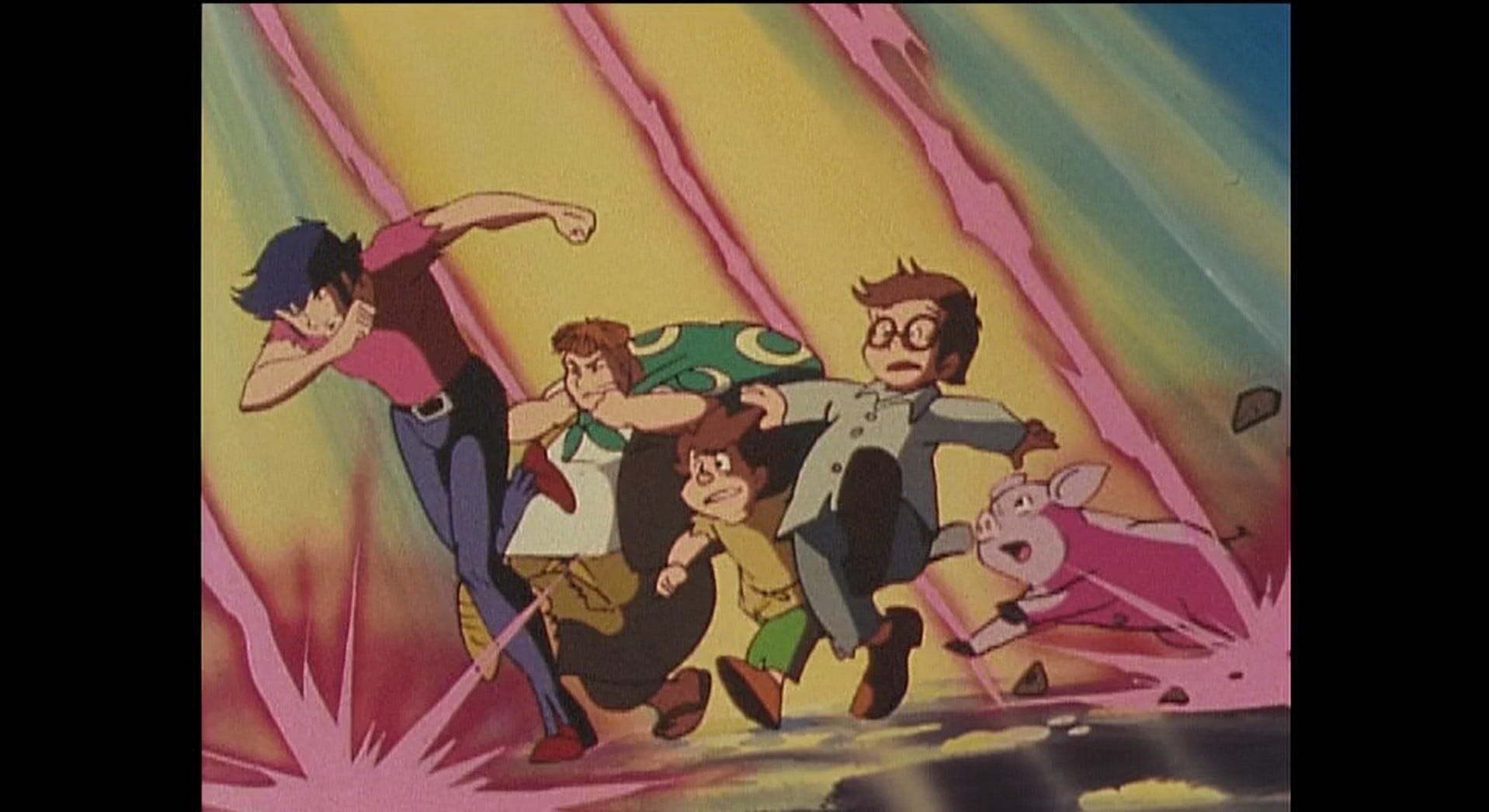
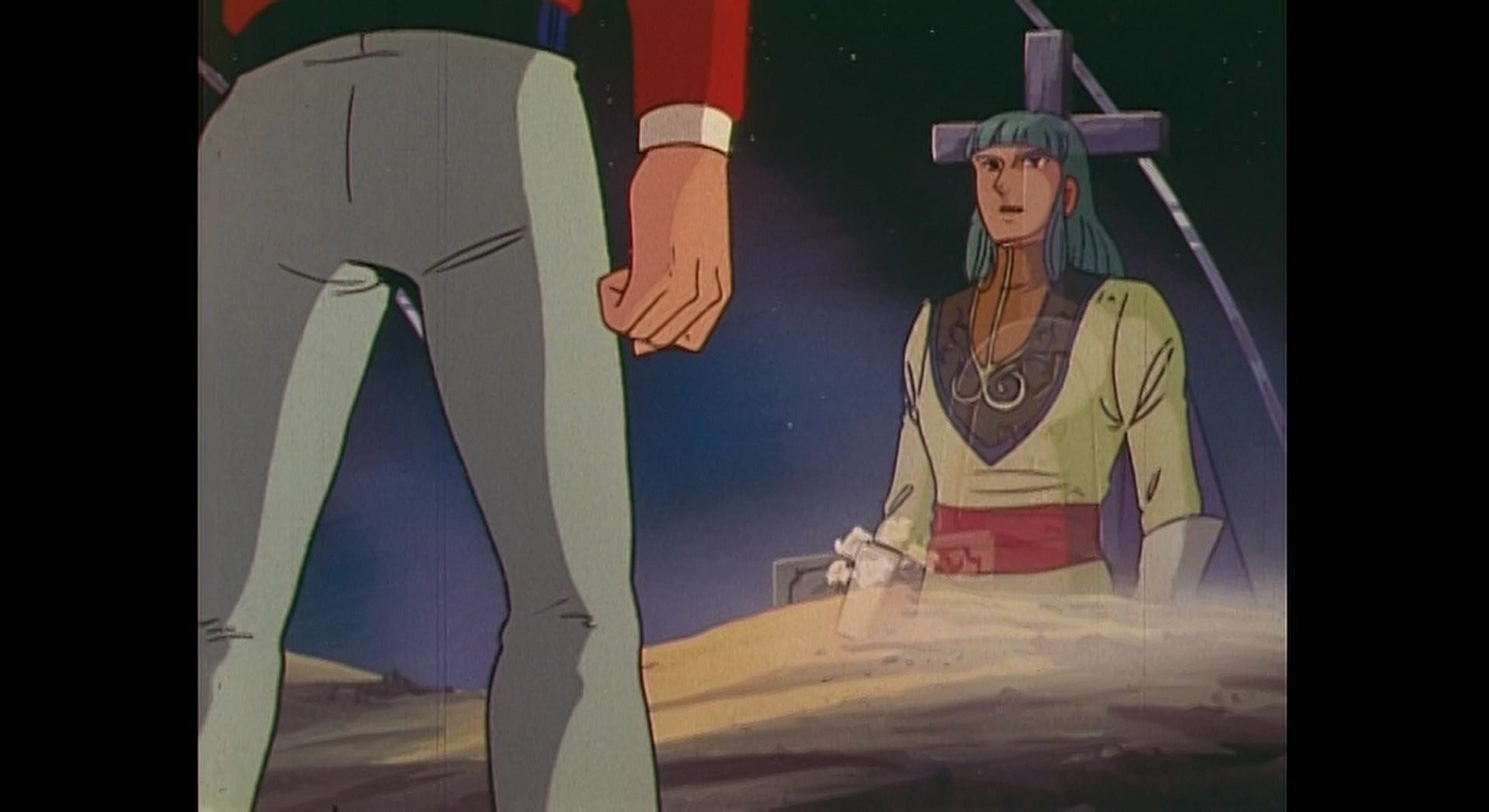
One of them - Tate Kento (lit. ‘shield sword-person’), the kid in the red shirt - had lost his sister and mother in the war.
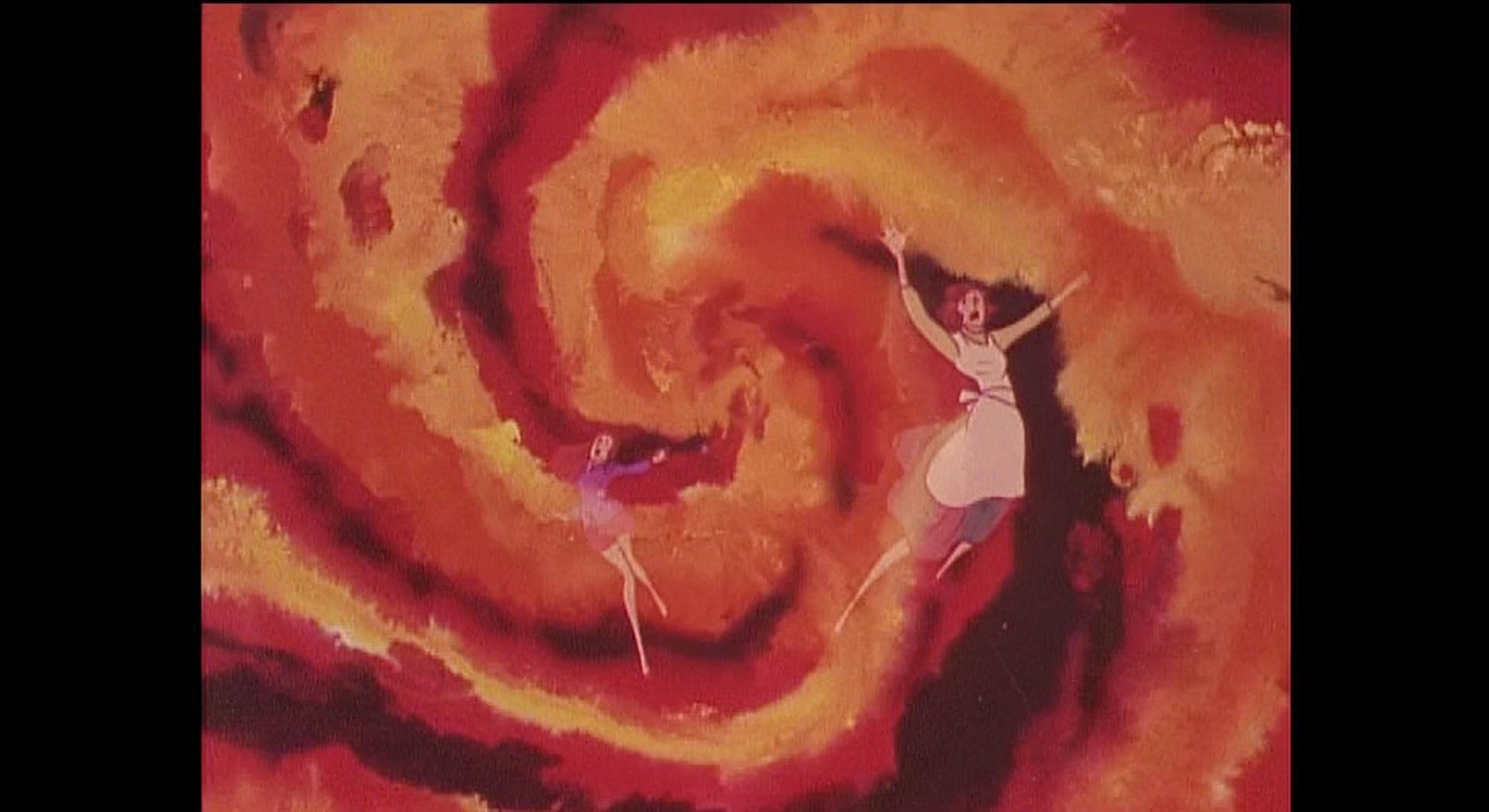
Kento had never known his father, who turned out to be Prince Harlin of another alien state, the Elios Empire.
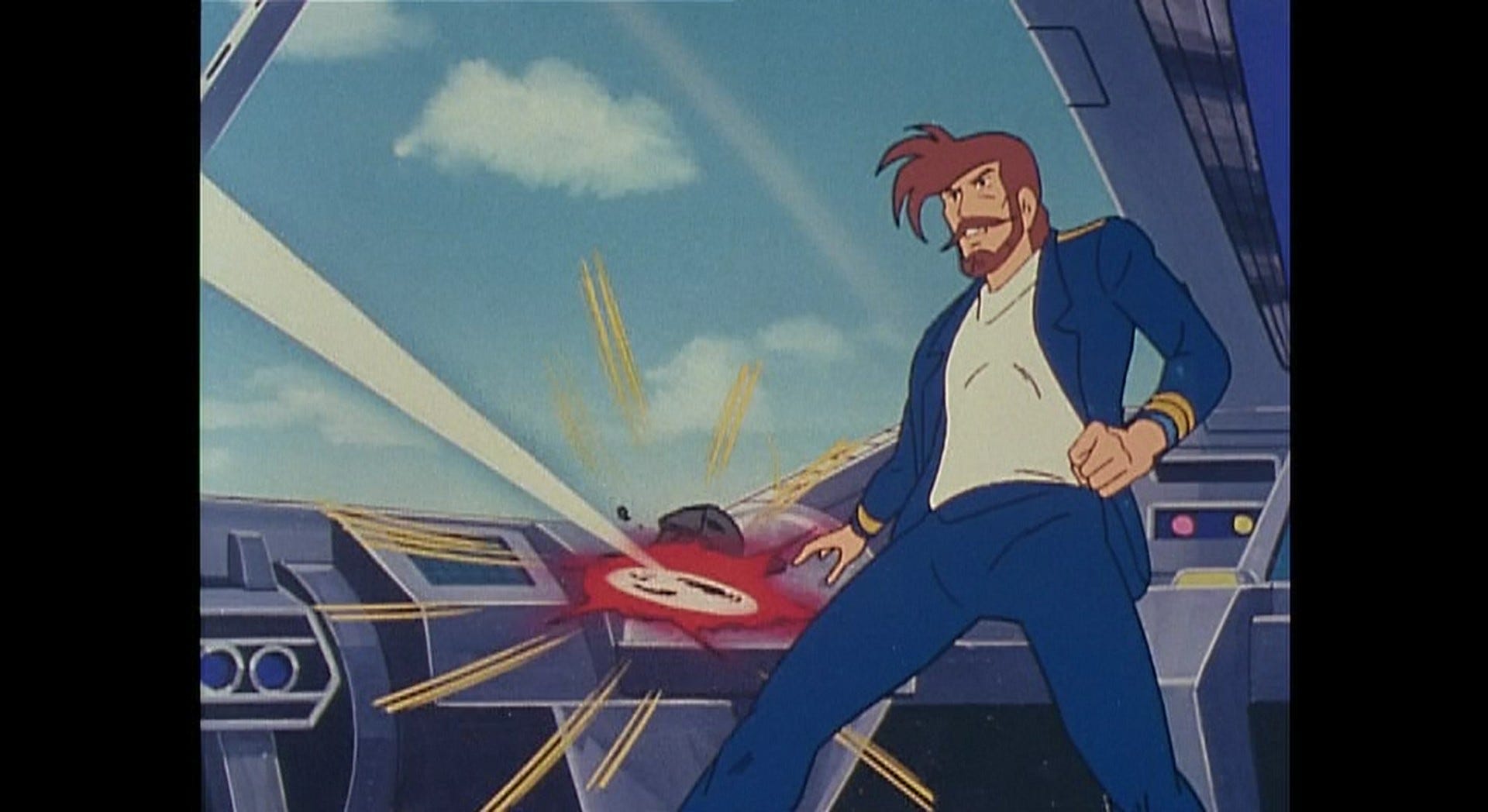
While his father was still missing, Kento became the heir to the throne - and was forcibly recruited …
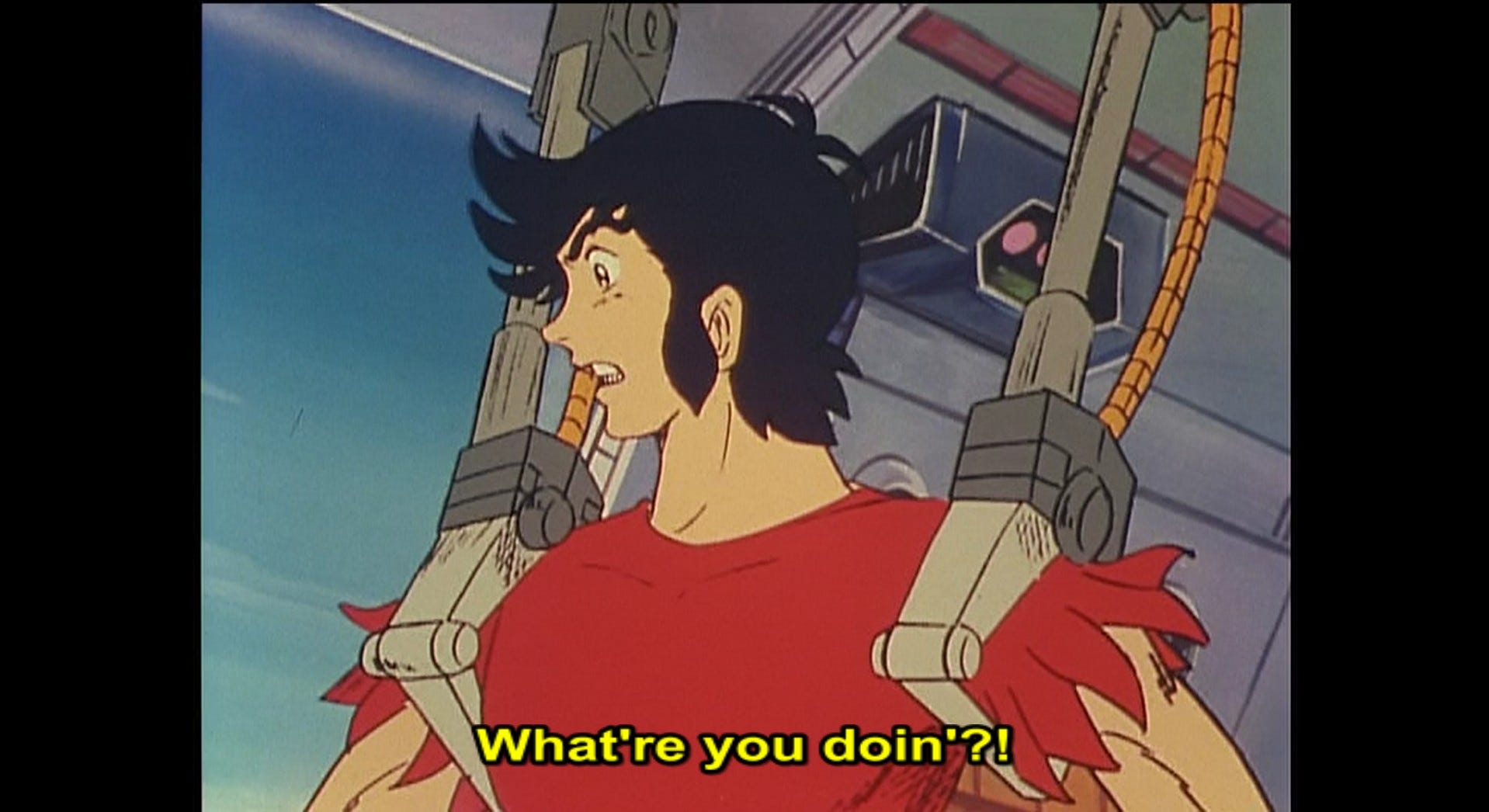
… to become the pilot …
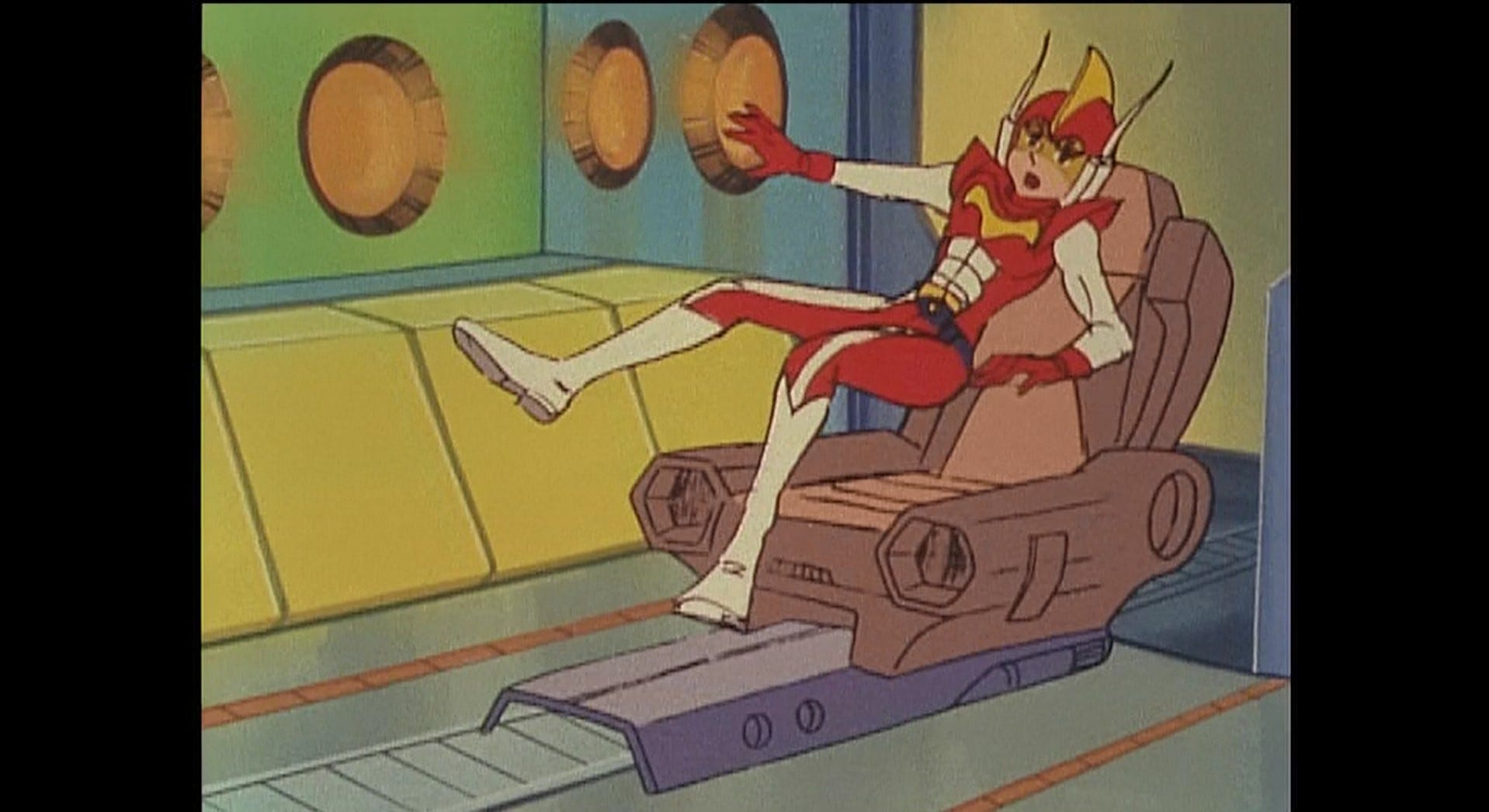
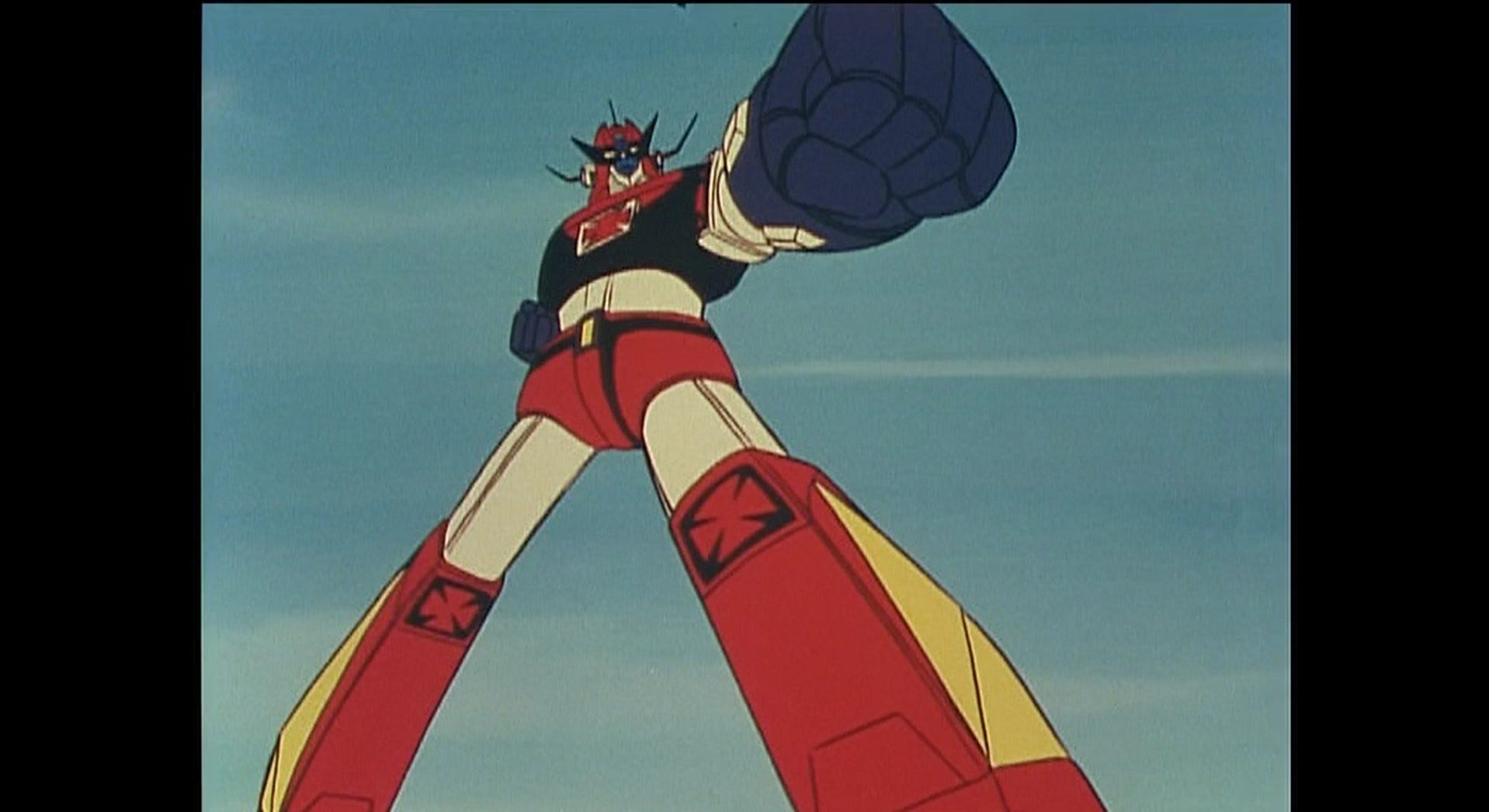
of one of the three pinnacles of Elios’ technology: the giant robot Atlaus.
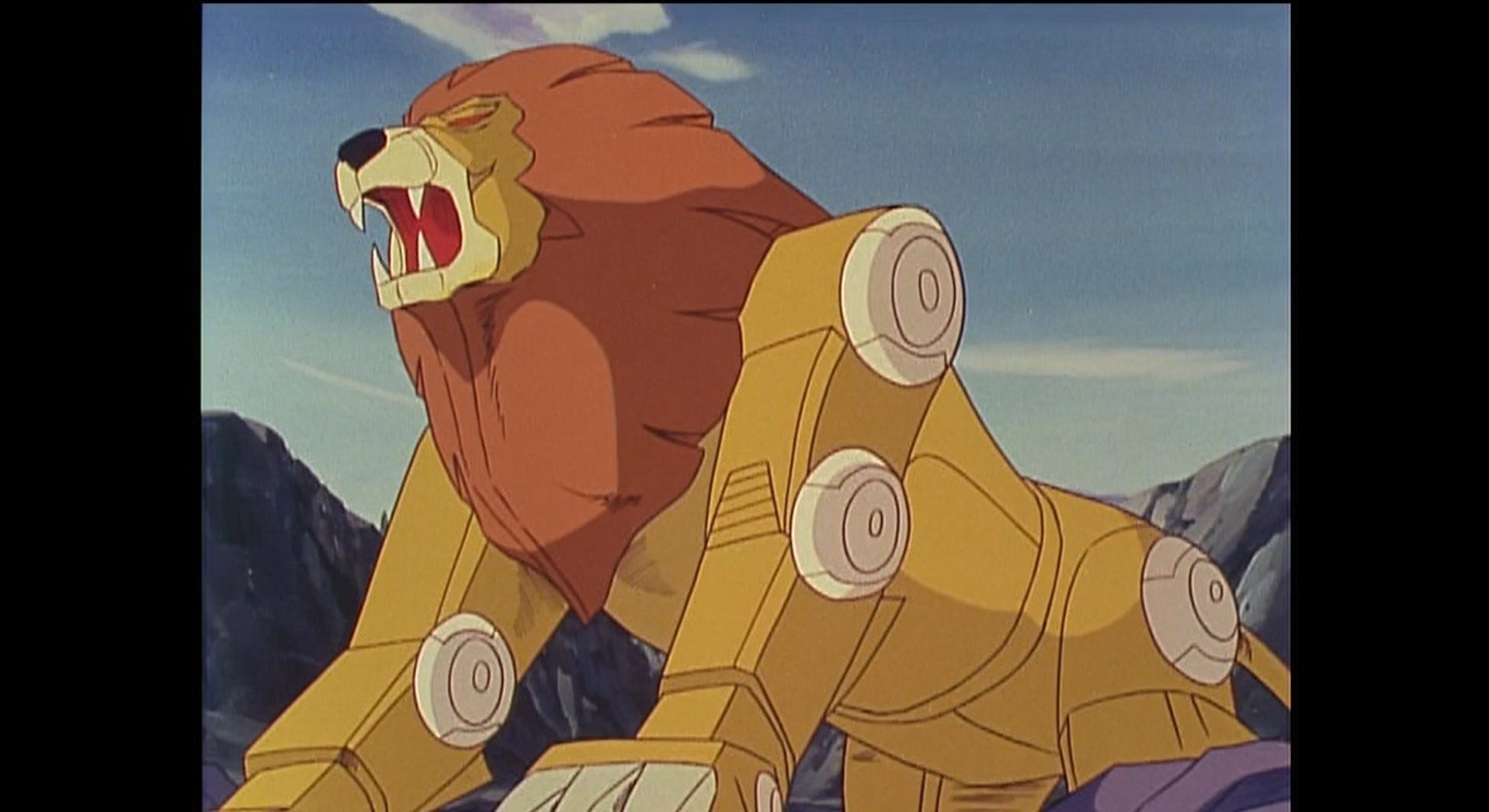
The second was “the lion” that World Events initially wanted: Belarios, a robot lion without any pilot.
The third was the superplane Gamper …
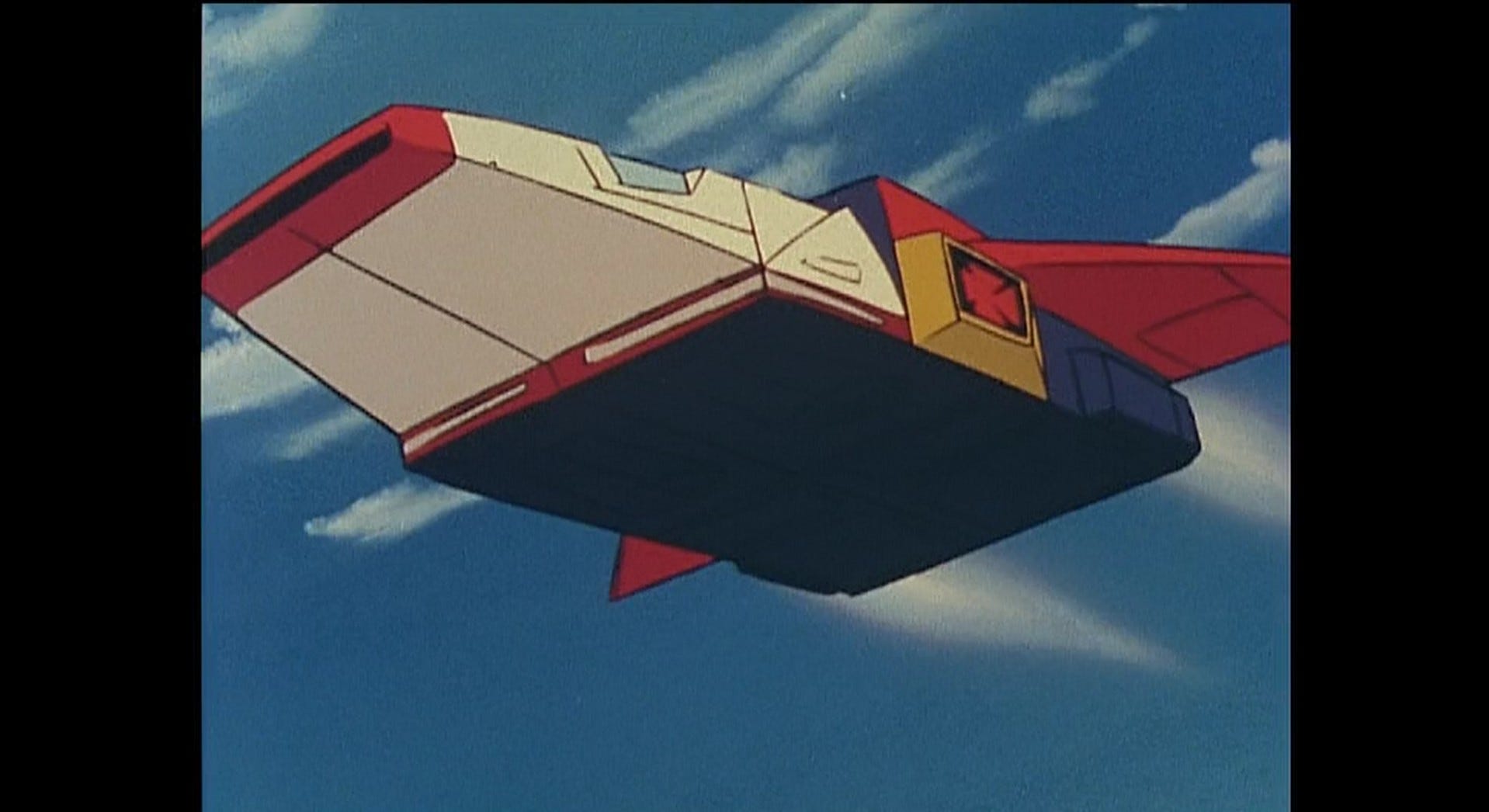
… , piloted by Kento’s fellow orphan Hiiragi Danji (lit. ‘holly bullet-child’).
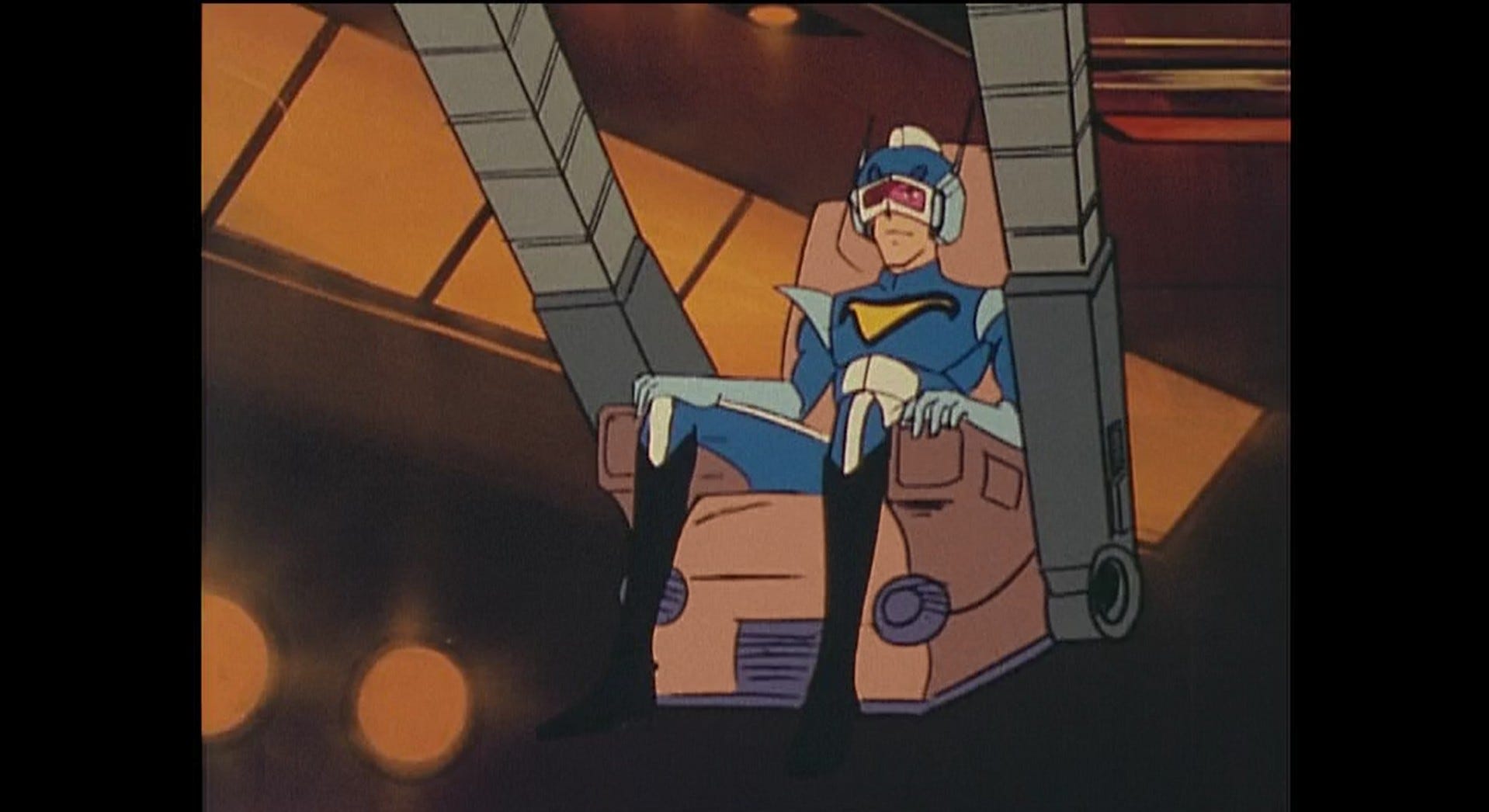
The robot, the lion, and the plane …
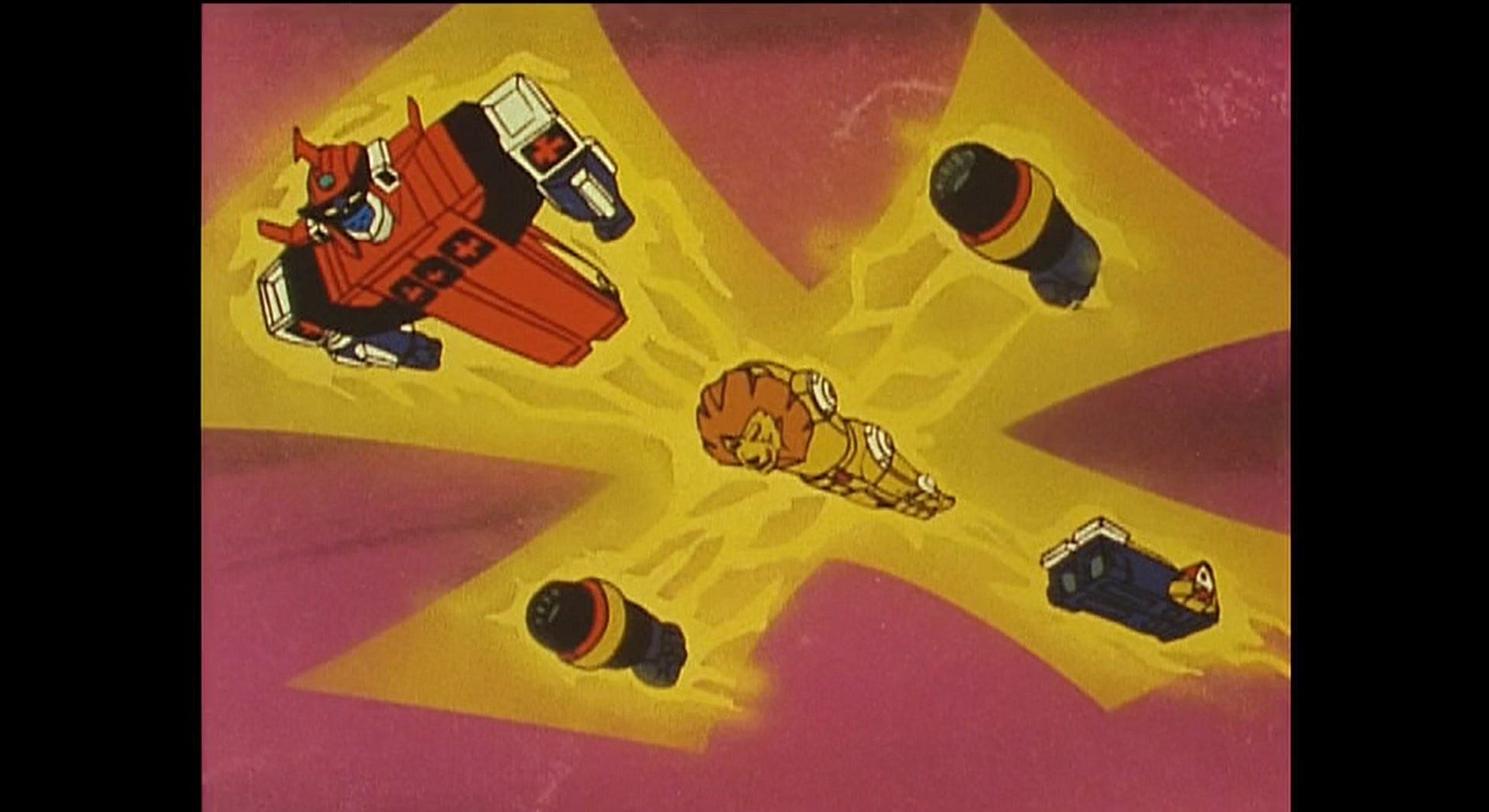
… combined to form Daltanious.
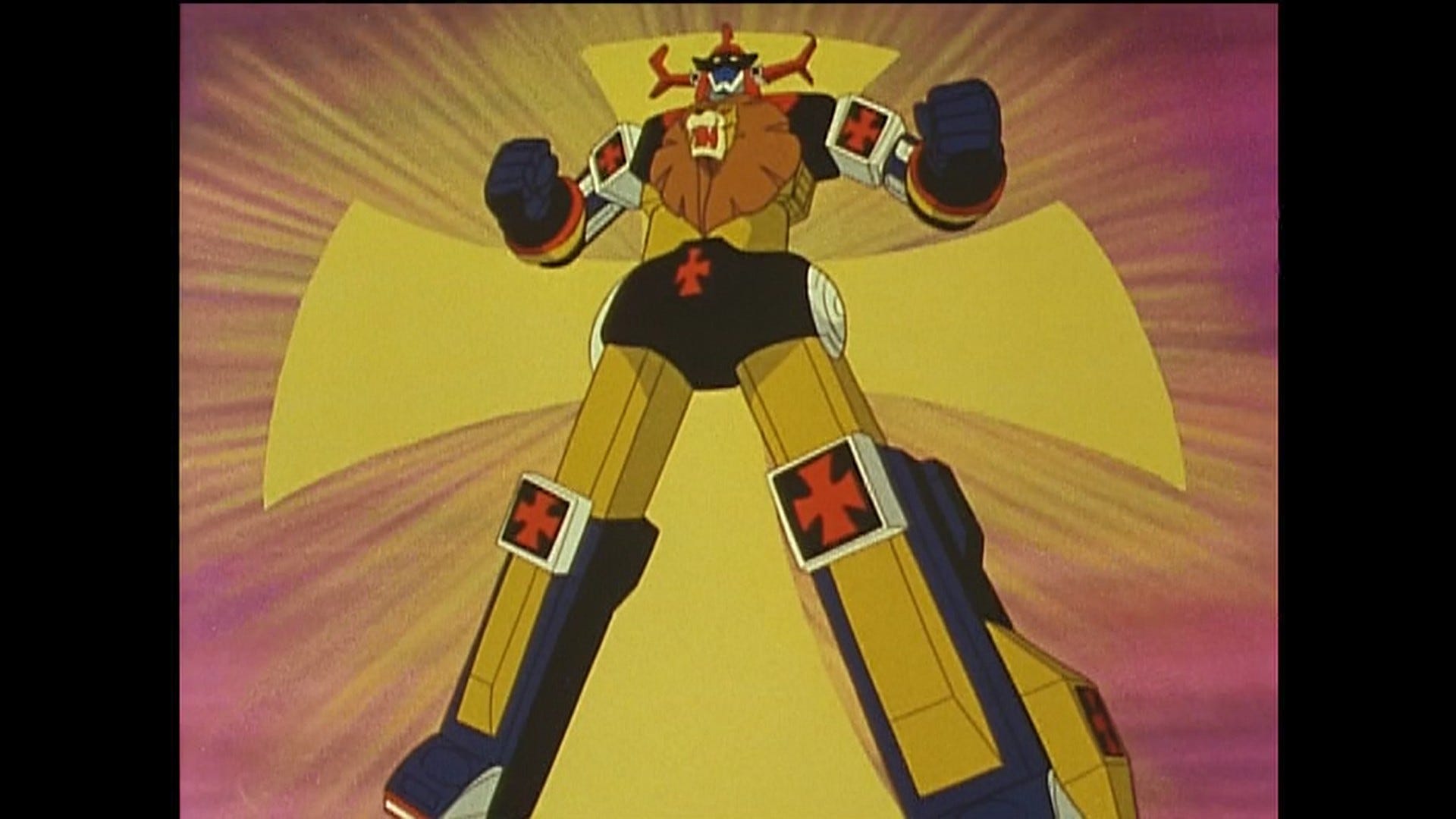
The world of Daltanious juxtaposed happy-go-lucky children who had grown up amidst the ruins with serious adults who remembered the world they had lost … or were alien soldiers.
In the first episode, an insect-headed Zarl commander was executed on camera for cowardice by Nova, the pet black panther …
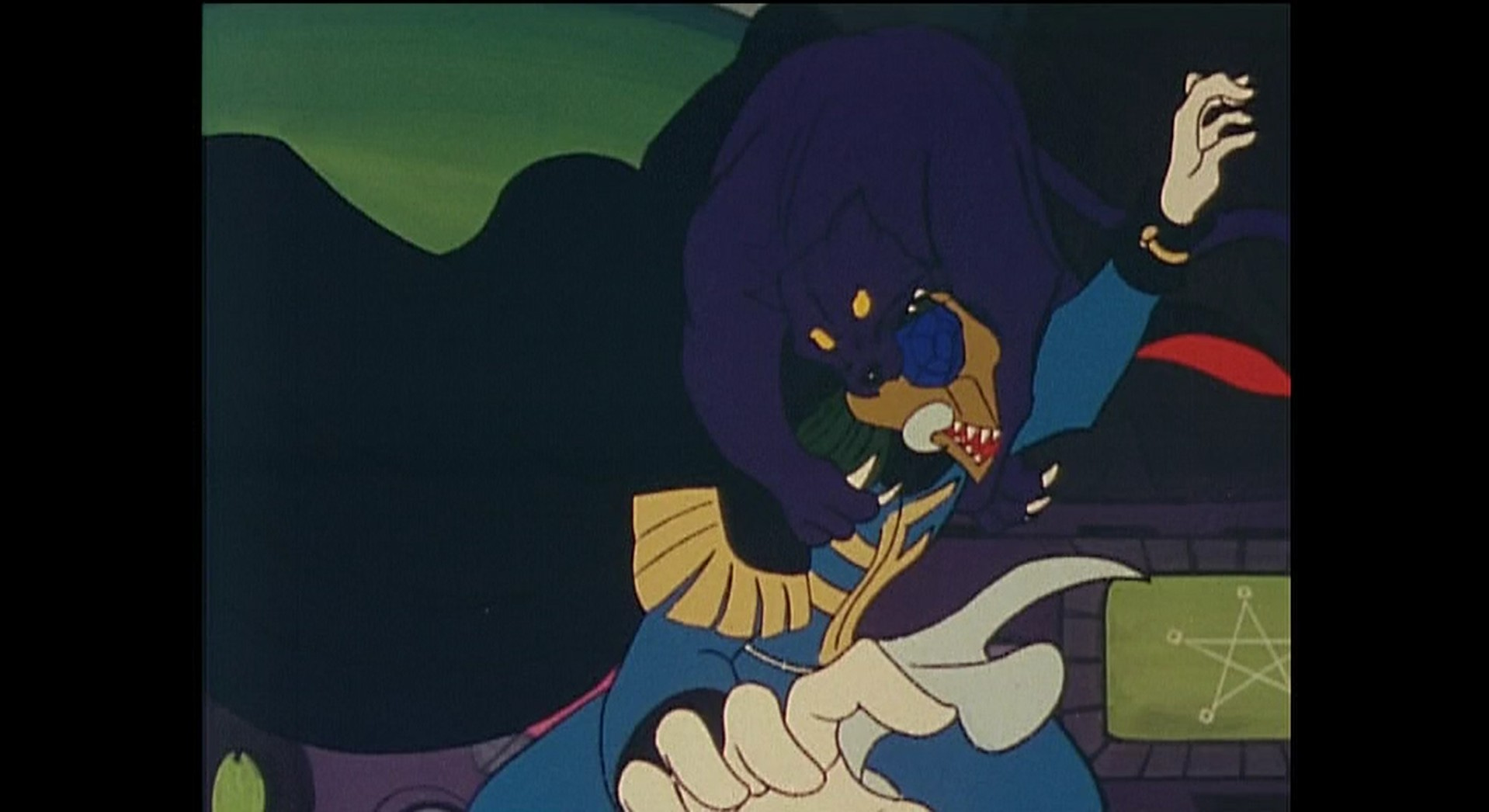
… of Supreme Commander Kloppen.
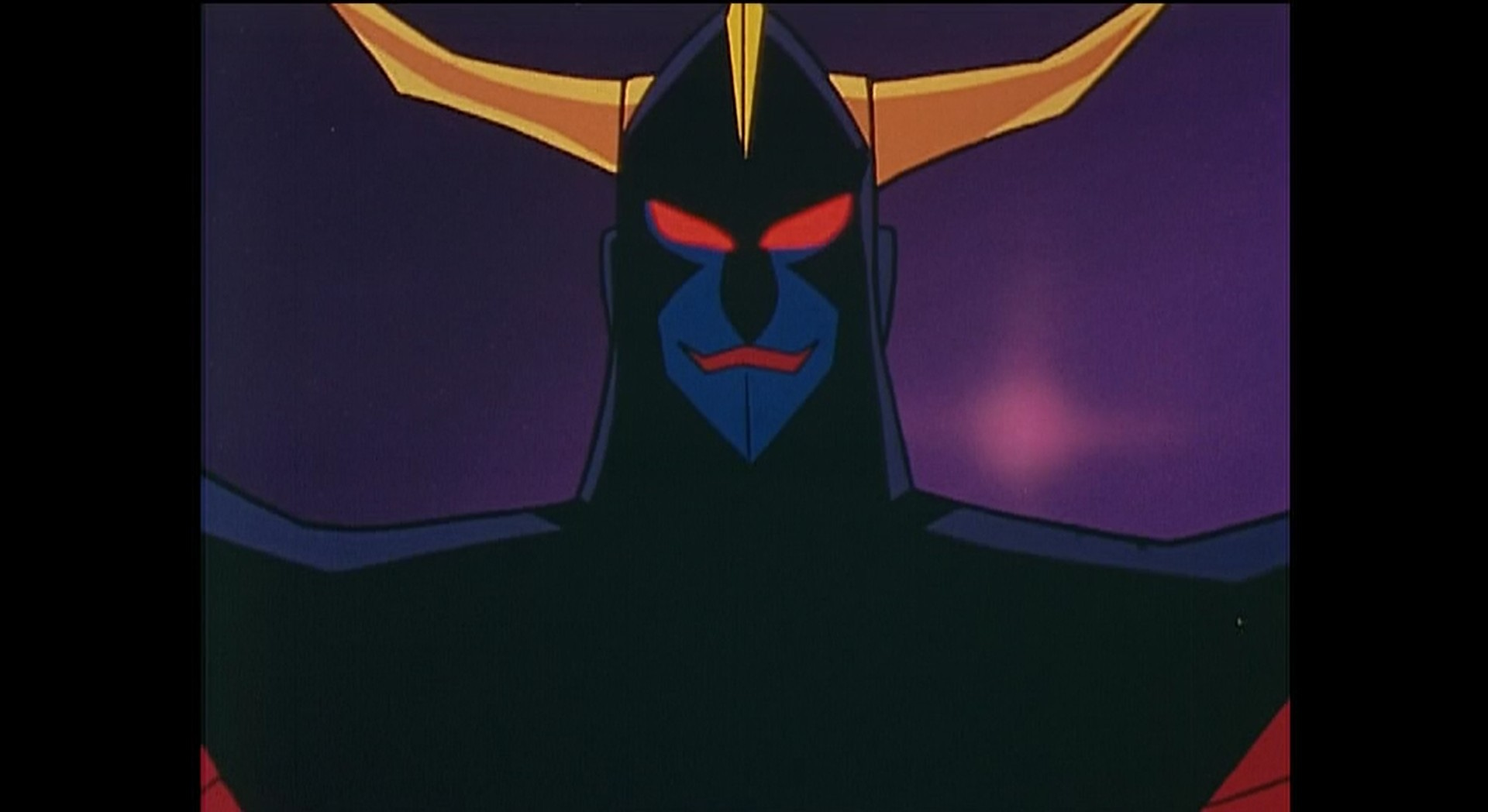
That scene established how anyone could die at any time.
Including Kloppen himself, who was actually a clone of Kento’s father Prince Harlin.
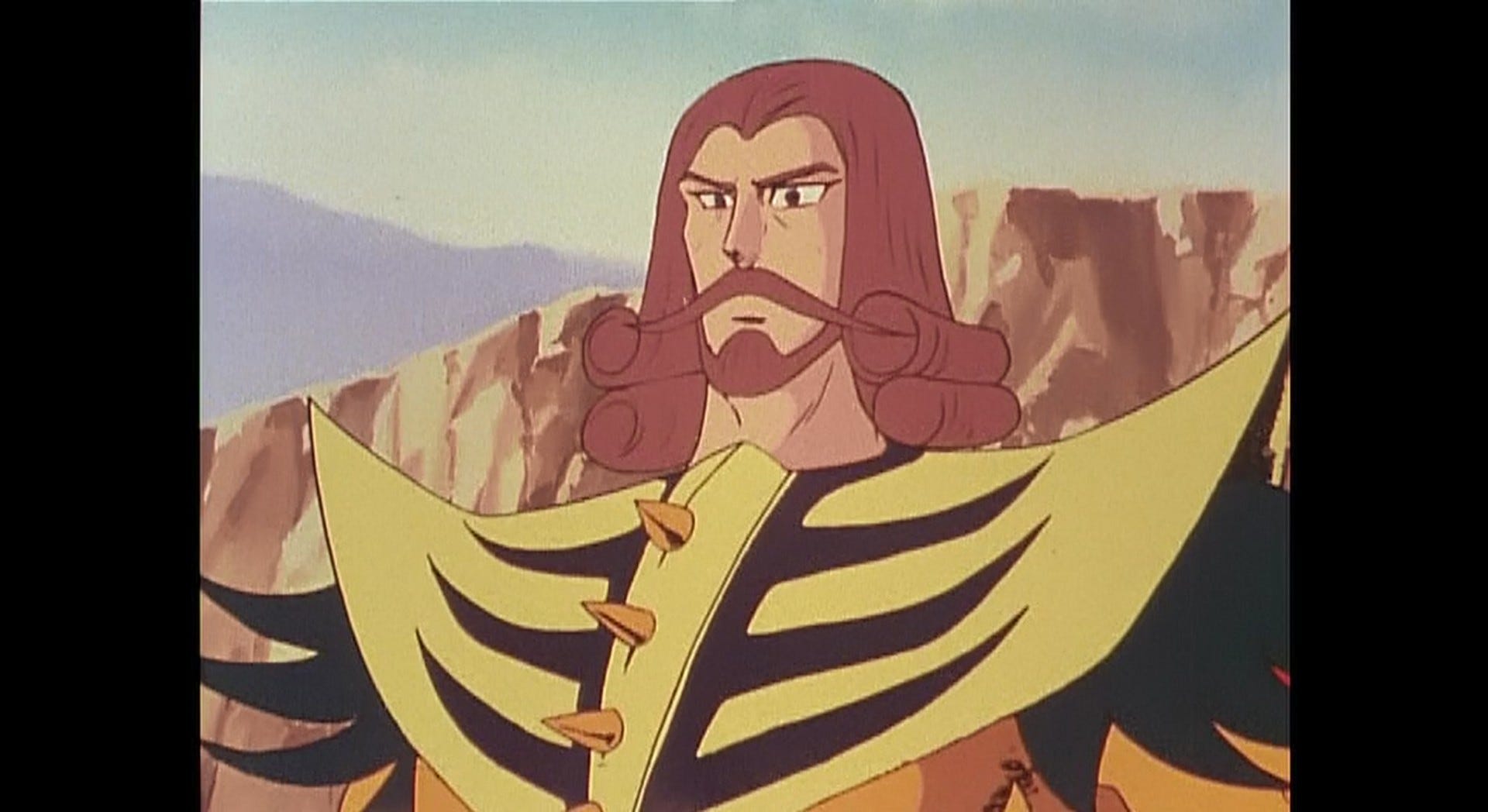
Great Emperor Dolmen of the Zarl Interstellar Empire was a clone of Harlin’s father and Kento’s late grandfather, Emperor Palmion of the Elios Empire.
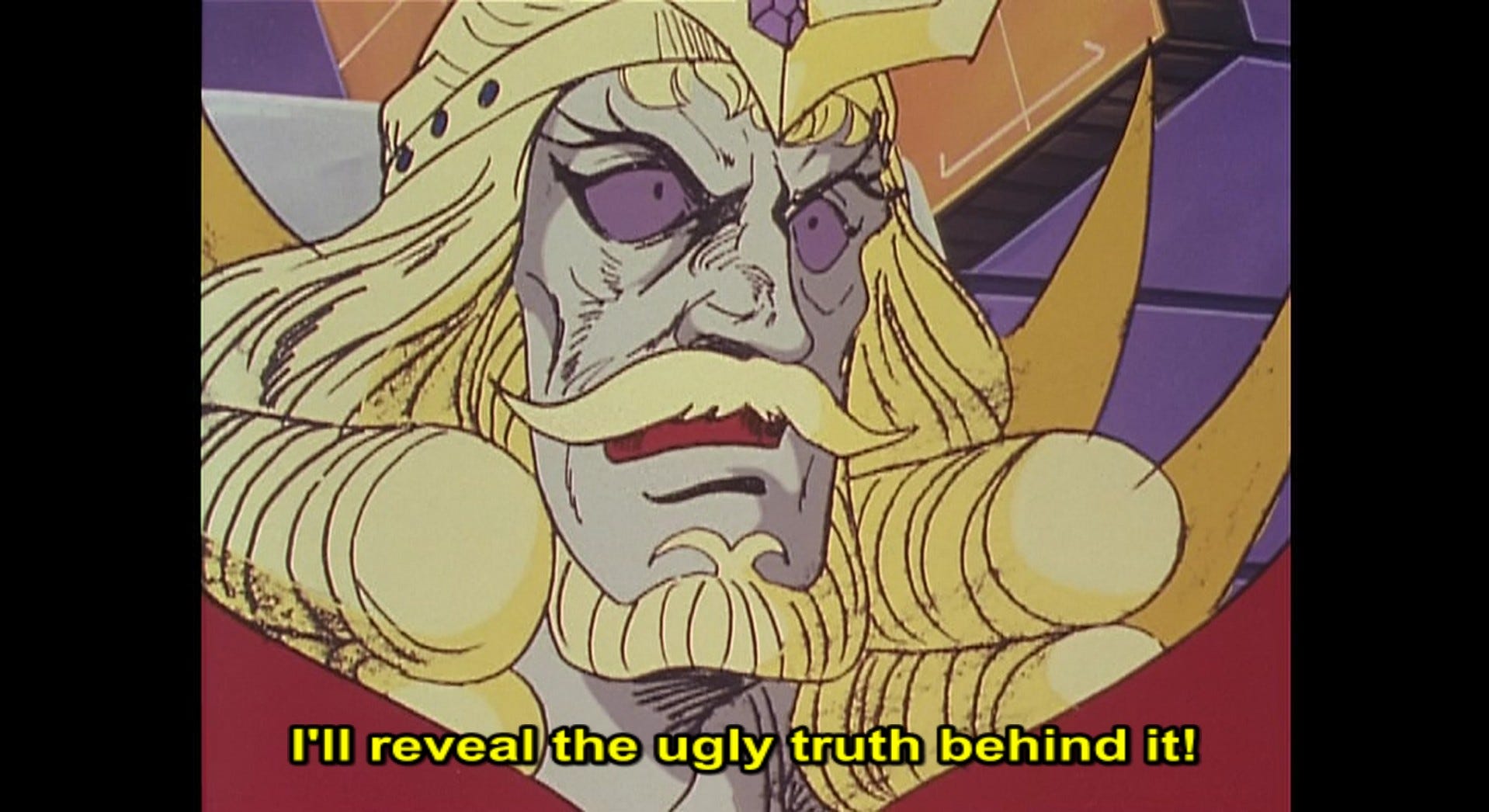
Hints earlier in the series pointed toward Dolmen’s final revelation: The Elios Empire - the ‘good guys’ - was actually depraved at the top.
Every Elios prince was cloned.
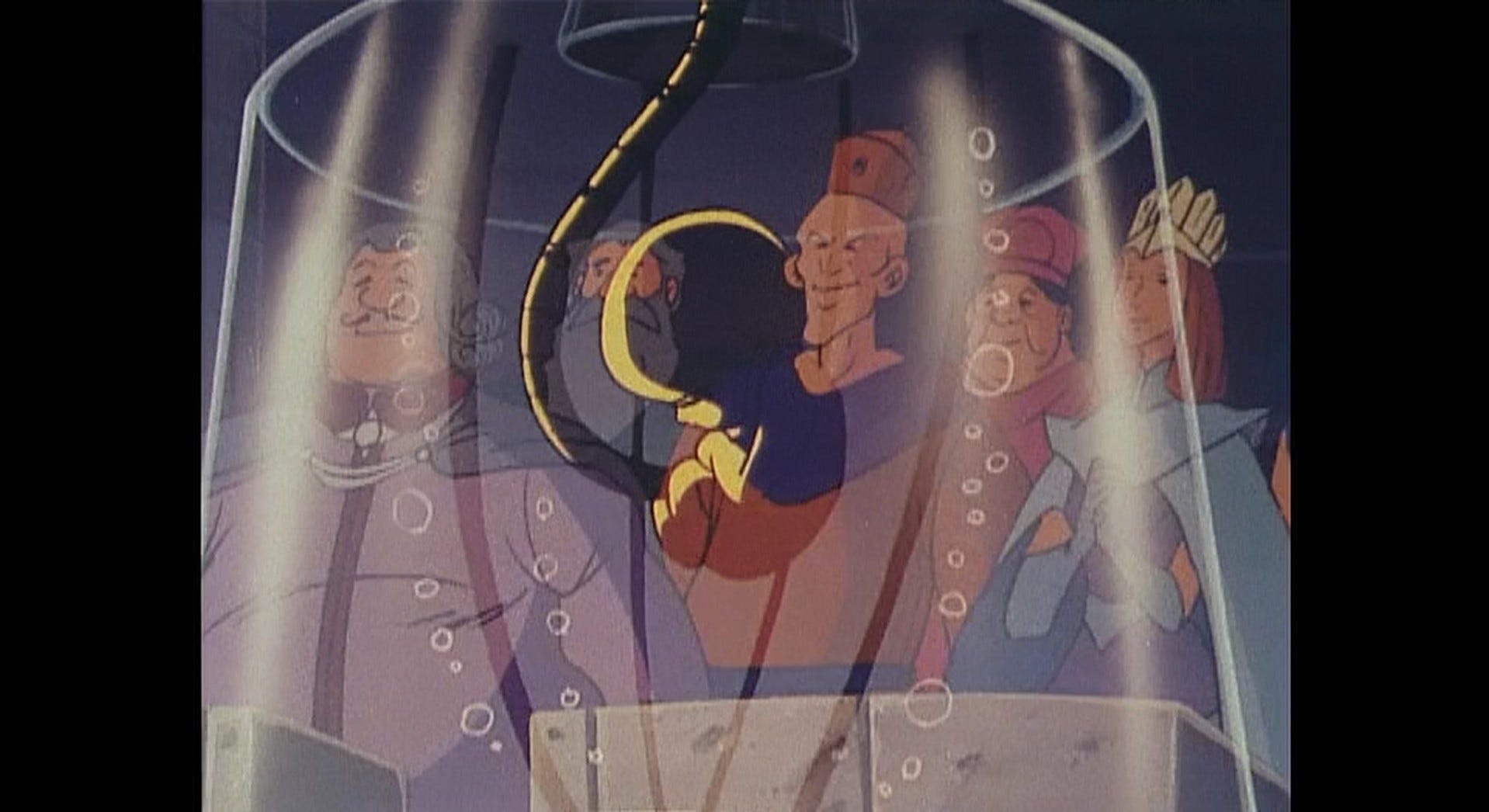
Whenever a prince …
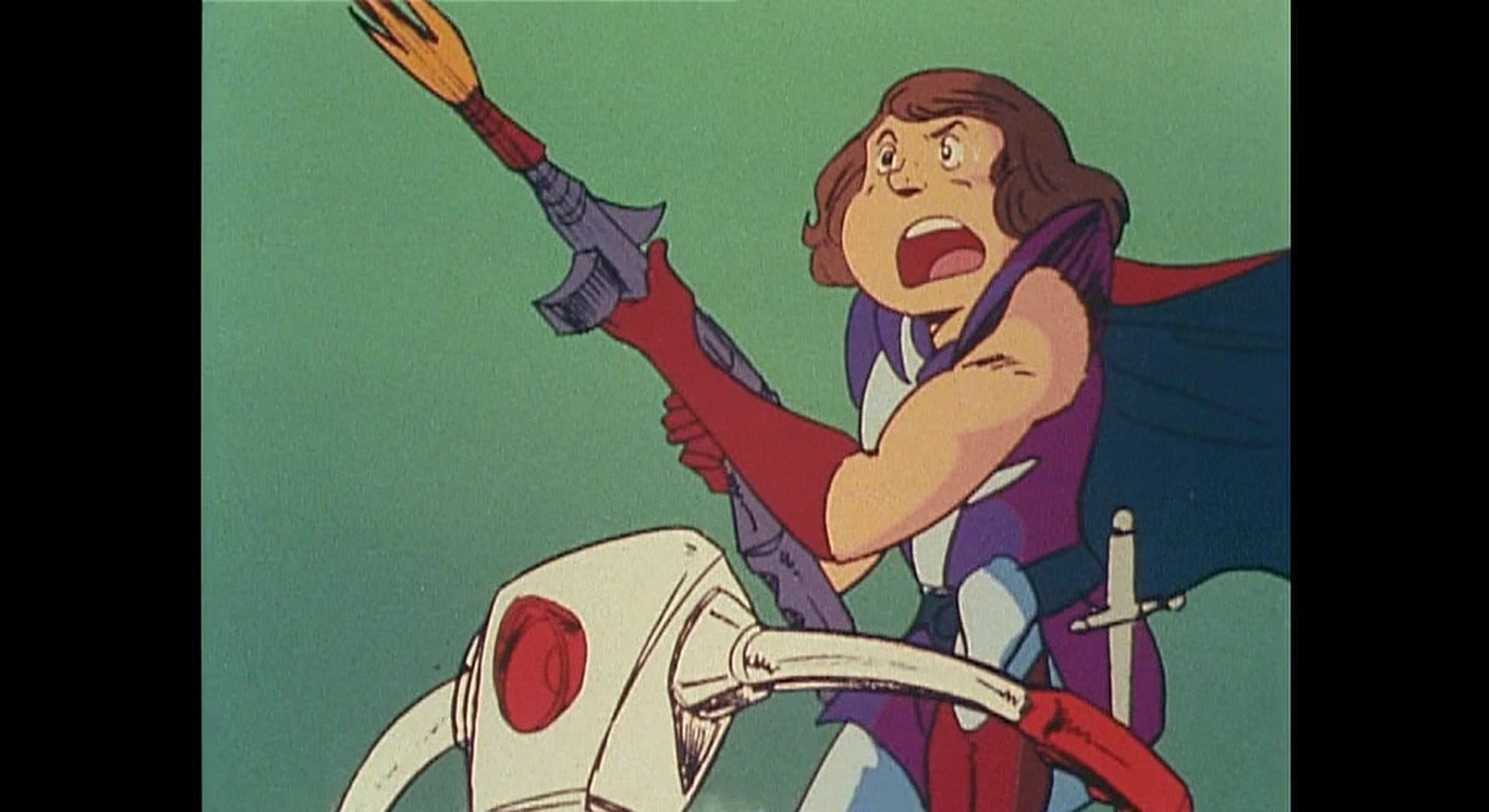
… was gravely wounded …
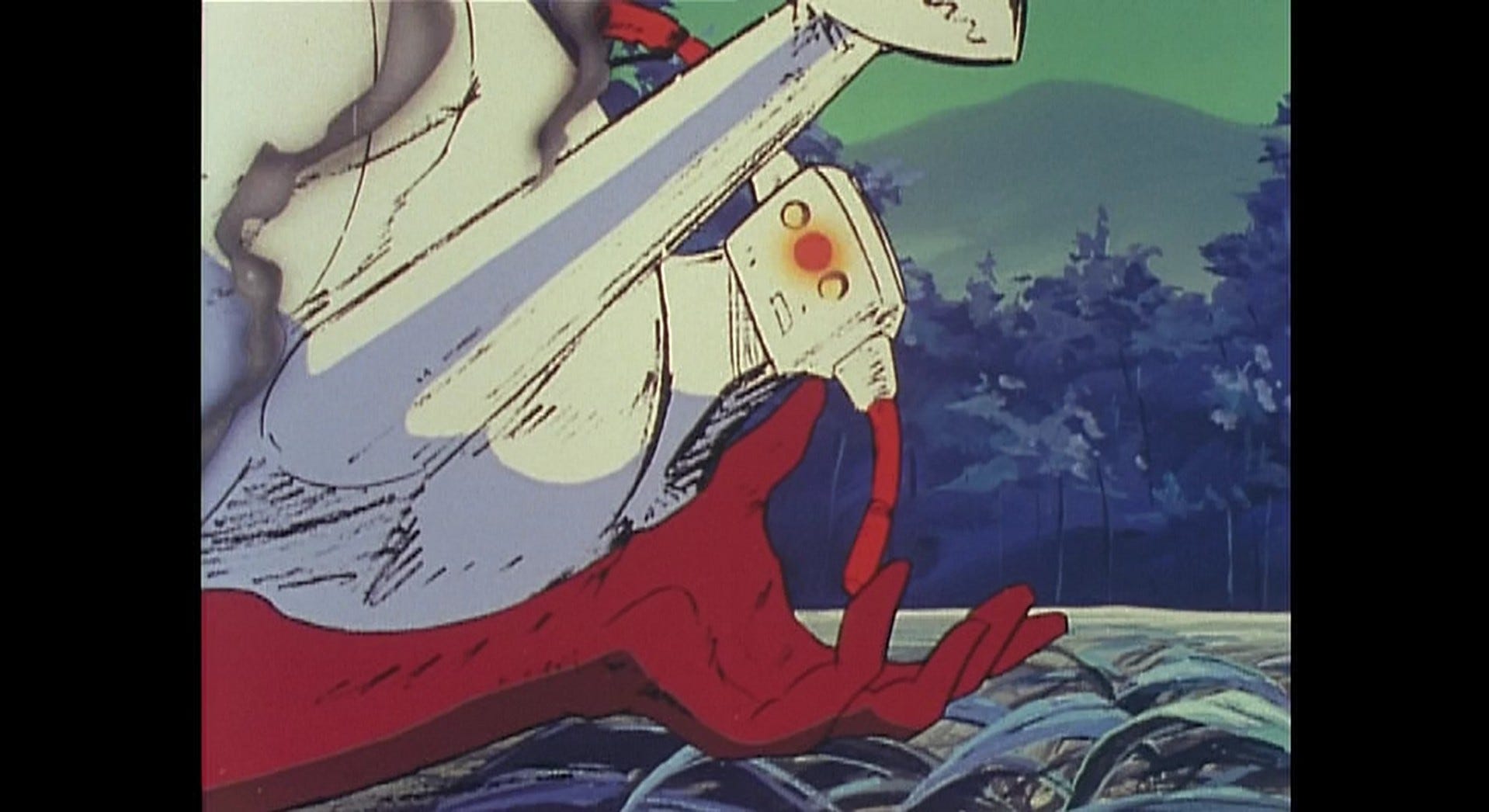
… his clone would be dragged out and carved up for spare parts.
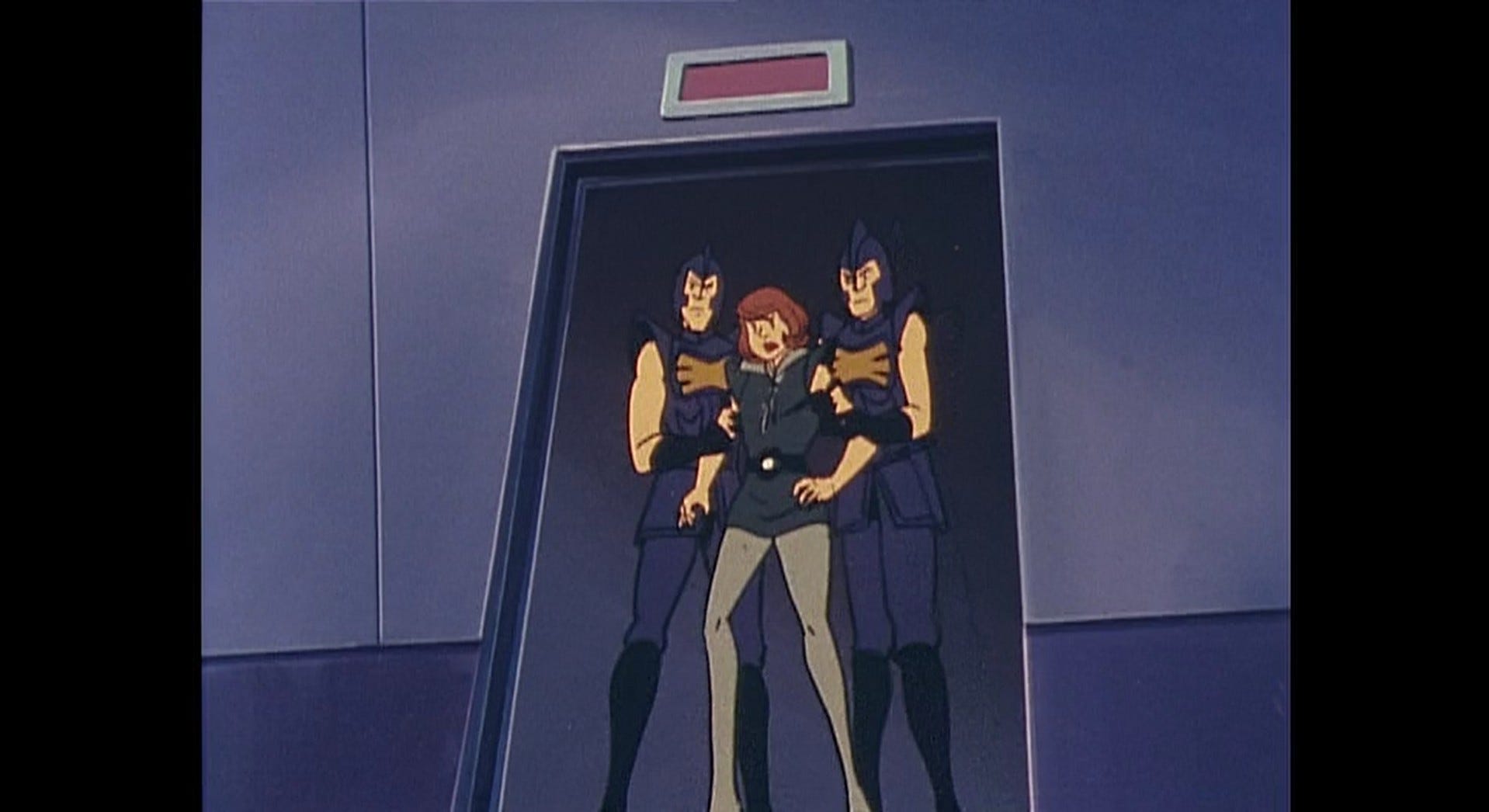
Clones had no rights.
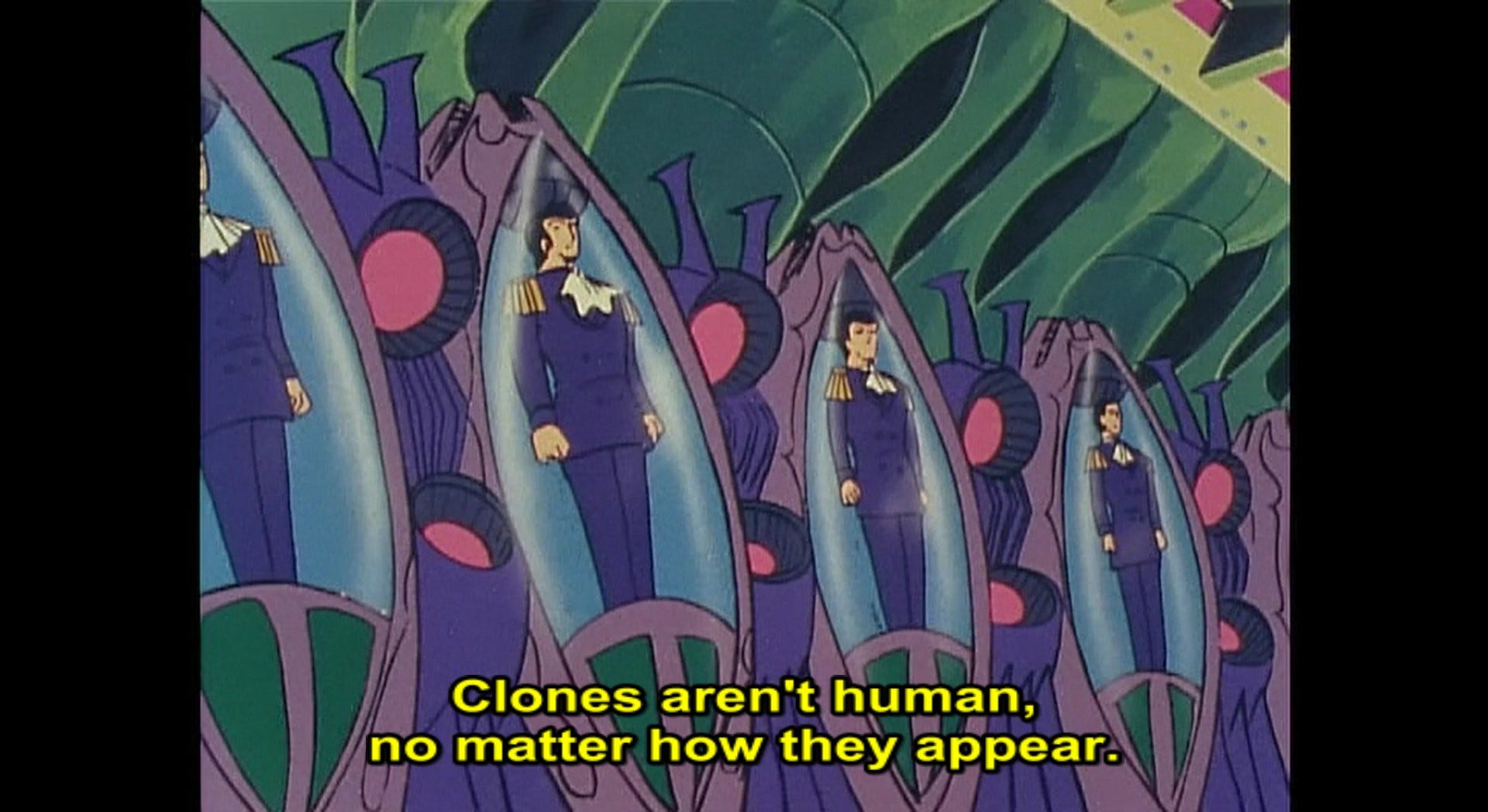
And when an Elios emperor died …
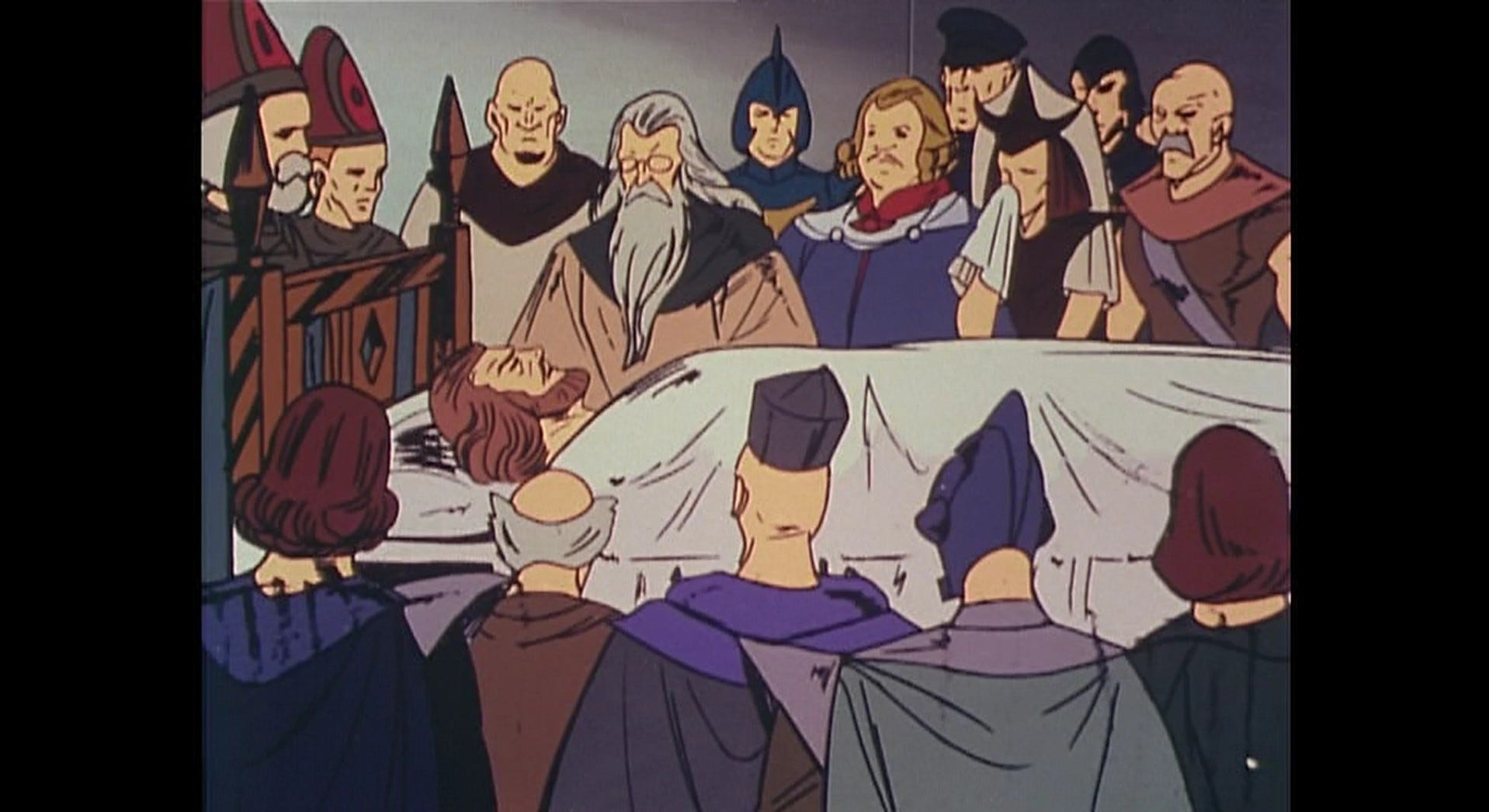
'… the men around him …
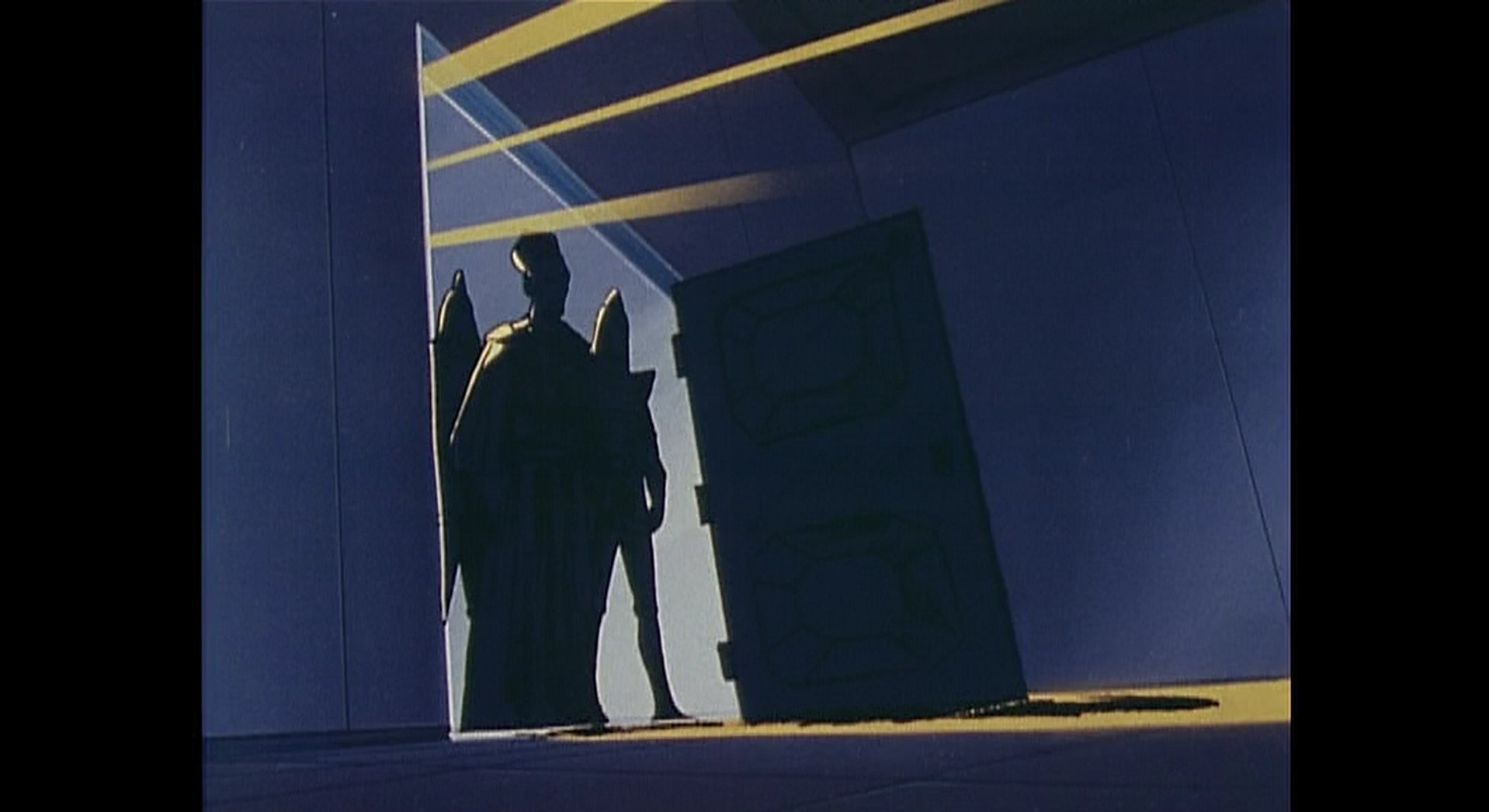
… took his clone out of captivity …
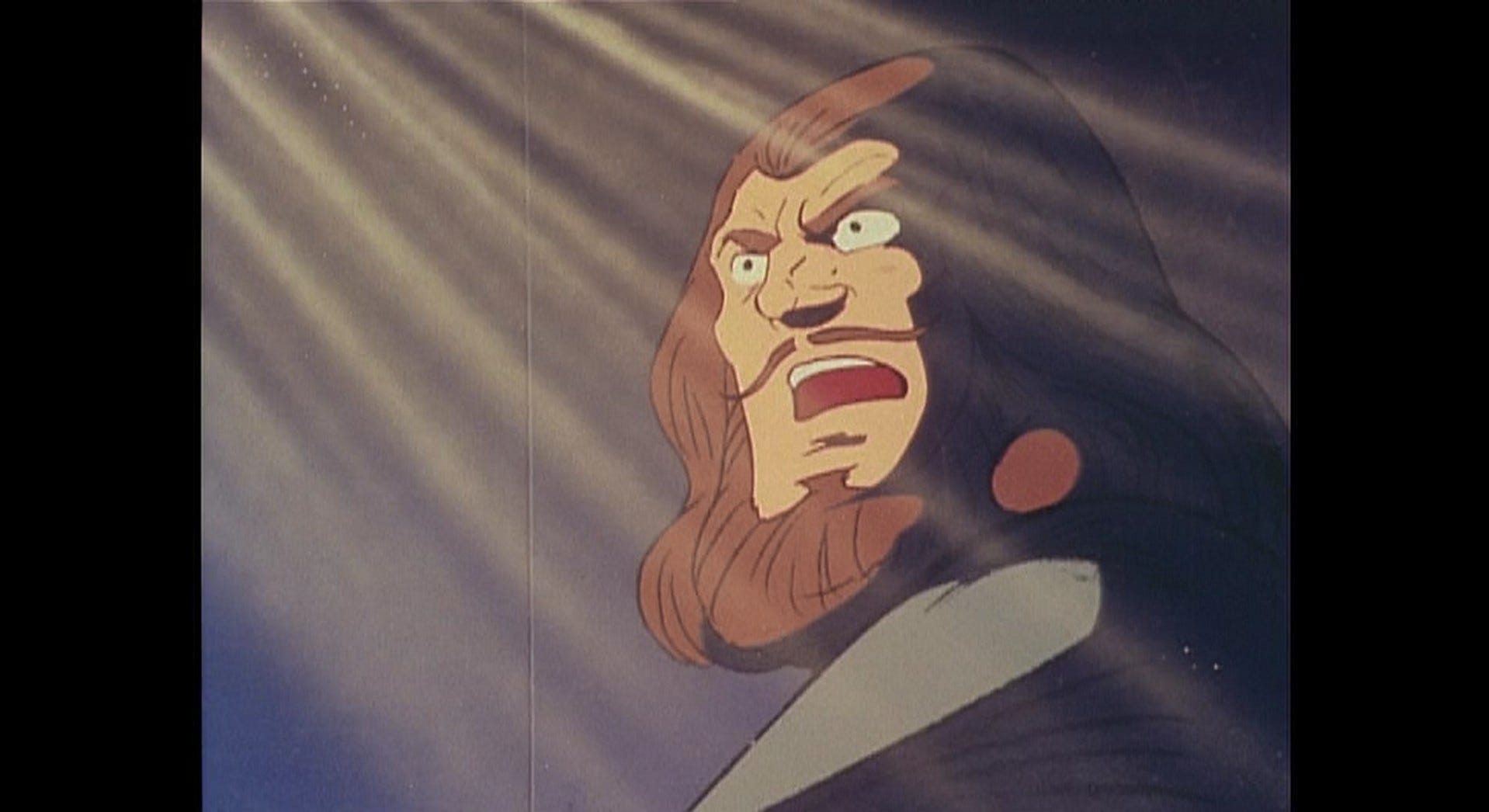
… and propped him up as a puppet ruler.
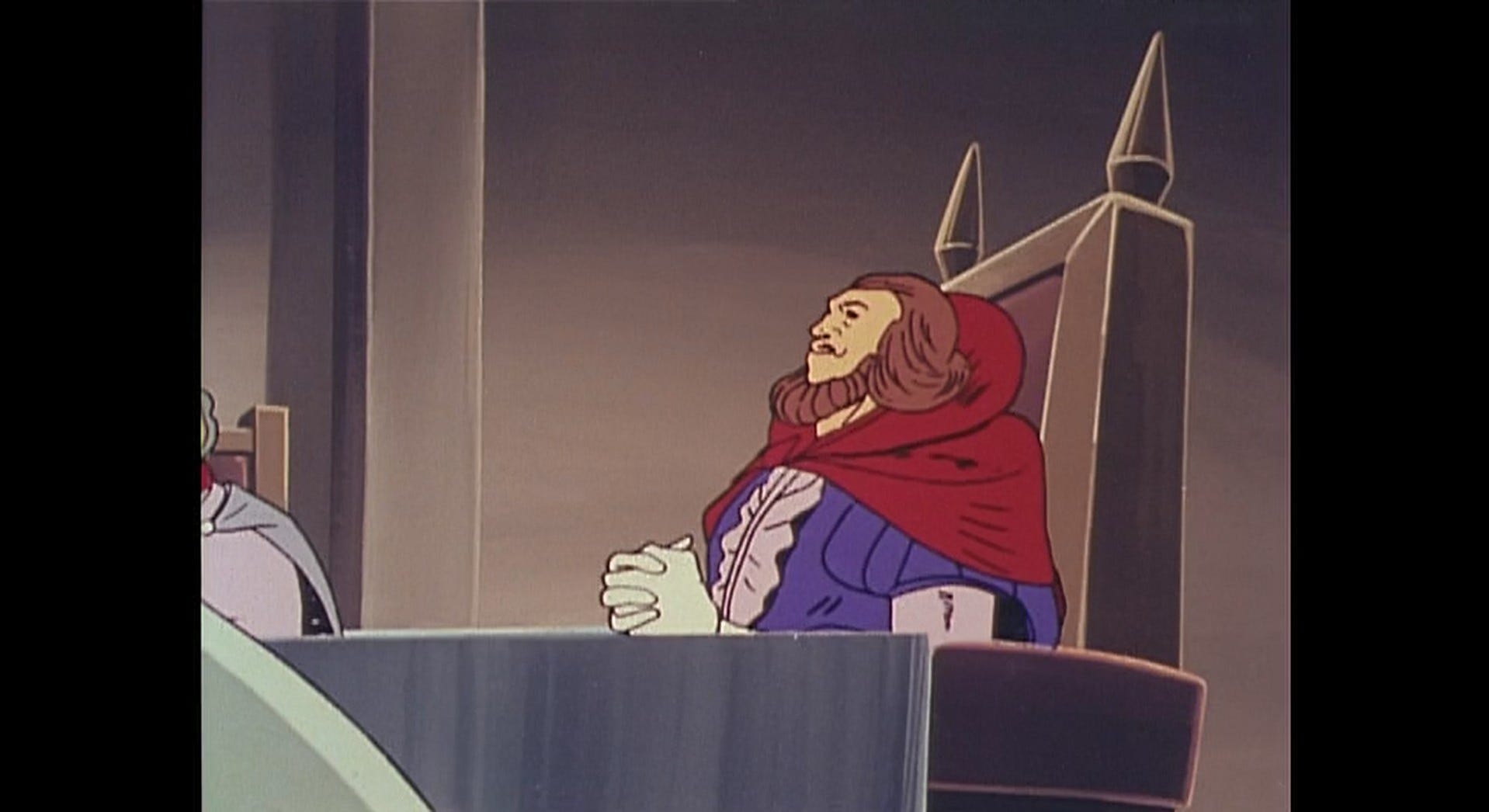
But all puppets had their own expiration dates.
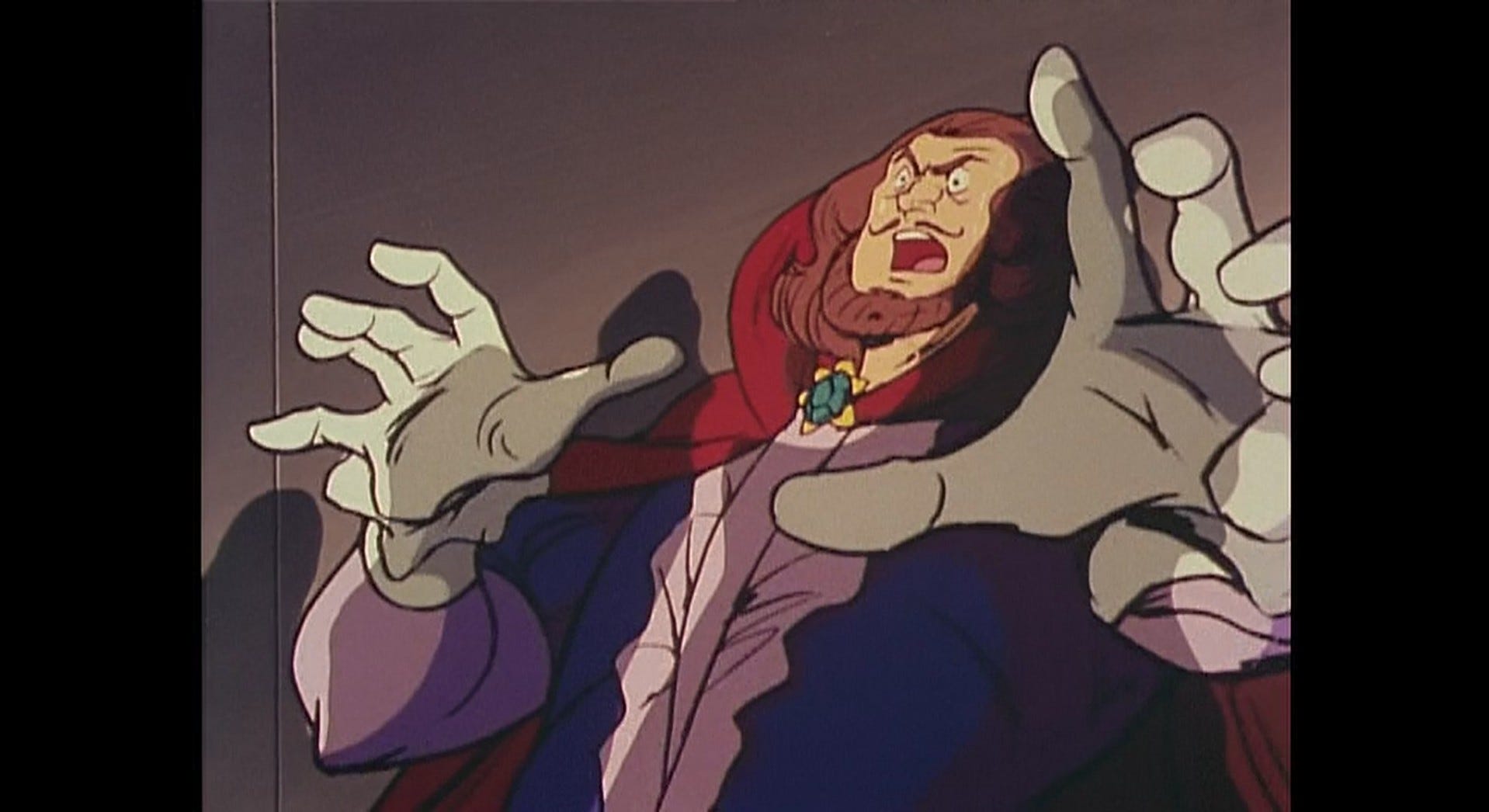
When a fake emperor was murdered … the cycle began anew.
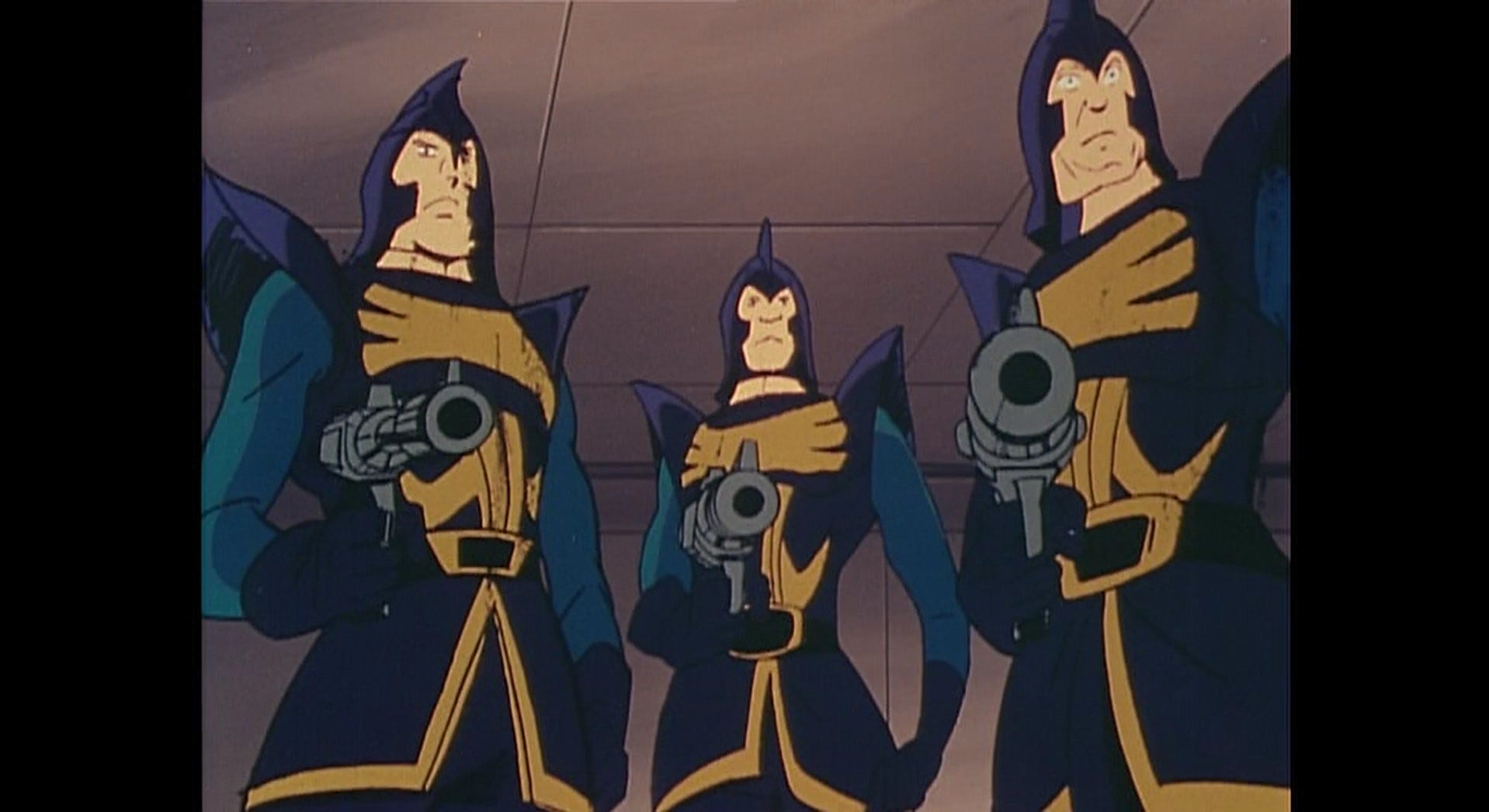
Having grown up Terran with a single mother on Earth, Kento wanted nothing to do with any of that alien insanity. After winning the final battle on the Zarl throneworld, he and his Terran friends went back to their world - ours.
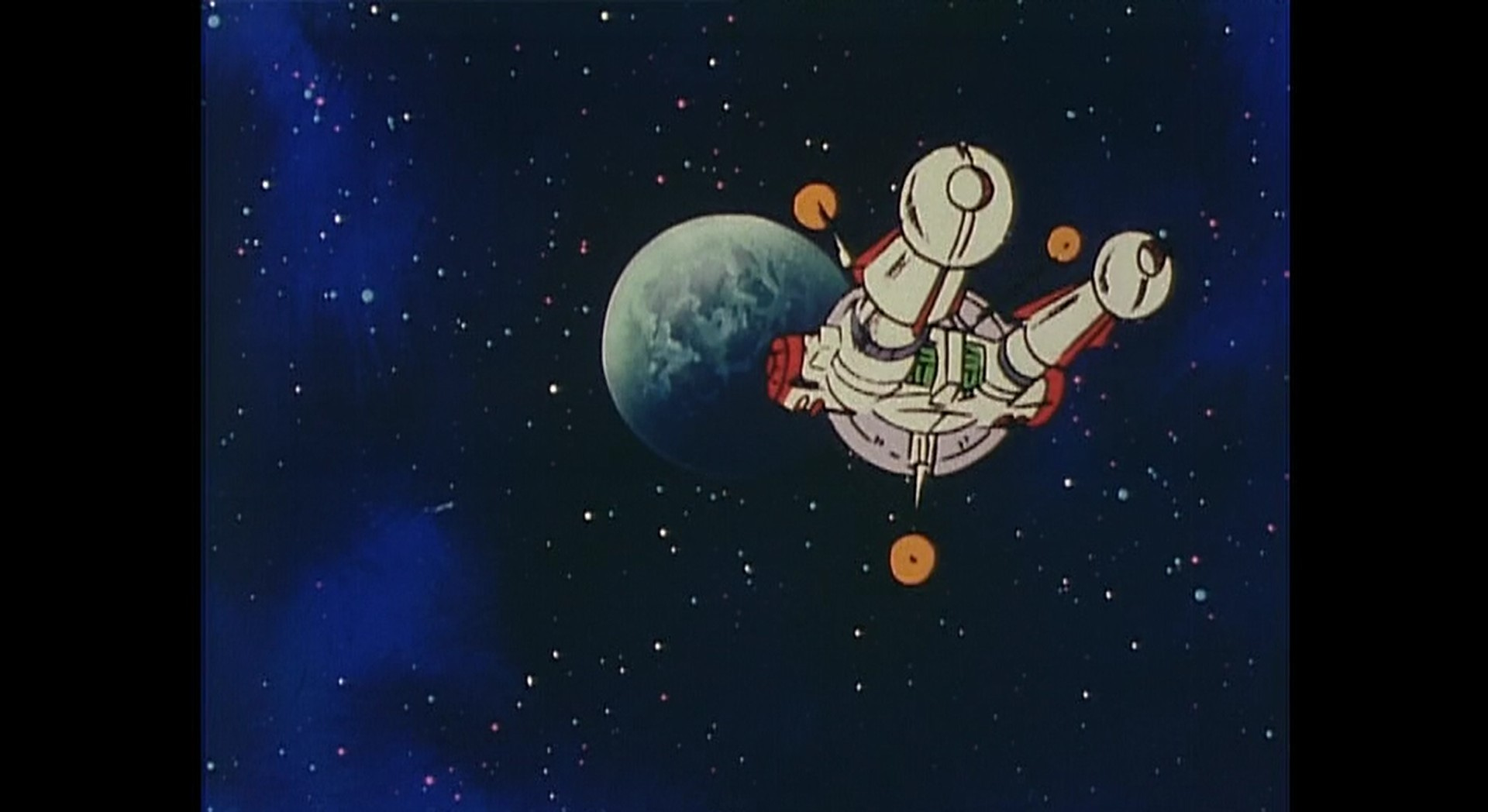
They would be happier at home.
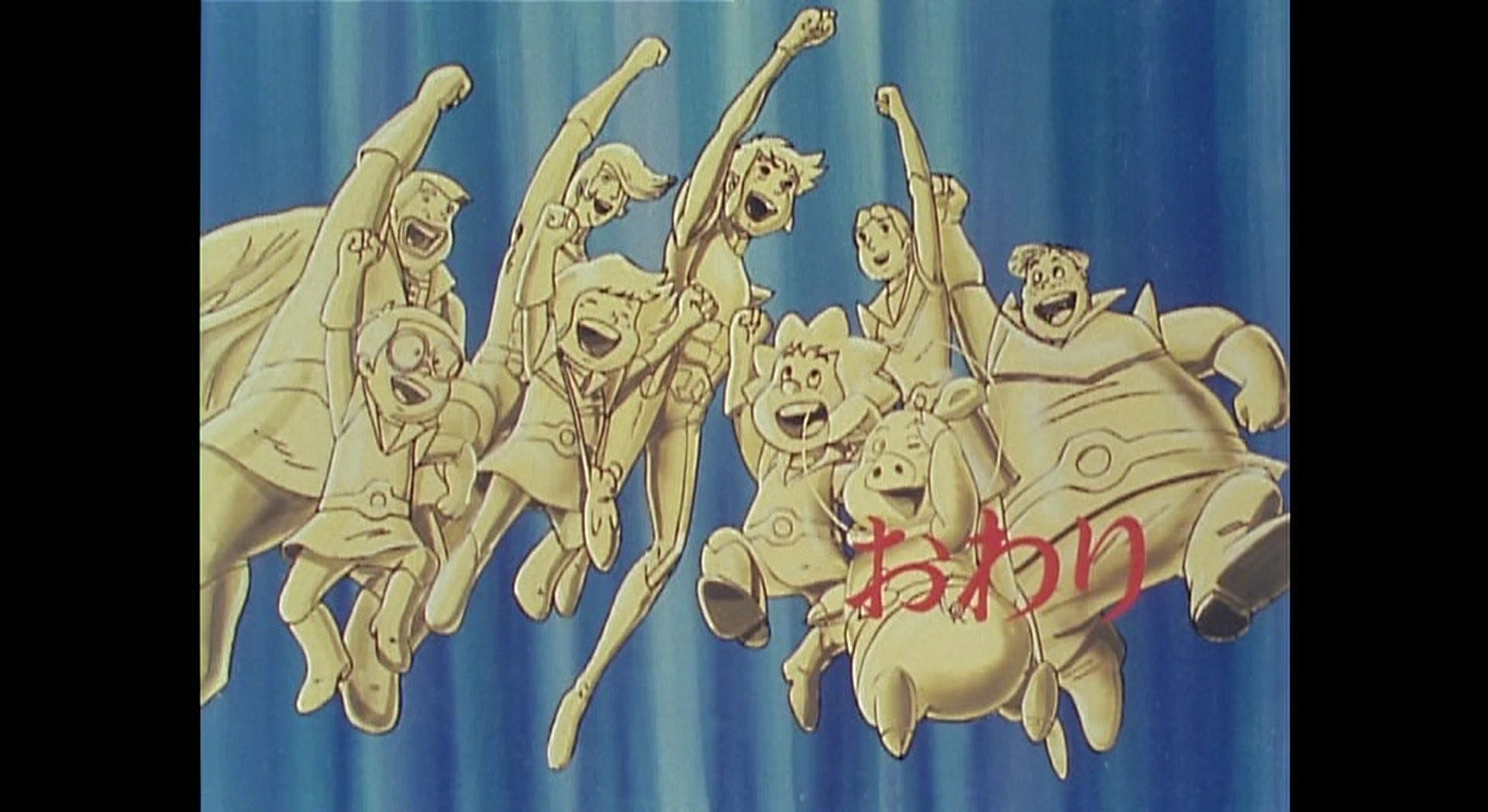
THE END
While World Events did heavily carve up Golion and Dairugger XV to fit the strict standards of American children’s television in the mid-eighties, there was no way a show set in a war-torn foreign country was going to fly, much less a show in which the ‘good guys’ weren’t really so good and which the ‘bad guys’ turned out to be the victims of the good guys. The Zarl Interstellar Empire was the revenge of the clones against their Elios originals.
The show that Toei produced between Daltanious and Golion for Tokyo Channel 12’s Wednesday 7:30 PM giant robot timeslot would also be impossible to Americanize.
Great Space Emperor Godsigma (1980-1981)
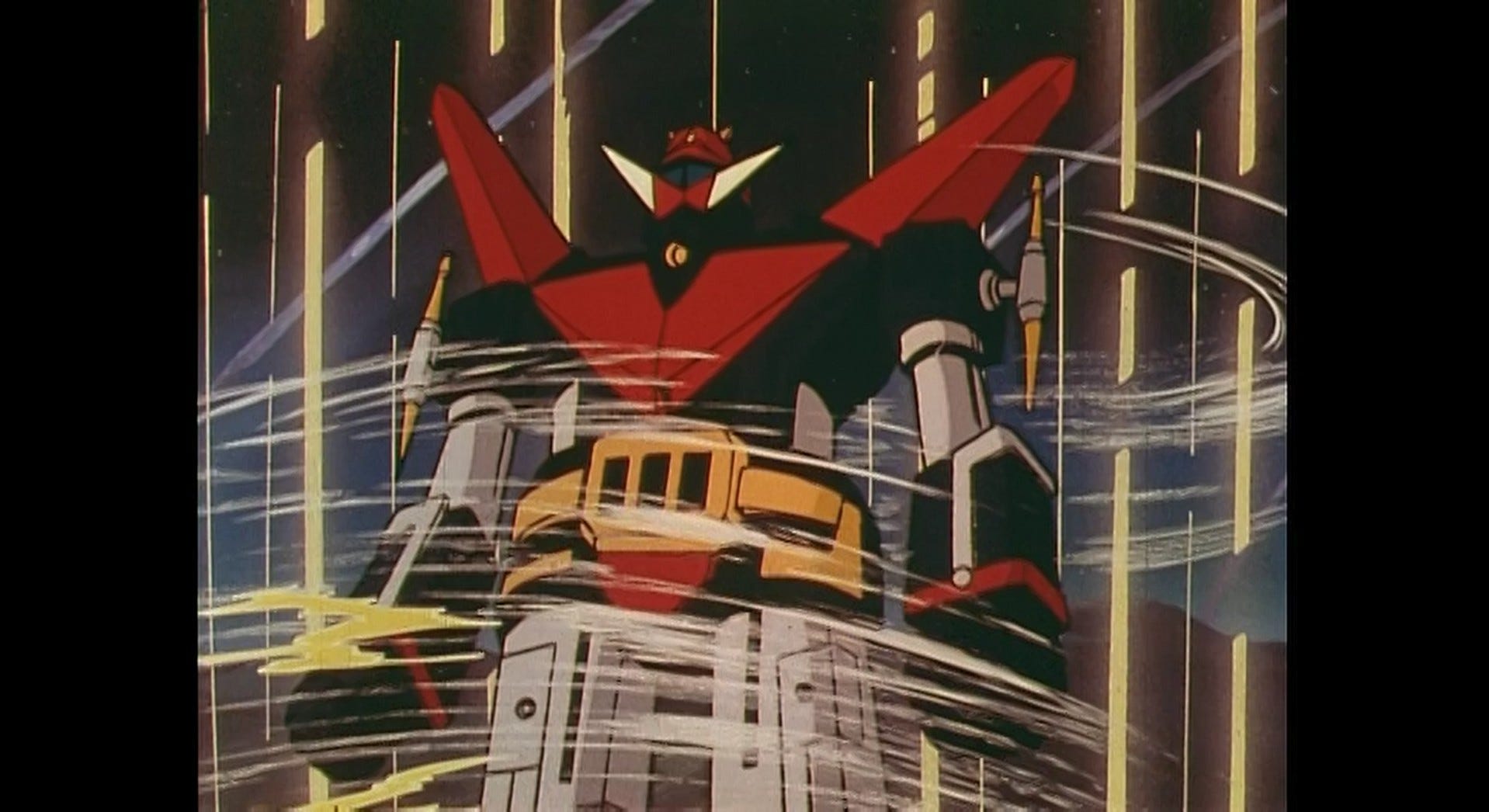
Three robots - Sky Thunder King (black and red; center), Sea Roar King (blue; left), and Land Quake King (yellow, right) …
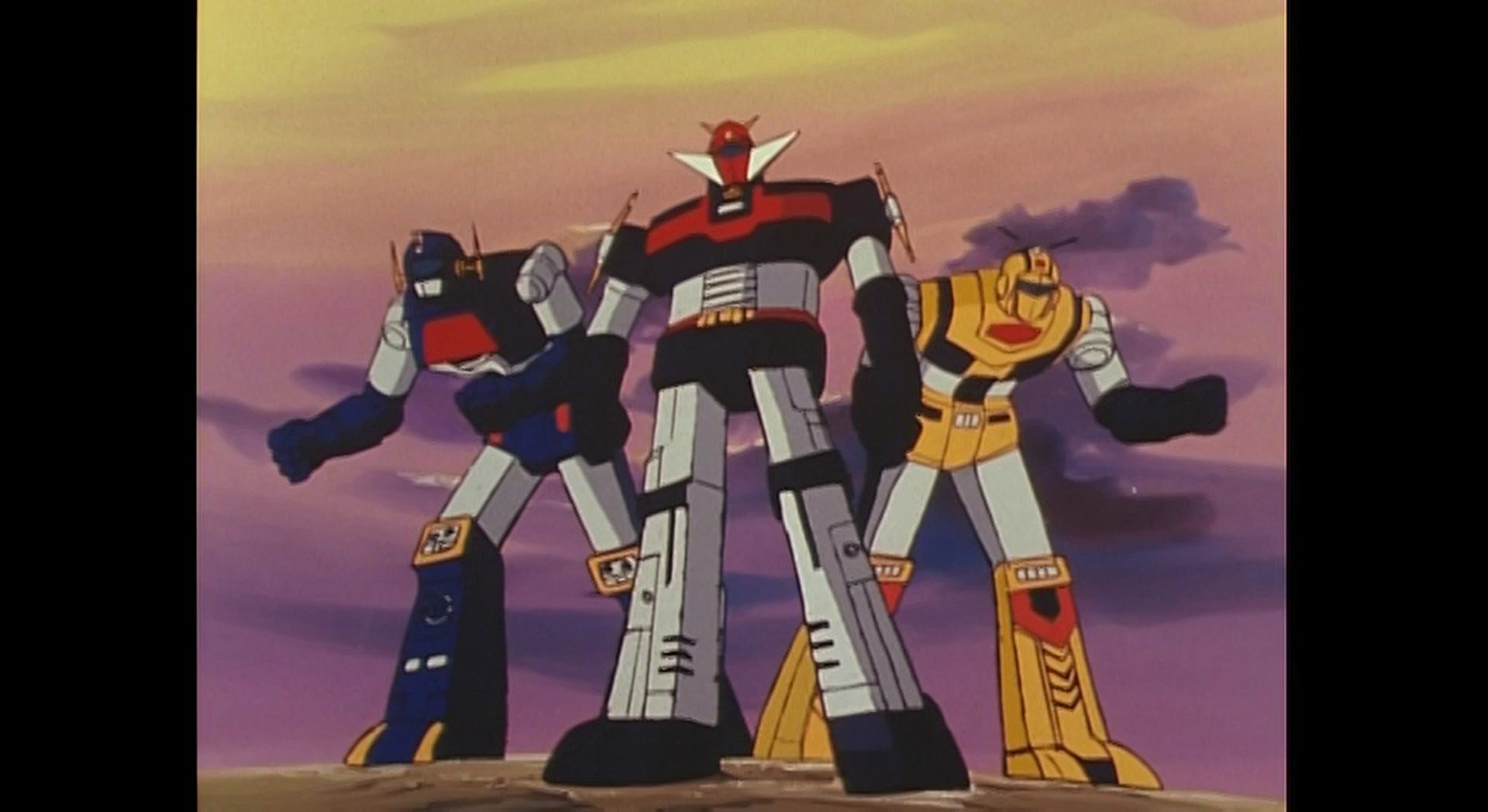
… combined together …
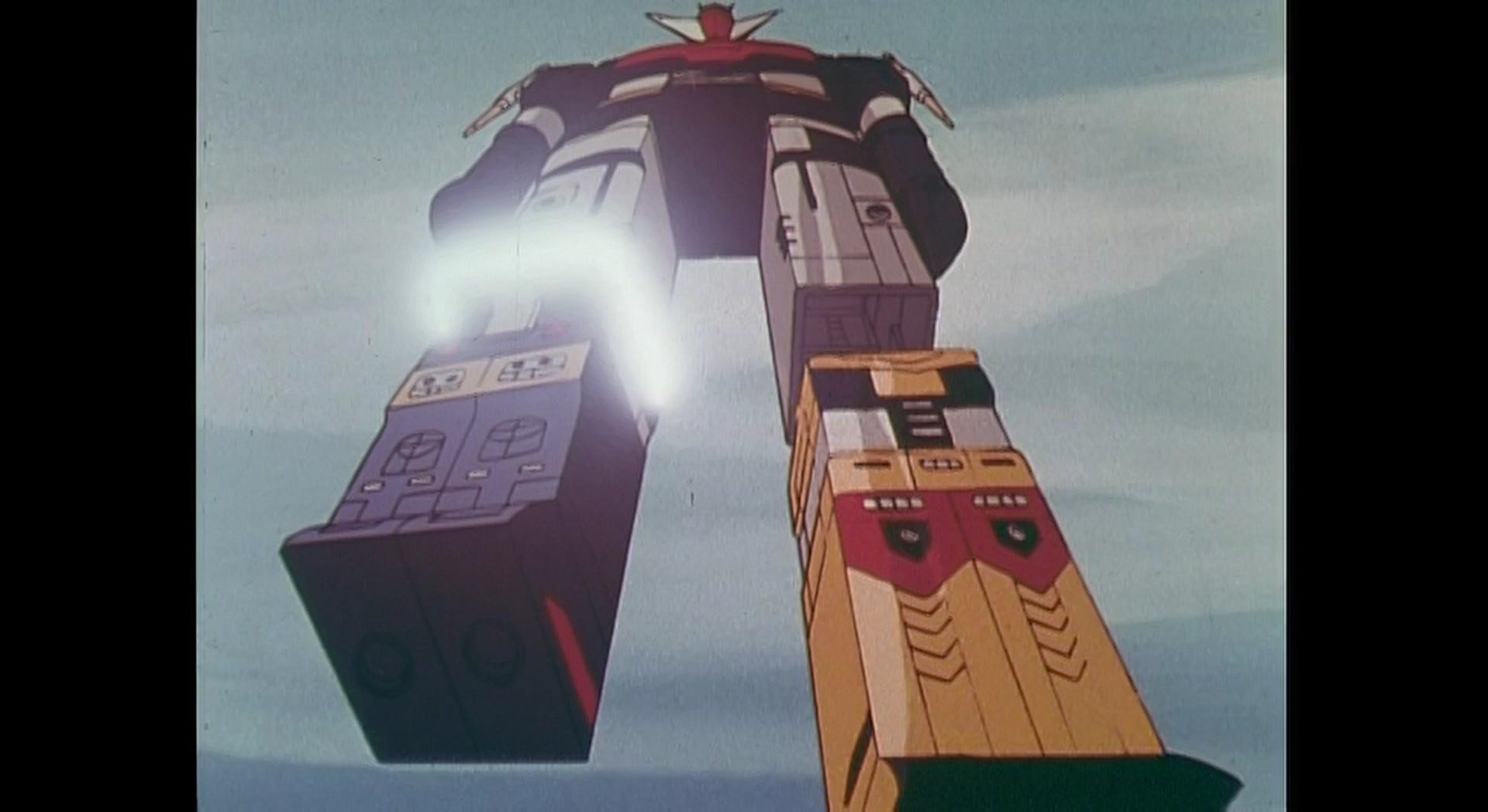
… with the self-explanatory Big Wing …
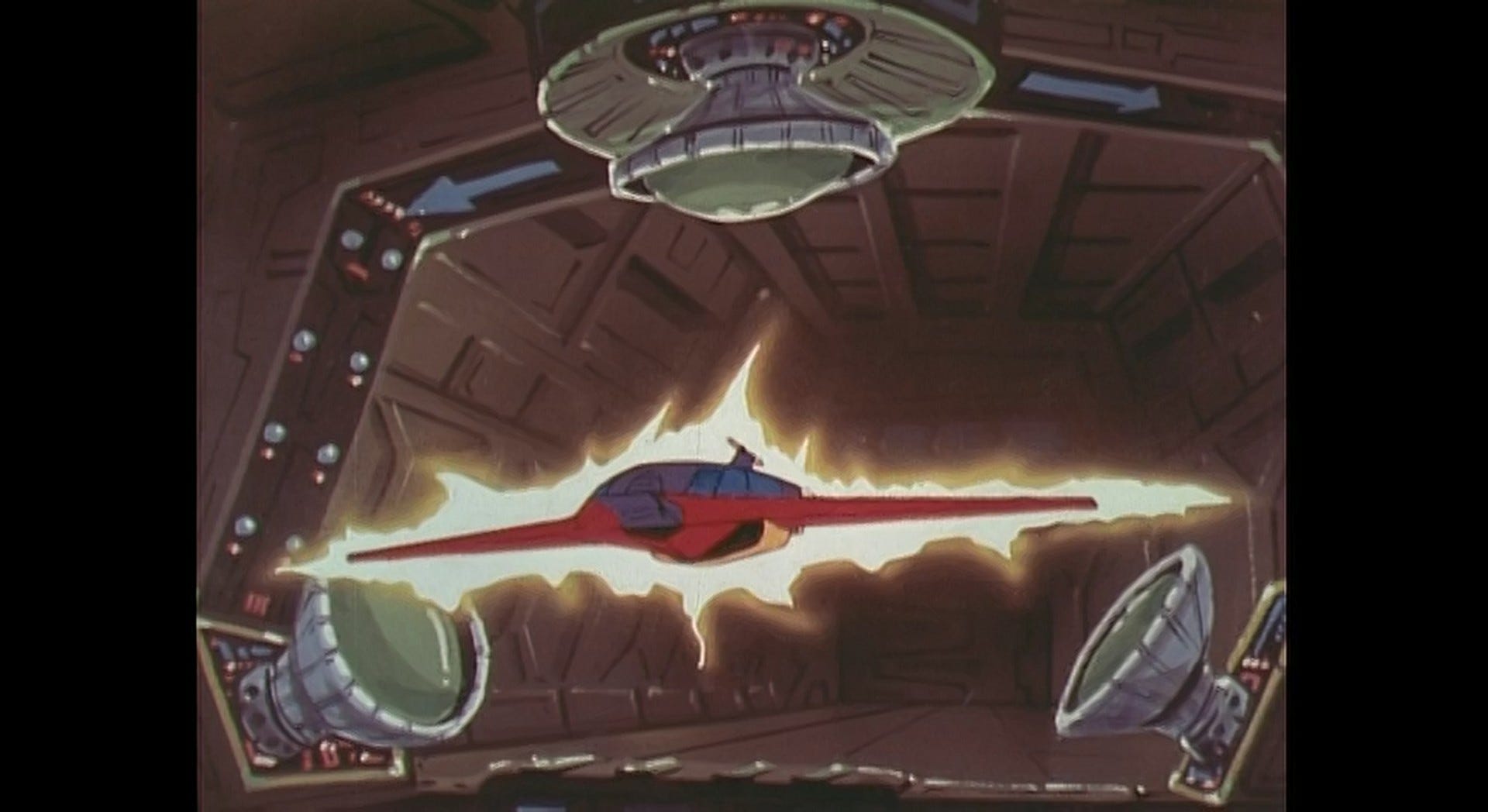
… that formed the vest and wings of the even bigger Godsigma, powered by Trinity Energy.
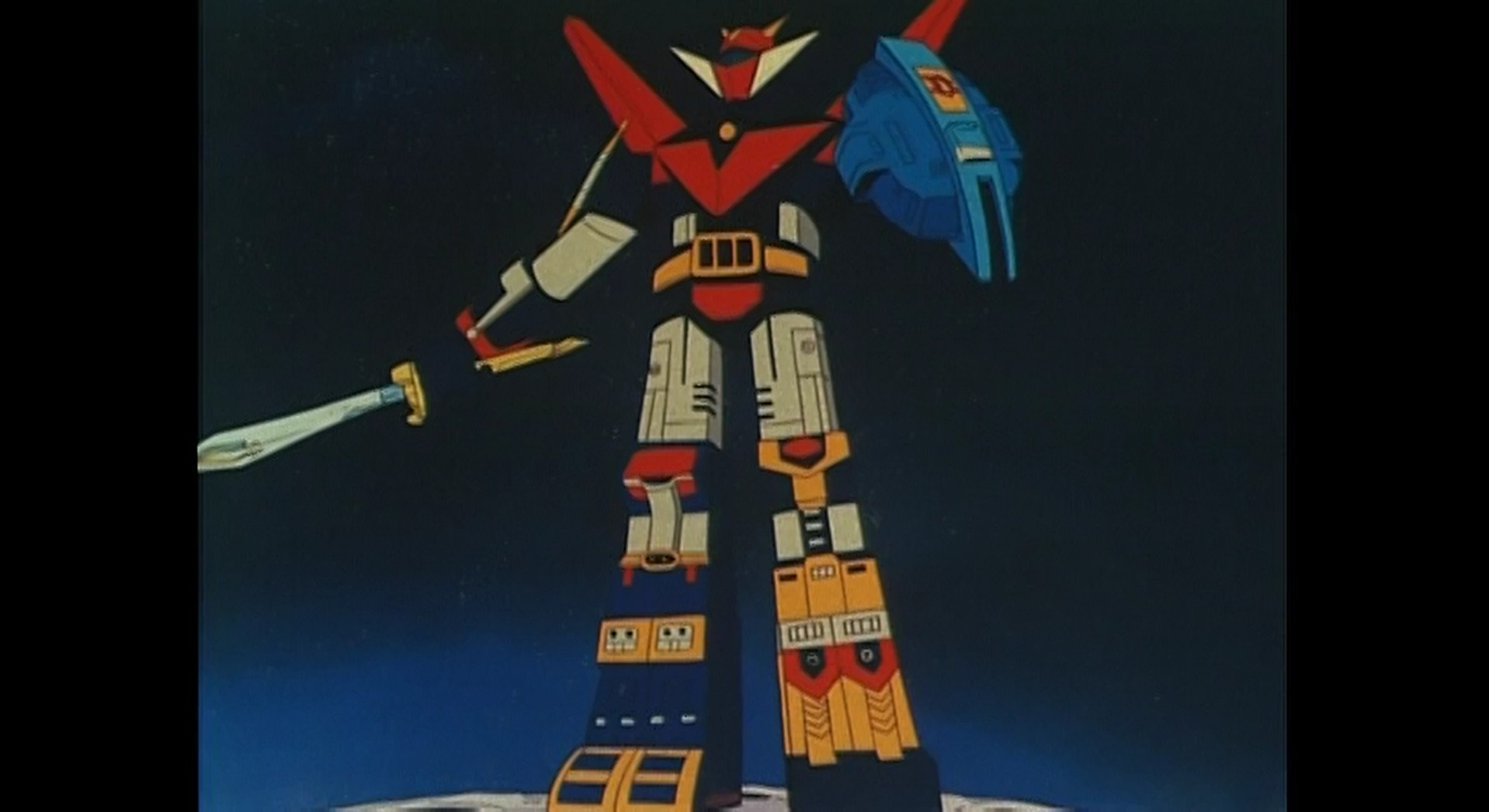
The Earth of Godsigma’s 2050 was a happier place than the hellscape of Daltanious’ 1995. The alien Eldar Empire couldn’t wreak havoc on a planetary scale because it had only sent a small force to attack Earth.
It had no choice. Eldarian Supreme Commander Teral - a woman in a replica of her effeminate dead boyfriend’s body (! - long story) - explained why.
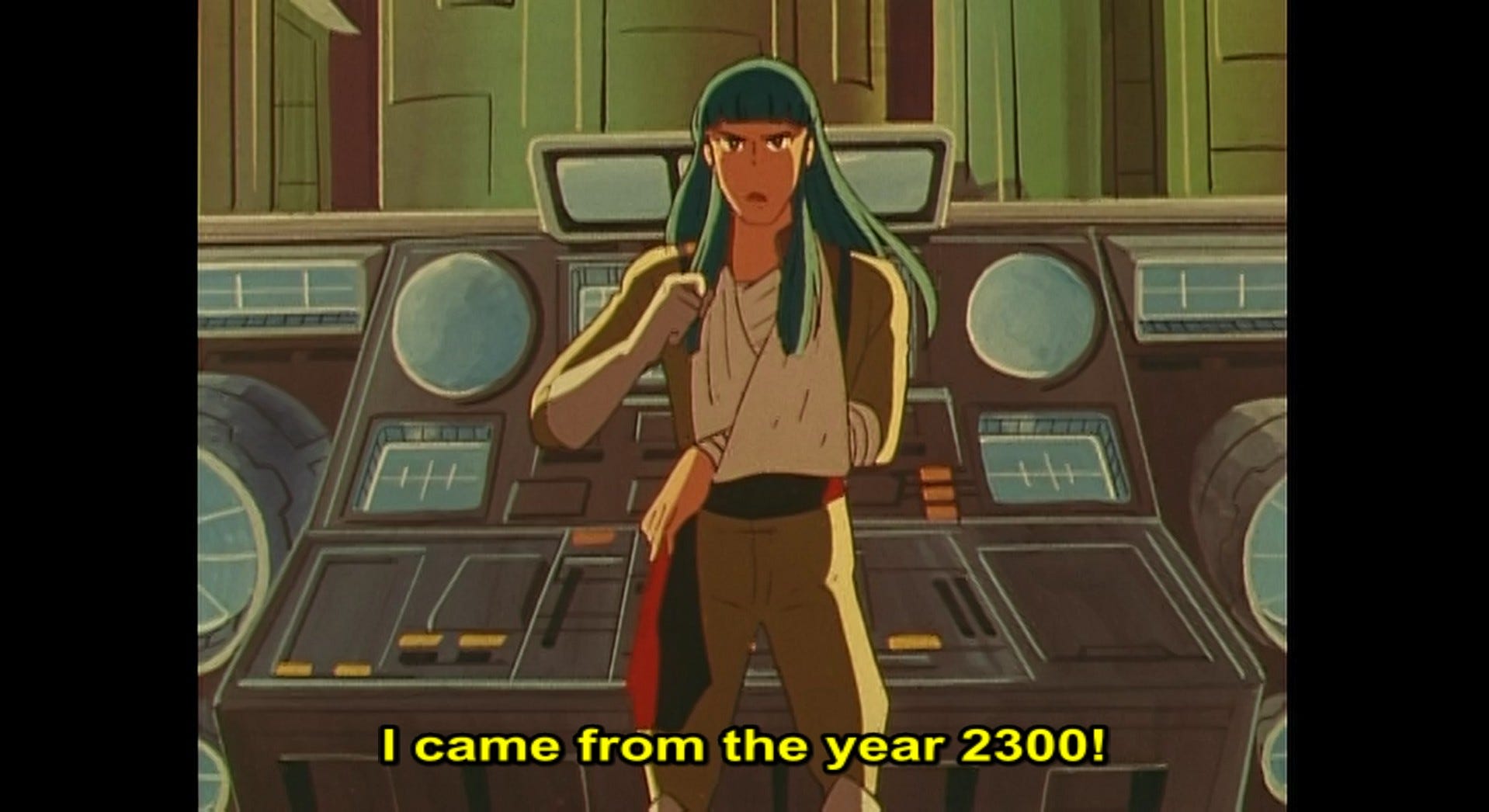
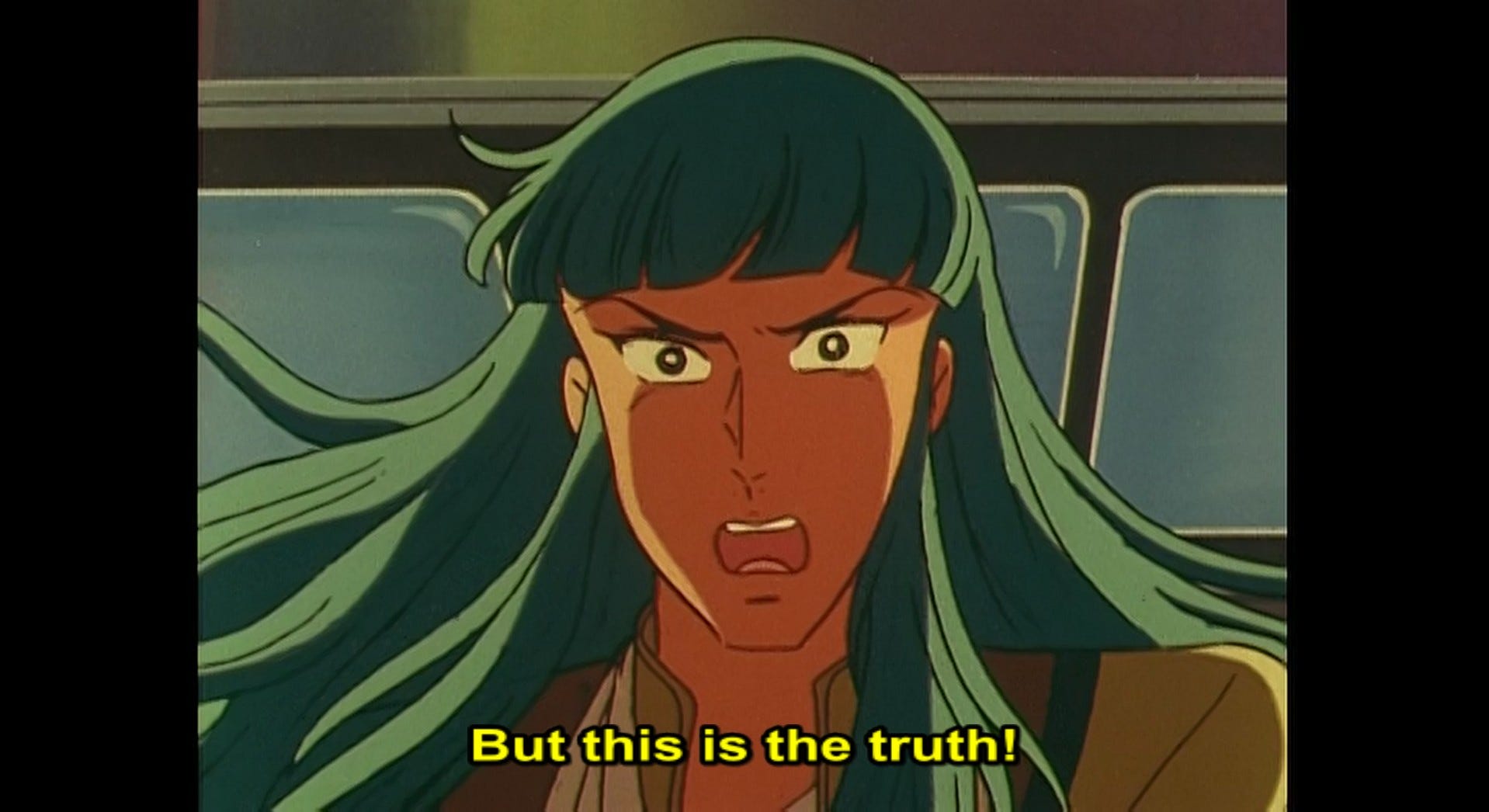
Two and a half centuries in the future, the descendants of the ‘good guys’ of 2050 - Earth - had turned Teral’s homeworld into a blazing red ball:
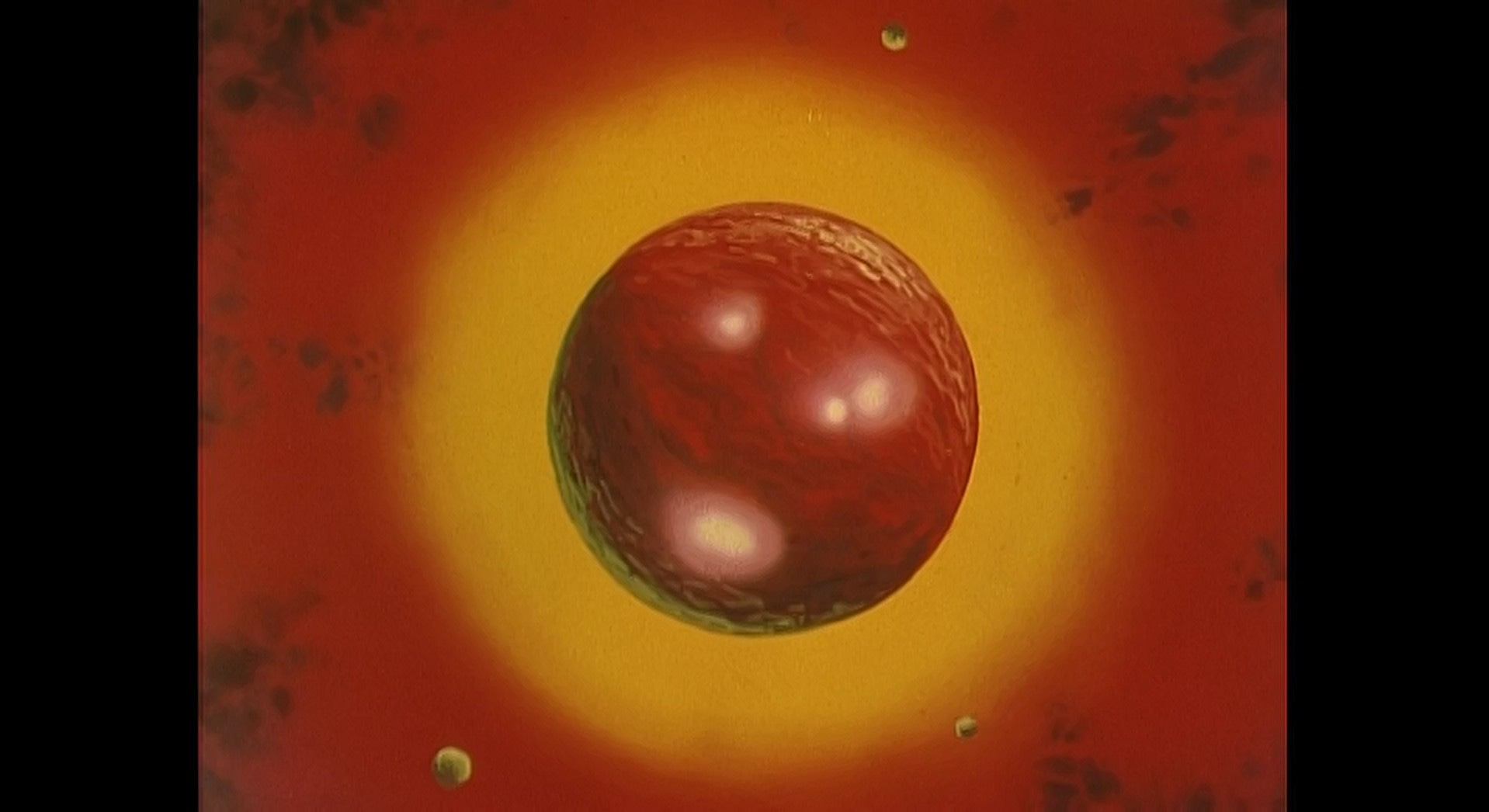
As advanced as the Eldarians were, they lacked Earth’s Trinity Energy-based technology that blasted through their cities.
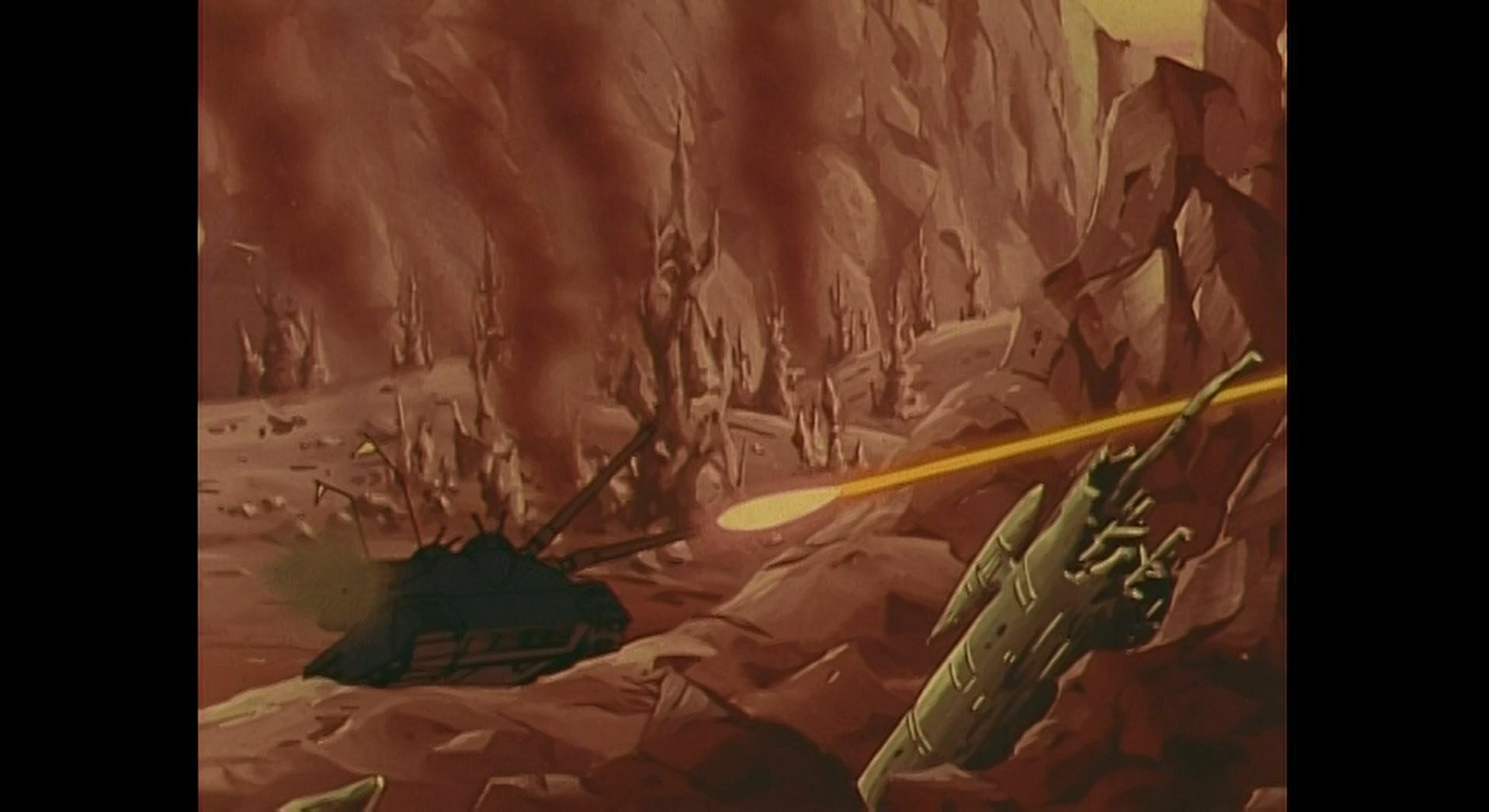
Invaders from Earth shot and burned women and children alive on camera. I’m skipping those scenes.
The surviving Eldarians had their hands full dealing with genocidal Earthlings and could only send a small group back in time to retrieve the secret of Trinity Energy and change history.
Once again, the ‘bad guys’ turned out to be the victims of the ‘good guys’.
And lest you think that the Earth of Godsigma only went bad later, the leader of the good guys - the genius who developed both Trinity Energy and Godsigma - Dr. Kazami gradually went from being merely obnoxious to outright evil over the course of the series. By the climax, he betrayed the Godsigma team …
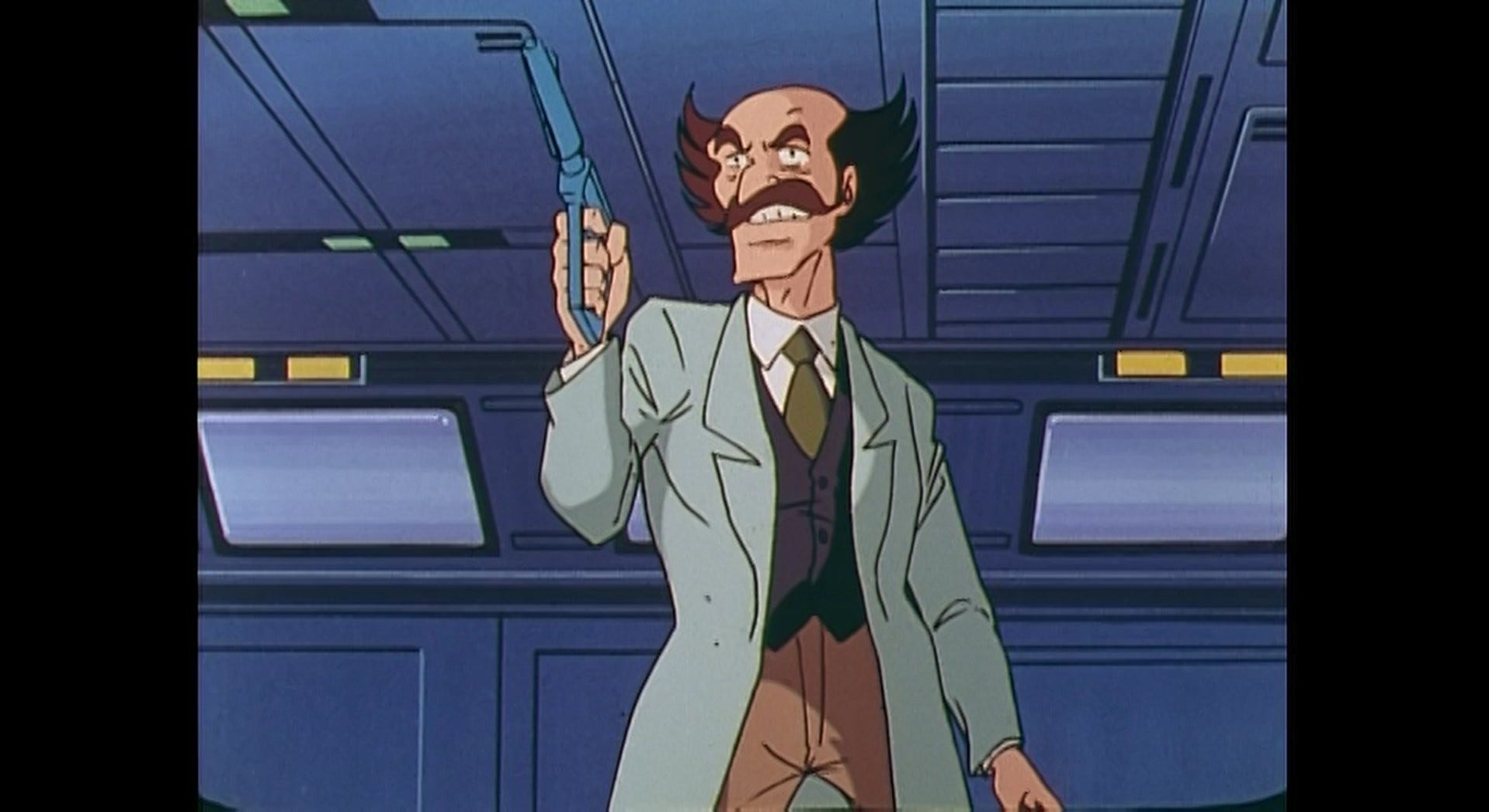
… who had to turn their guns on their former mentor!
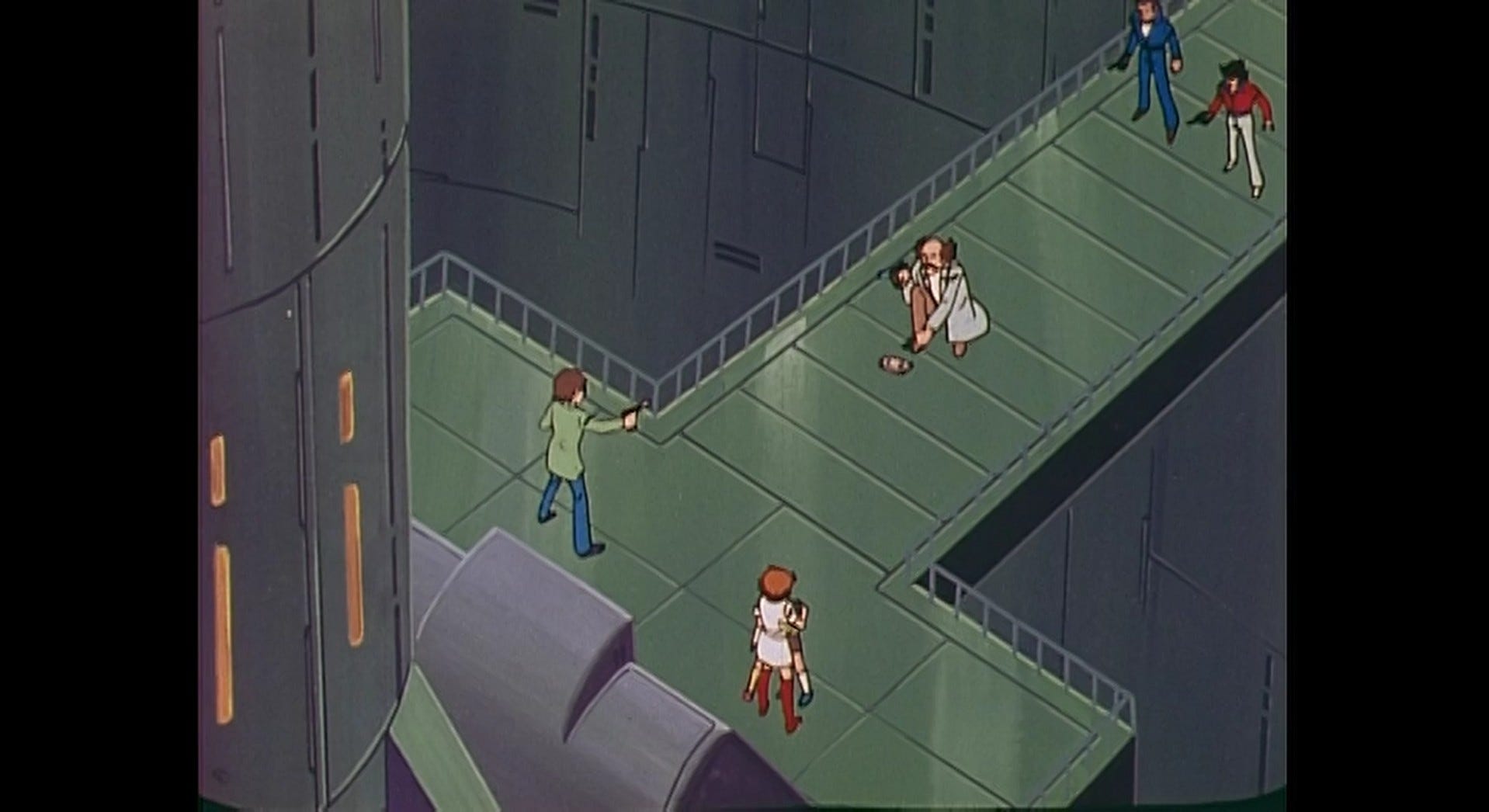
Was he motivated by morality? By a need to help Eldarian victims? No, all he cared about was Eldarian technology. He figured he could get a taste of it if he joined their side against his own people.
Unfortunately, this Eldarian soldier didn’t get the memo …
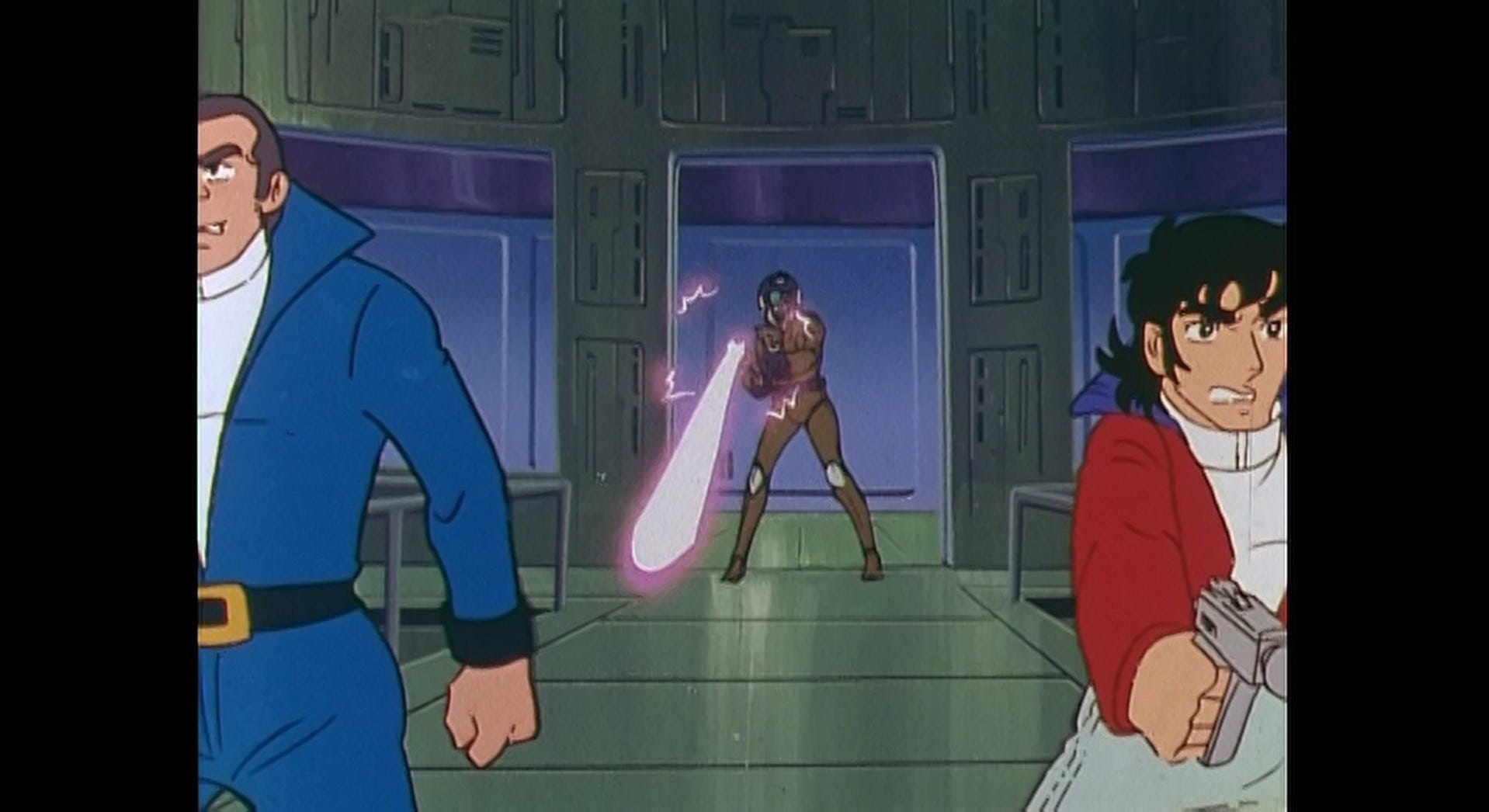
… and shot Dr. Kazami dead.
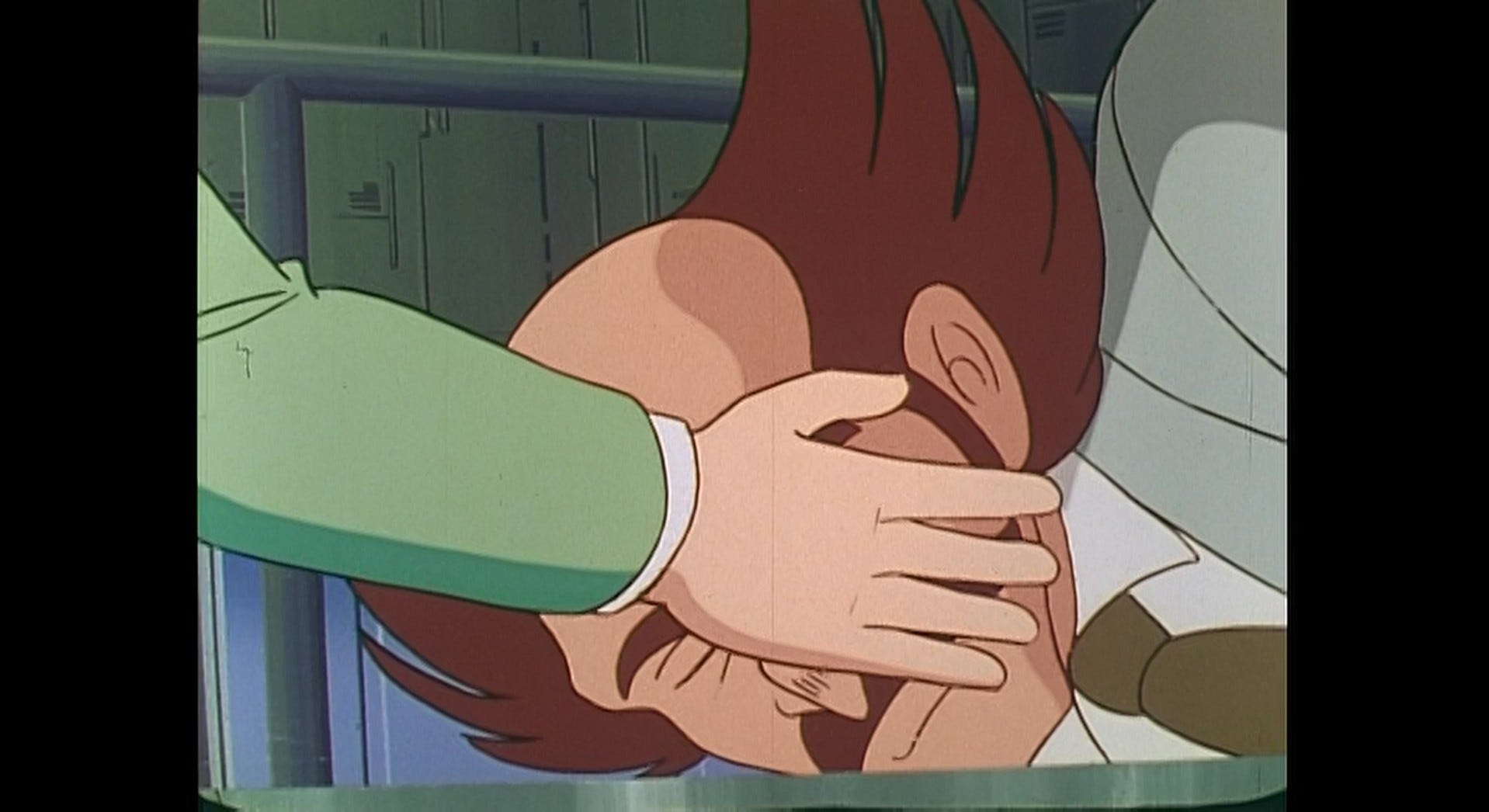
Godsigma ended with a duel between Teral and ‘his’ replacement, the vile Gagarn.
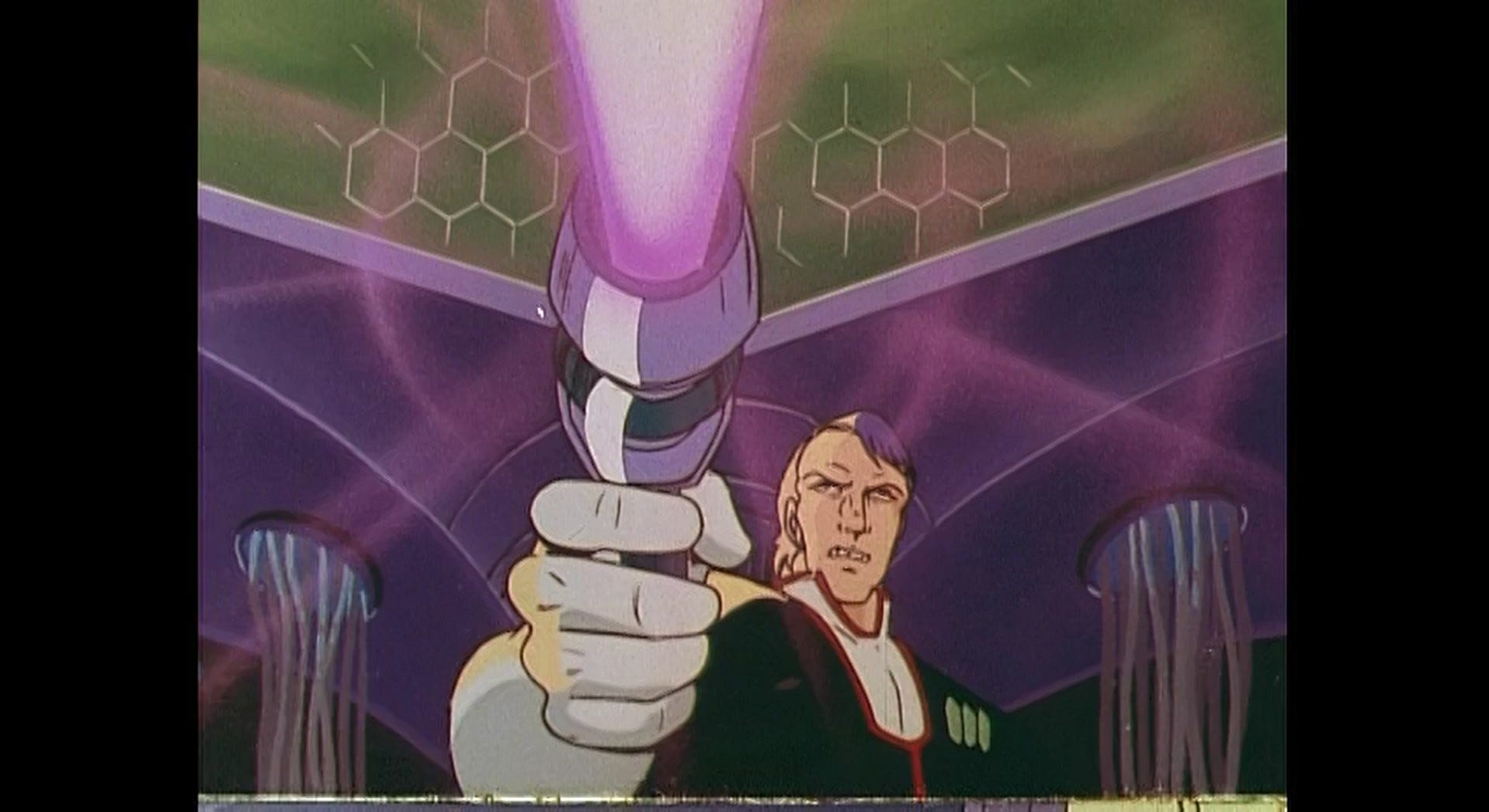
It’s too graphic to share here.
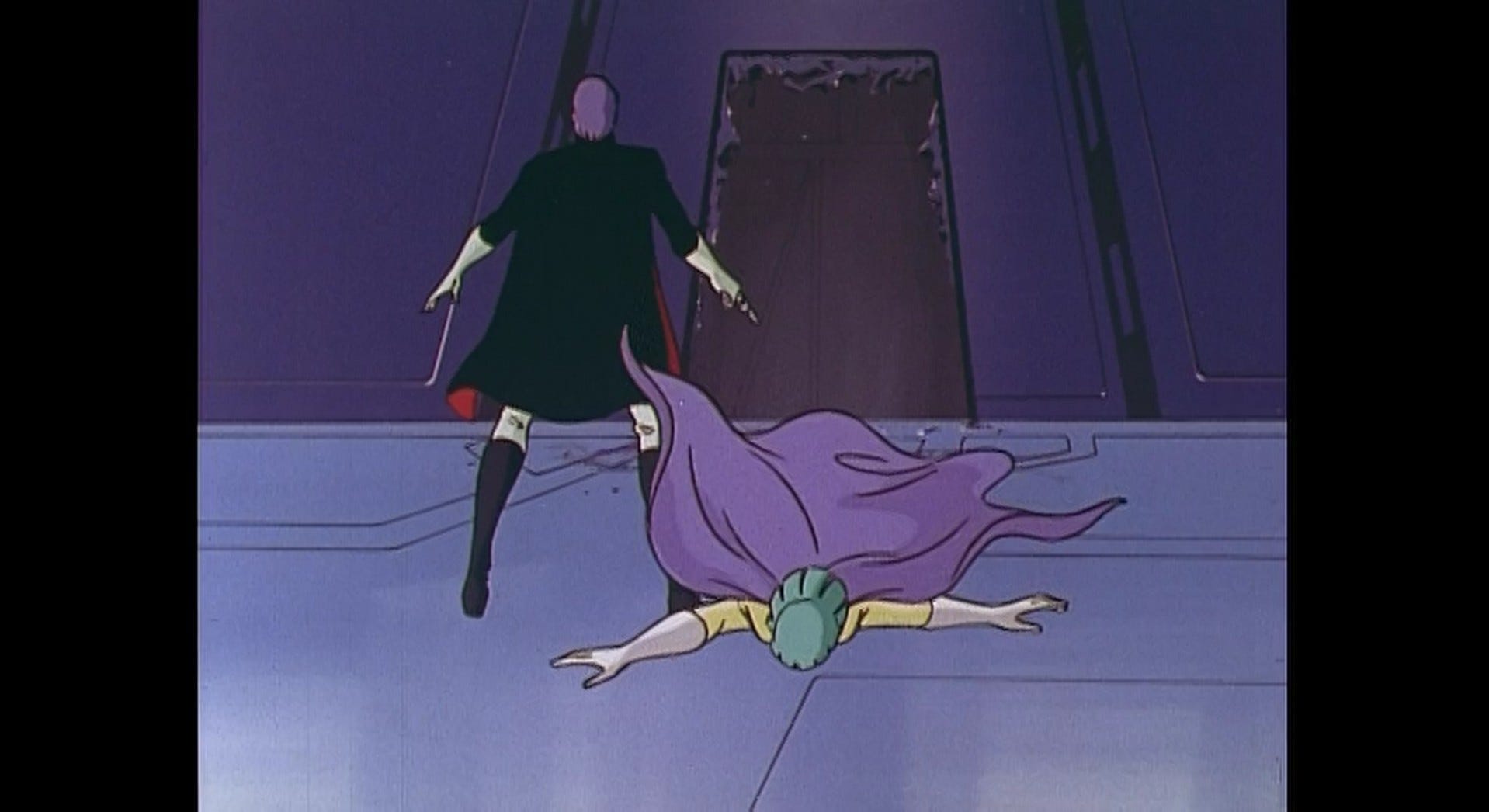
Gagarn shot up Teral and left ‘him’ for dead.
Dan Toshiya (lit. ‘altar is-fighting-purpose’), the main pilot of Godsigma, killed Gagarn with a shot to the head.
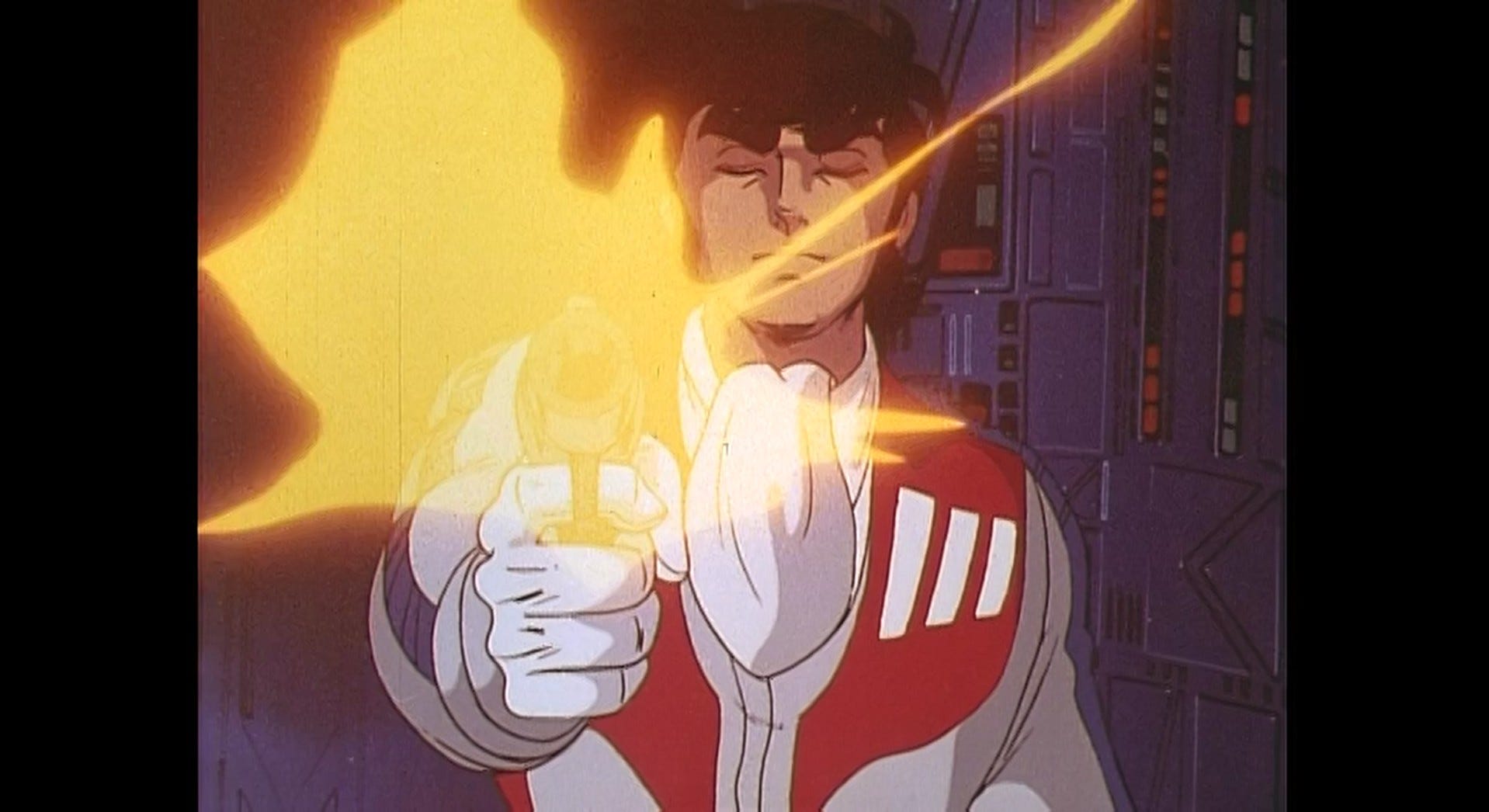
Yes, Gagarn’s fatal wound was shown on camera. No, I won’t show it.
Haunted by Teral and the knowledge of the Trinity Energy-powered evil empire that Earth will spawn …
… Toshiya used an Eldarian time travel machine to take Godsigma to 2300.
He hoped to stop the twenty-fourth century Earth-Eldar war with a single robot that would have been antiquated by the standards of future Terrans. Good luck with that.
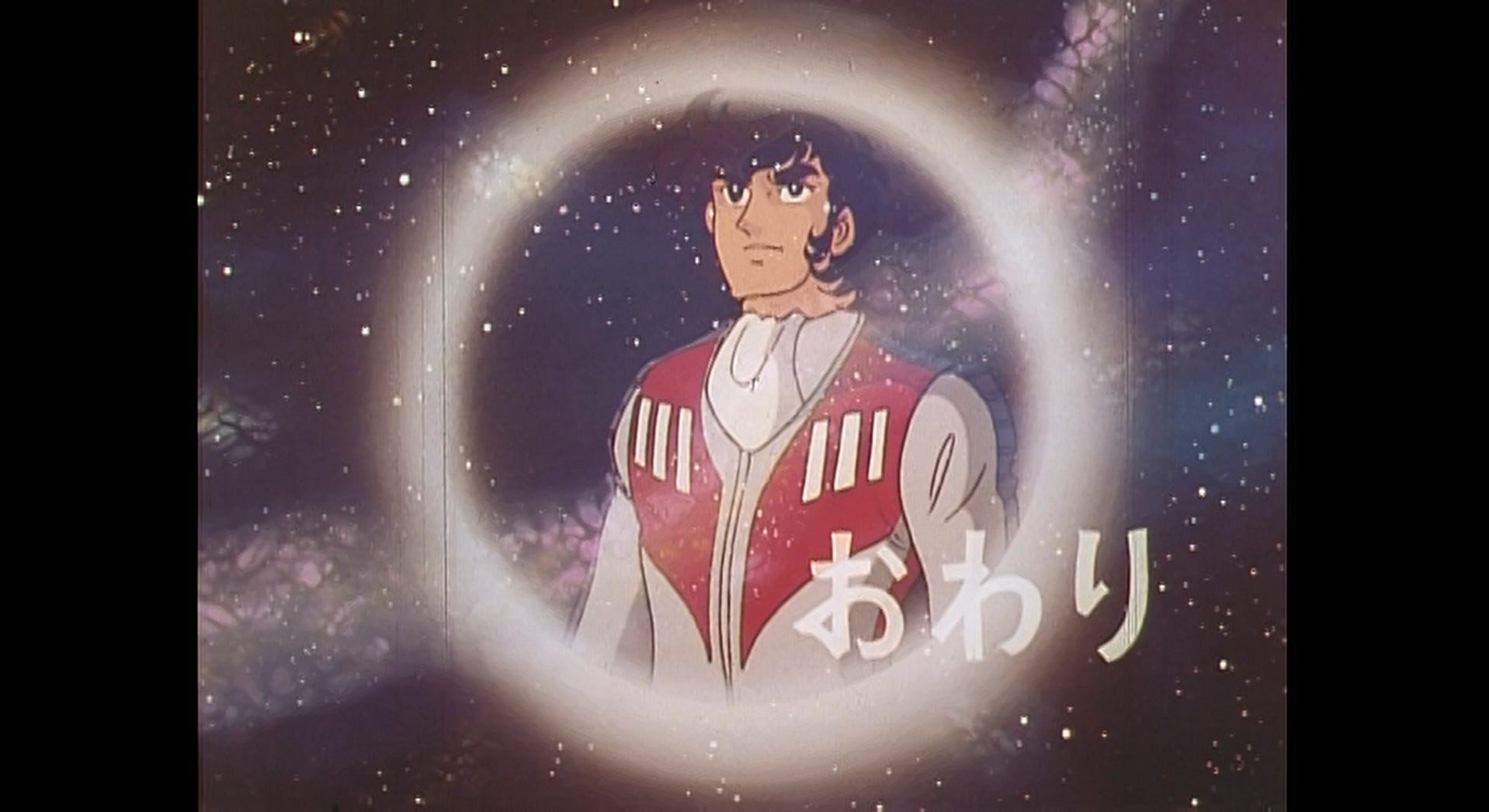
THE END
Hundred Beast King Golion (1981-1982)
took over the timeslot vacated by Godsigma. It was an attempt to make a more ‘classic’ giant robot show with much clearer heroes and villains - and without gender-bending. Nonetheless, the darkness of Godsigma seemed to have spilled over into the premiere of Golion. World Events had to massively carve up episode one for American tastes.
The story opened with the legend of Golion. Thousands of years ago, a mechanical lion-headed thug of unknown origin with lion heads for hands and feet brutally brawled its way across the cosmos …
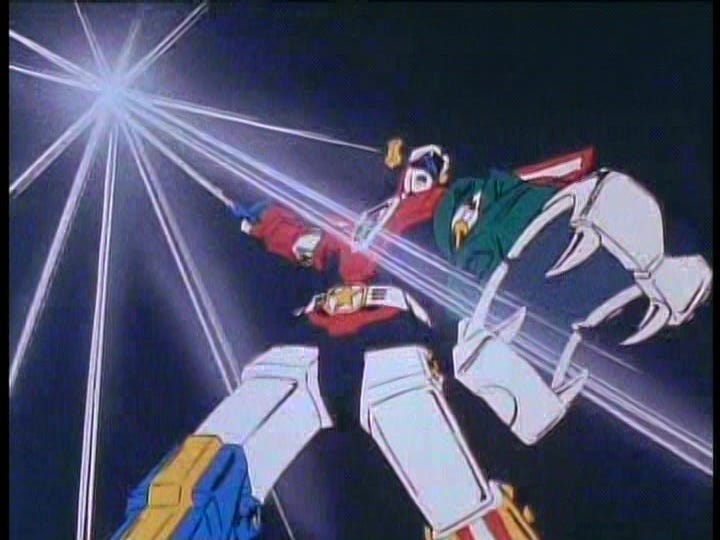
… until it challenged the “goddess of the great universe”1.
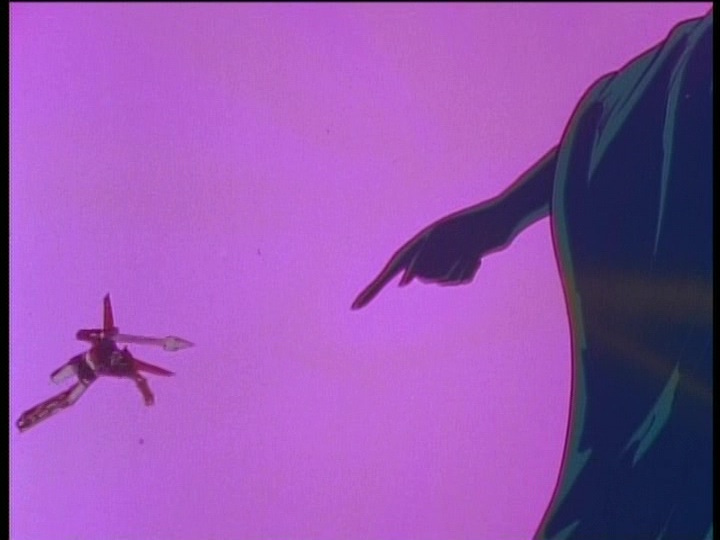
Appalled by Golion’s failure to use its great power for good …
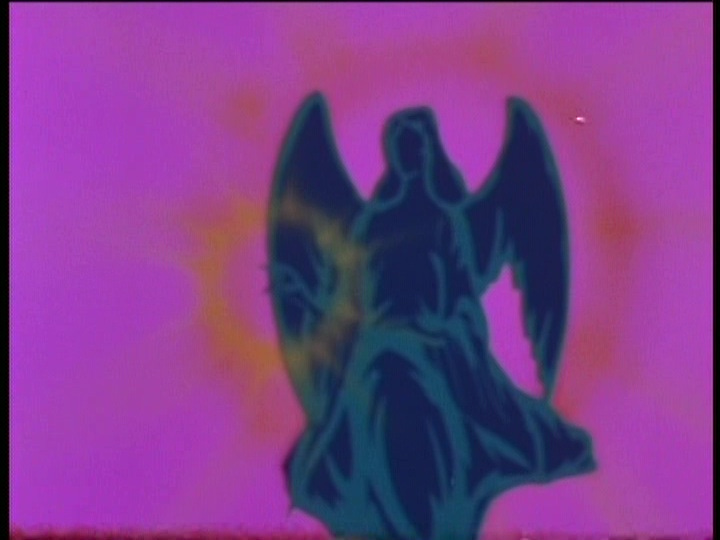
… she used her power to teach it humility by splitting it into five lions. (Go means ‘five’ in Japanese.)
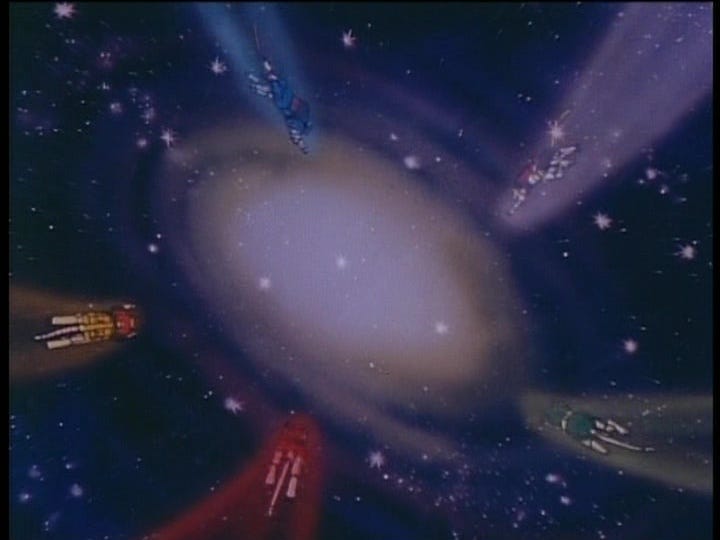
A questionable and arguably amoral Lion Voltron and “the goddess of the great universe” would not be acceptable in Abrahamic America, so in Voltron, the robot’s exploits were cleaned up, and the goddess was explained to be the evil witch Haggar in disguise. (But if Haggar could break up the lions with a gesture back then, why would she be unable to defeat the lions so easily later on in Voltron?)
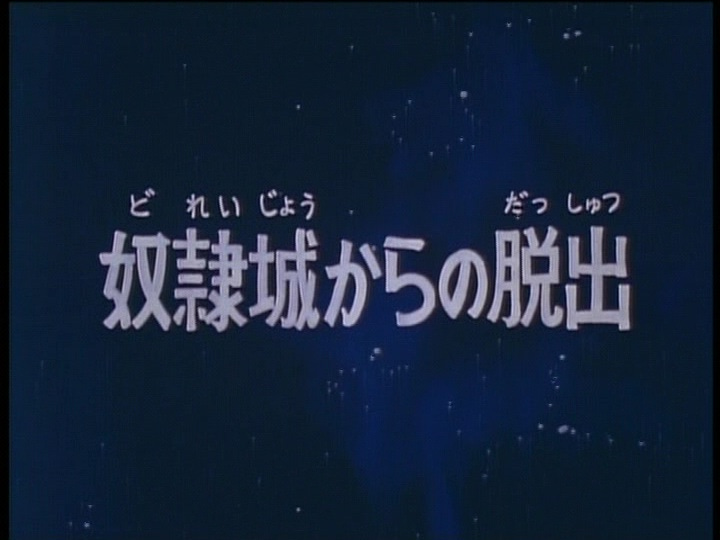
The original episode title “Escape from the Castle of Slaves” describes what happened next.
Aboard a slave ship of the Galra Empire …
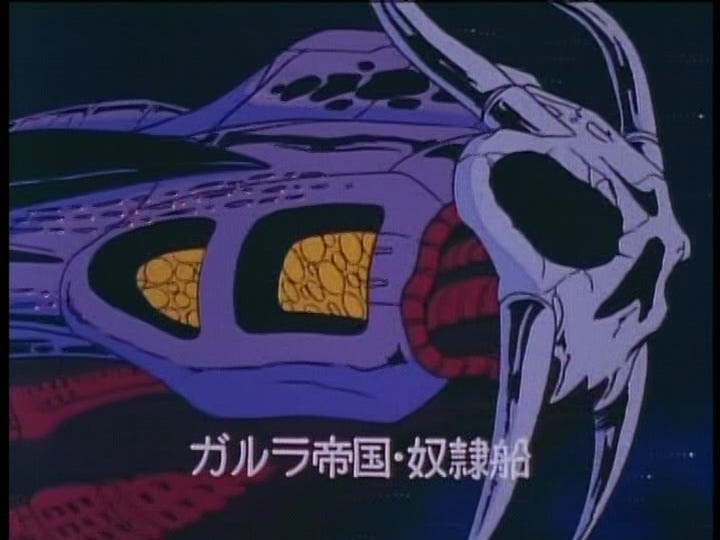
… slaves were whipped on camera. You’ll have to take my word for it.
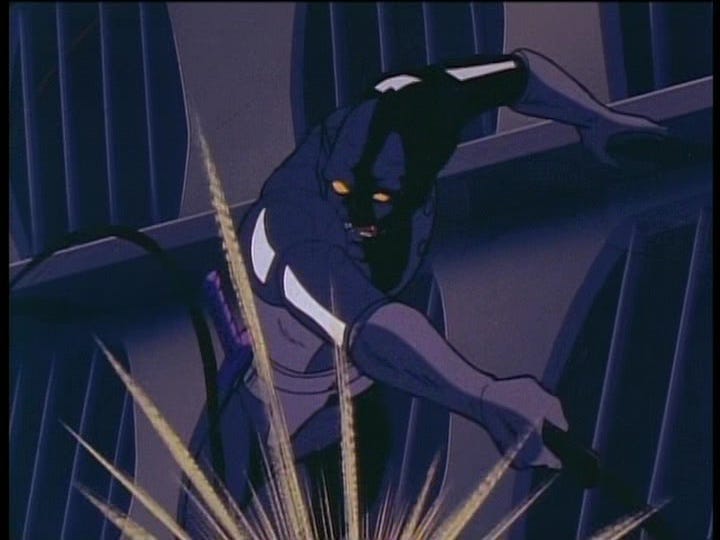
The ship headed for the Galra homeworld …
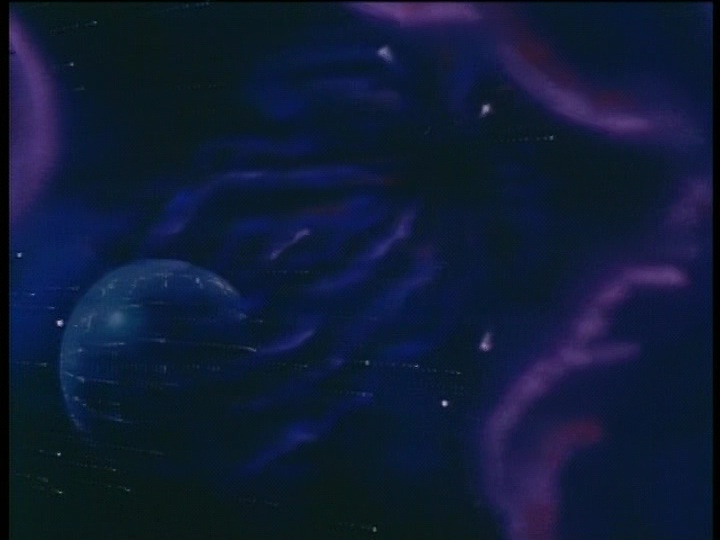
… and its monarchs’ castle …
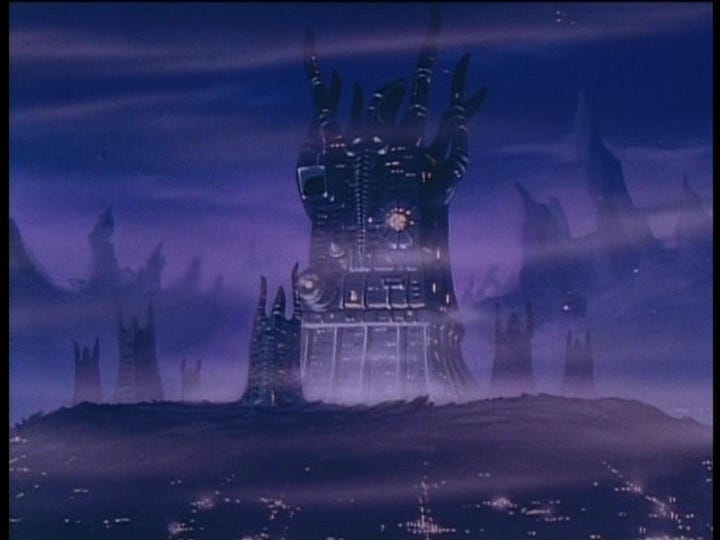
… whose lower levels contained slaves like these five Earthlings.
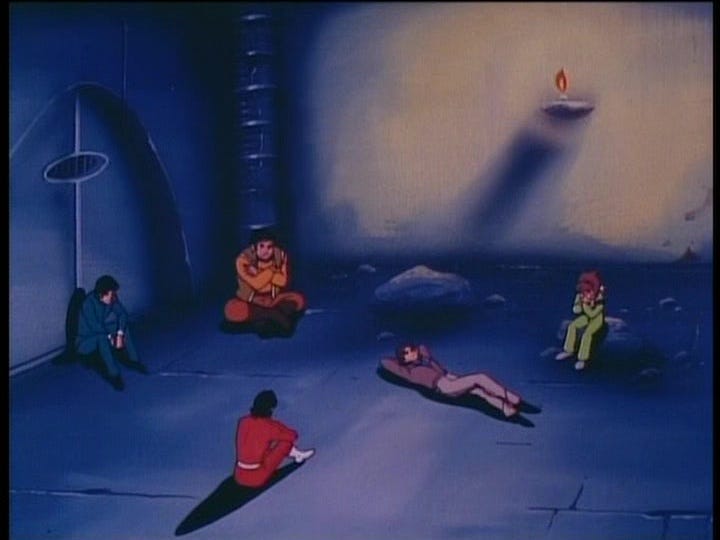
Two showed slave tattoos on screen.
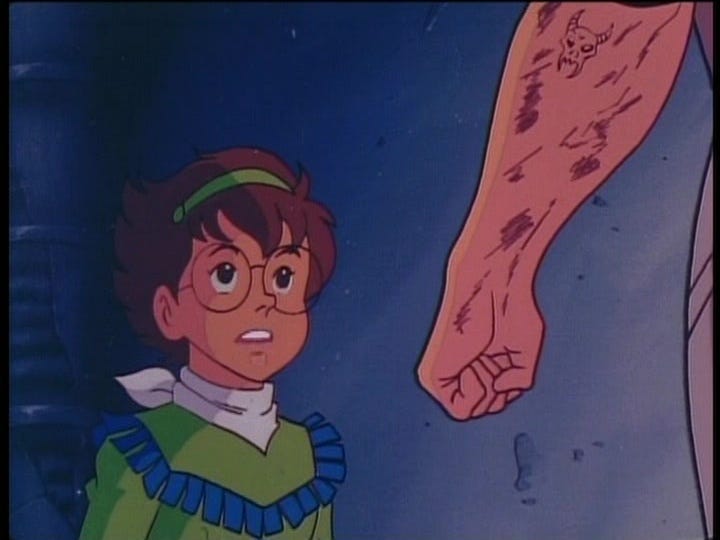
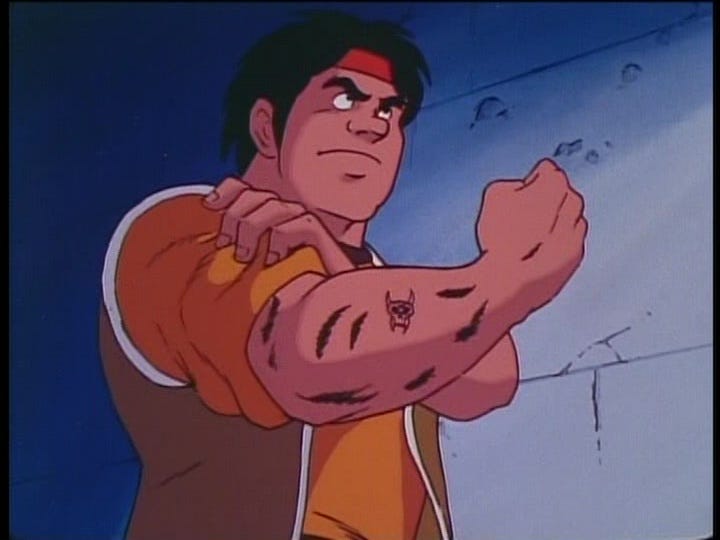
I’m amazed those tattoo scenes made it into Voltron. I guess the editors had already cut out as much as they could. They had already inserted Dairugger footage to fill time.
I’m even more amazed that Voltron in this instance explictly referred to tattoos in the dialogue. The original Japanese dialogue did not contain the word ‘tattoo’, perhaps because tattoos are frowned upon in Japan and even banned in some public places. Moreover, in Voltron, ‘Pidge’ (Suzuishi Hiroshi in Golion), the guy in green with glasses, said that he was tattooed - another line absent from the original.
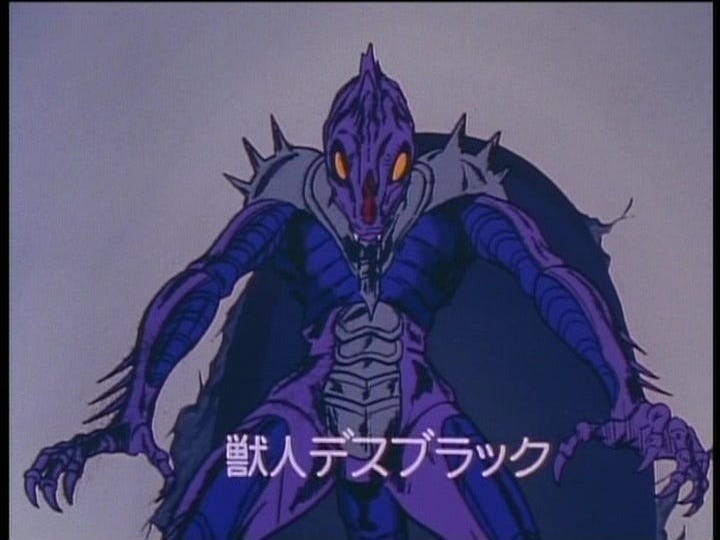
Slaves like the captive Earthlings had to ‘look forward’ to gladiatorial combat …
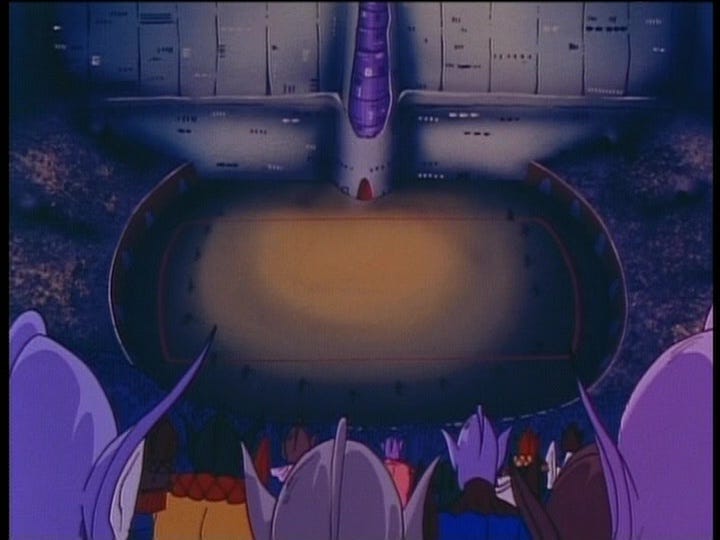
… against deathblack beastmen who dismembered, killed, and ate them on camera in scenes omitted from Voltron.
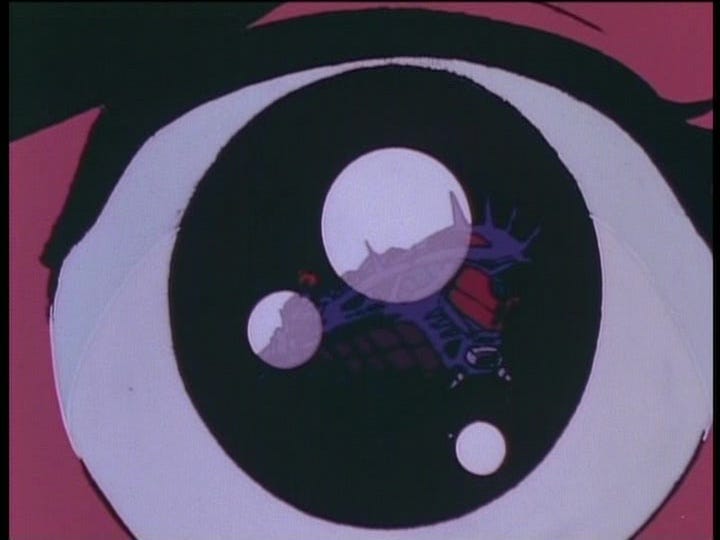
We look into the eye of the monster’s upcoming meal - the leader of the Terran prisoners and see his homeworld in this neat scene.
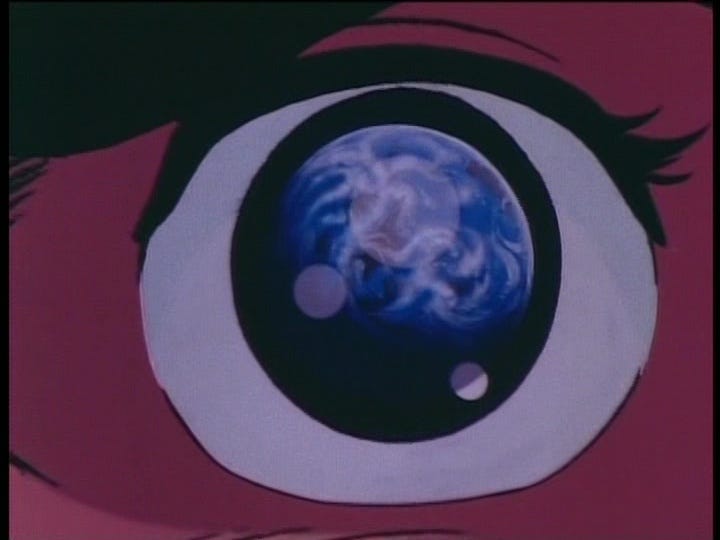
We learn that the year is 1999. See the pretty little sparkles on Earth?

Let’s take a closer look at our planet.
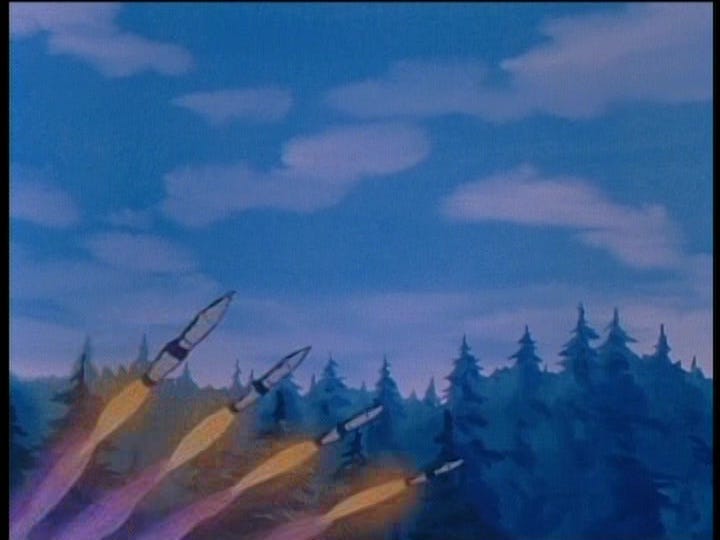
I’m guessing the missiles from the “East” were fired by the Soviets.
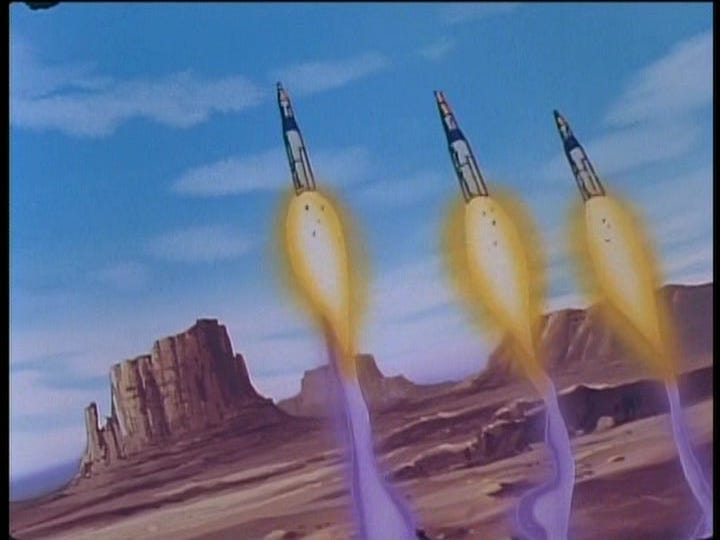
And I’m guessing those missiles from the “West” were fired by the Americans.
The sparkles were nuclear explosions.
World War III killed everyone on Earth.
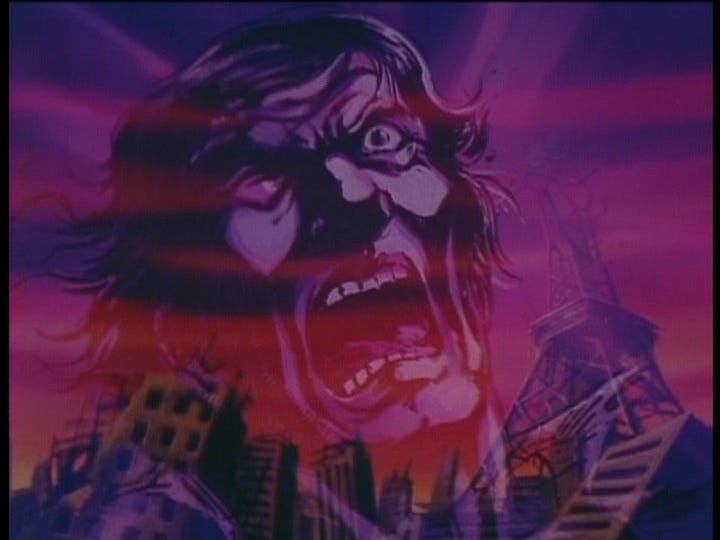
I’ll spare you the scenes in which two infants die on screen.
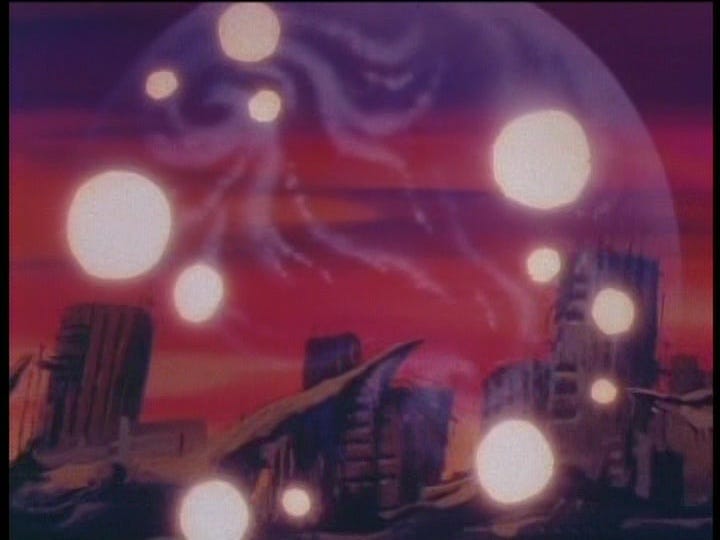
Keep in mind that Golion was produced during the Cold War. A few years before I saw a map showing what would happen if Pearl Harbor were nuked.
The only Terrans left were the crew of this spaceship …
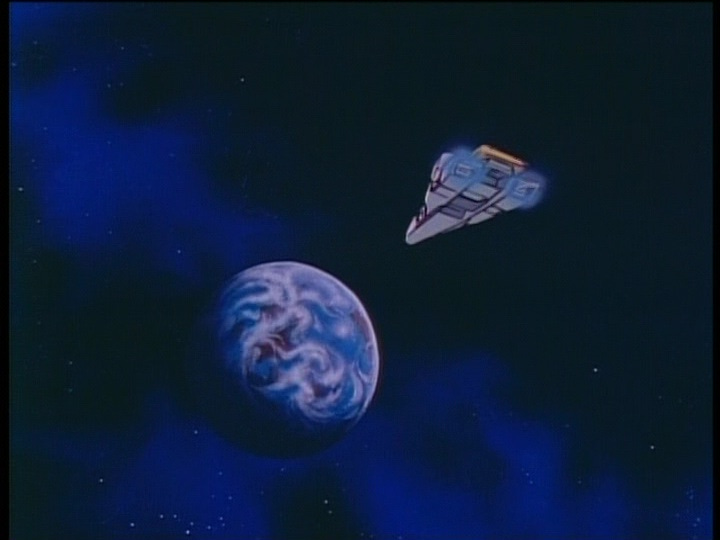
… five young men who are (almost?2) all wearing regular clothes instead of astronaut uniforms. Not realistic, but useful from a storytelling perspective, as they can all be easily identified even at a distance.
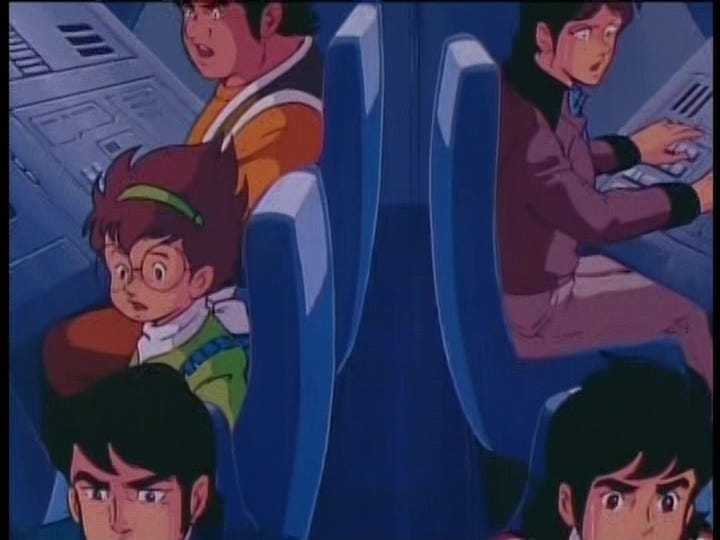
“FOOLS!” cried their leader 黄金旭 Kogane Akira (lit. ‘yellow-metal bright [morning sun]’) as their ship surveyed their lifeless home planet.
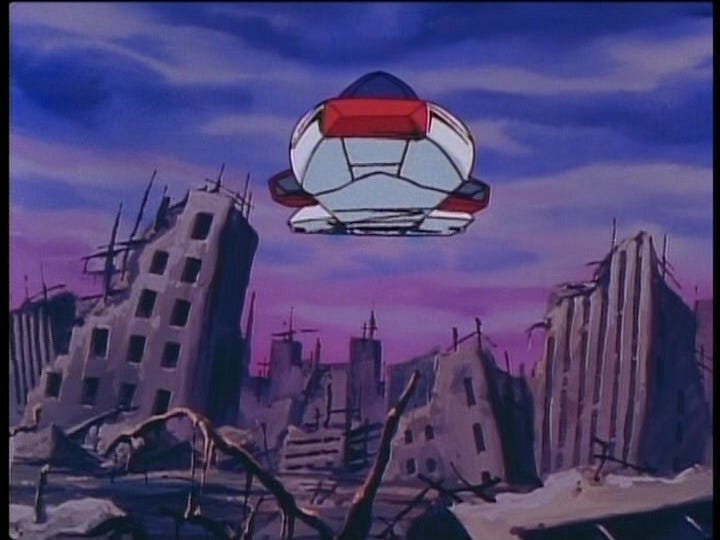
In Voltron, the aftermath of World War III was - minus the most disturbing scenes - explained away as the aftermath of alien King Zarkon’s attack on “Planet Arus” (which always looked like a misspelling of Ares to me). Voltron couldn’t depict America being partly responsible for the end of the world.
Back to Golion: Ahead in the distance …
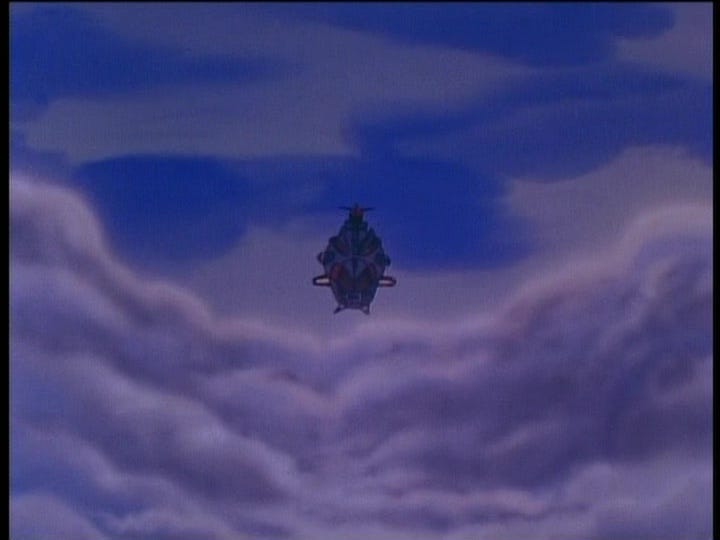
… was a Galra battleship.
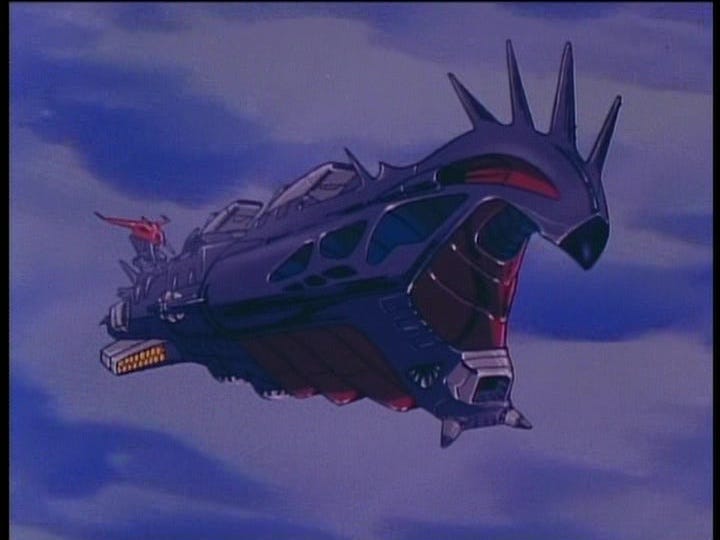
A tractor beam from the bow …
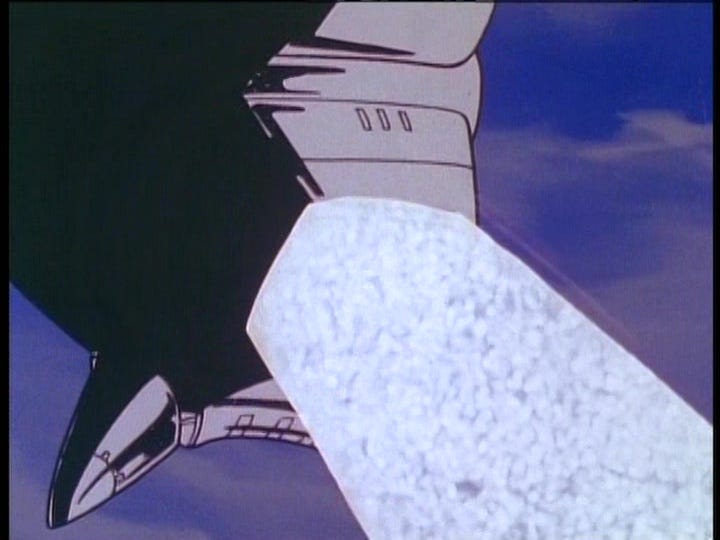
… pulled in the Earth ship.
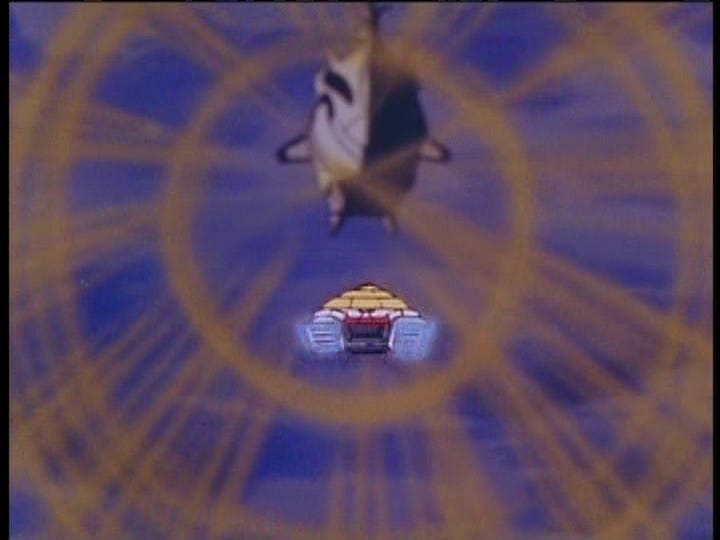
And we then zoom out from the prisoner’s eye.
Giant vultures outside his prison …
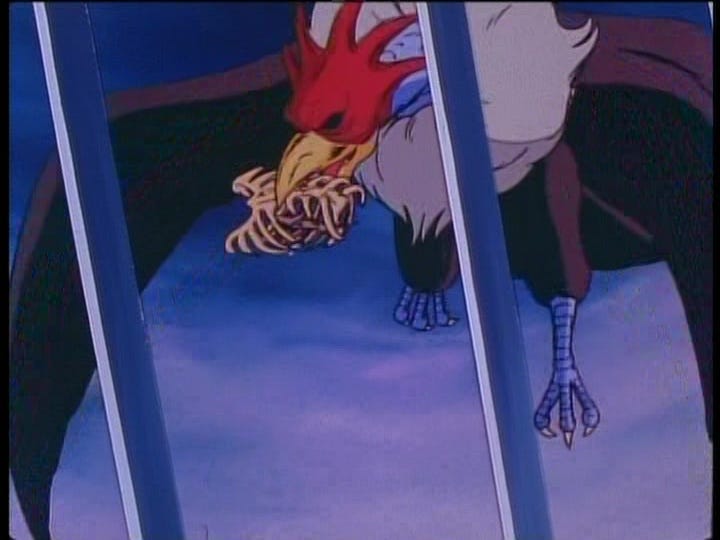
… were the last Terrans’ means of escape.
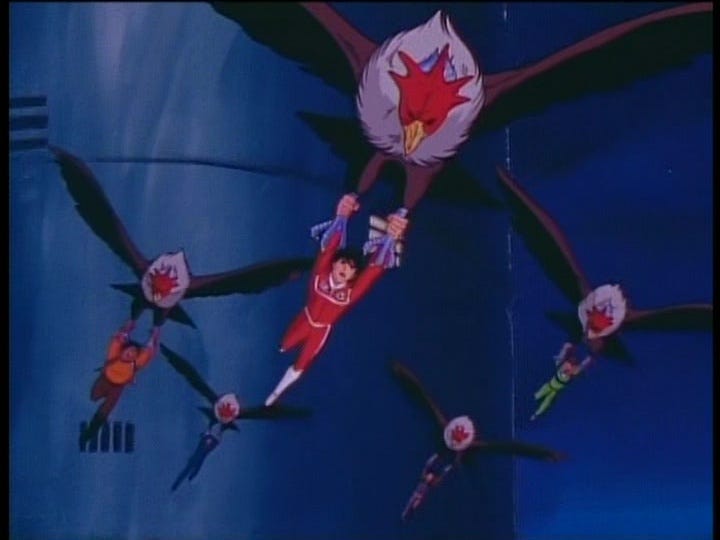
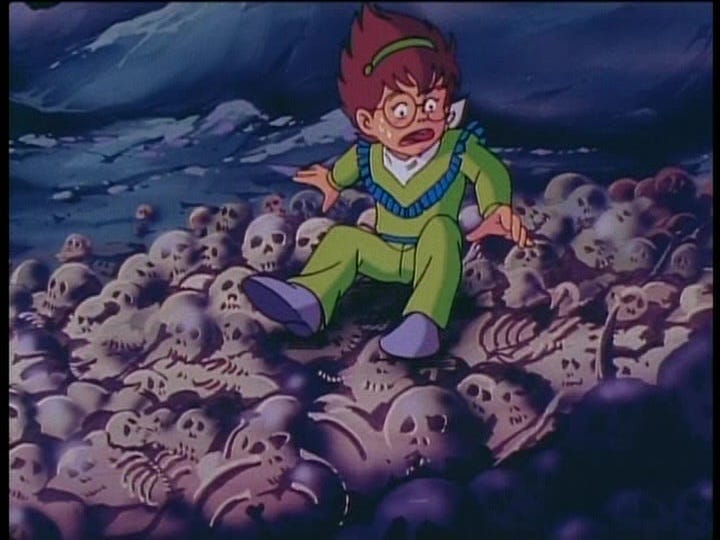
They ended up on a pile of slave skulls.
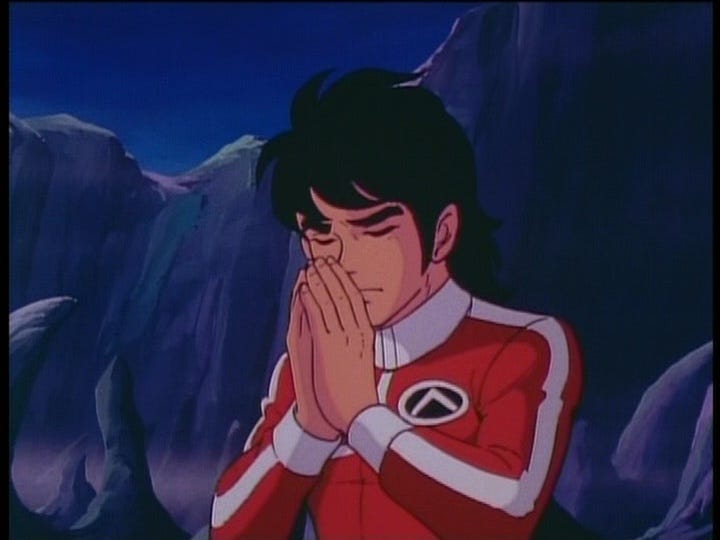
Asahi hoped the dead could become Buddhas.
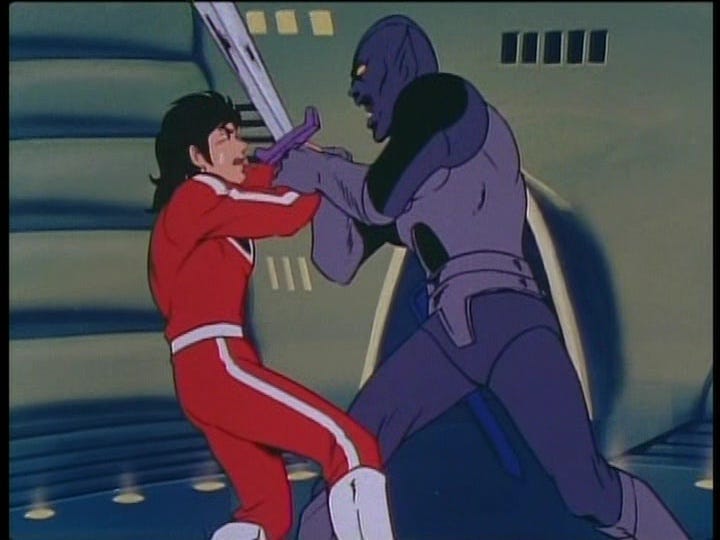
That nice religious guy then thrusted a sword through this Galra trooper in a moment I’m not sharing.
I think the remaining minutes of the episode made it into Voltron intact (apart from the removal of Japanese onscreen text), but I’ll cover them anyway for completeness.
The quintet boarded a slave ship …
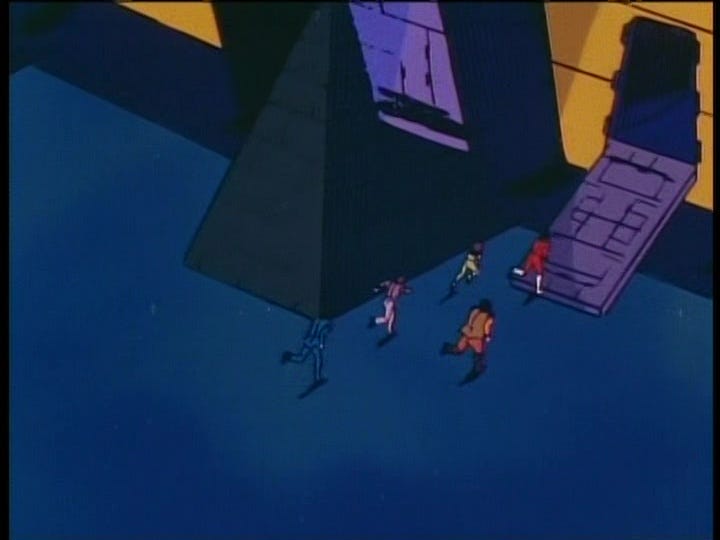
… and stole it.
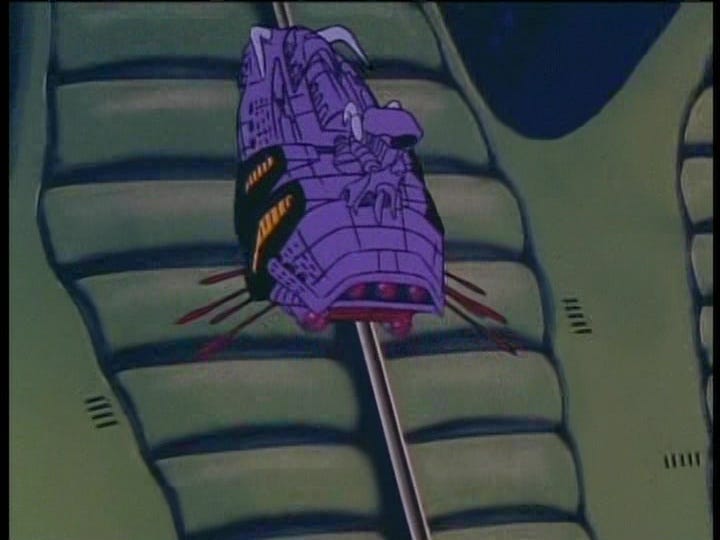
I like the oar-like things sticking out of the stern.
A Galra battleship like the one that captured the quintet chased their vessel …
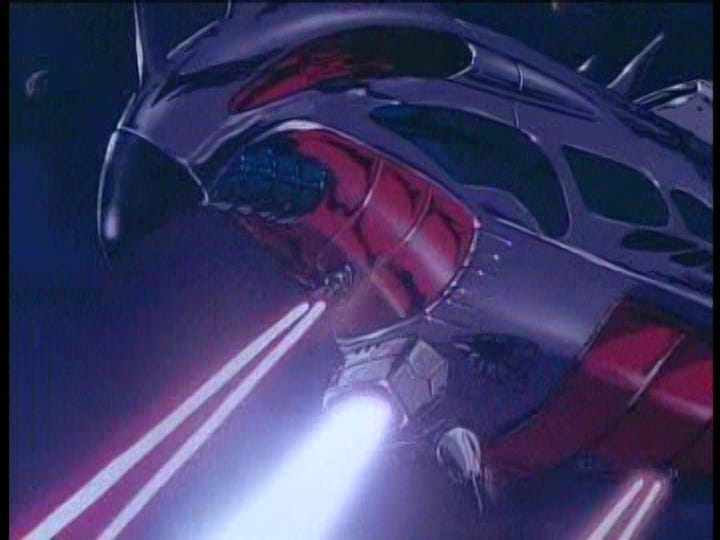
… which wasn’t sufficiently armored.
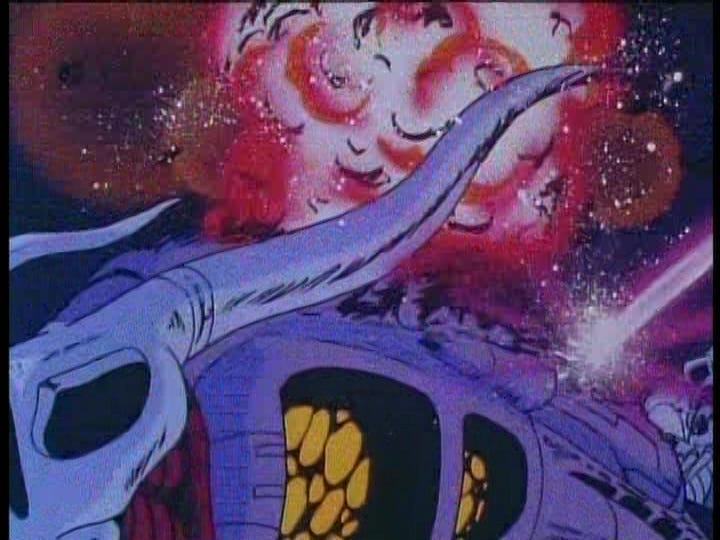
The Earthlings once again found themselves at the mercy of a tractor beam …
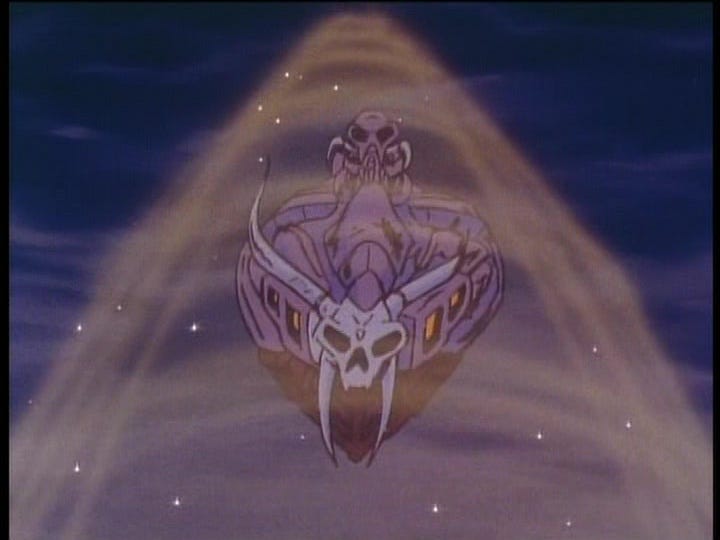
… coming from a lion statue in front of a decrepit castle on the planet Althea.
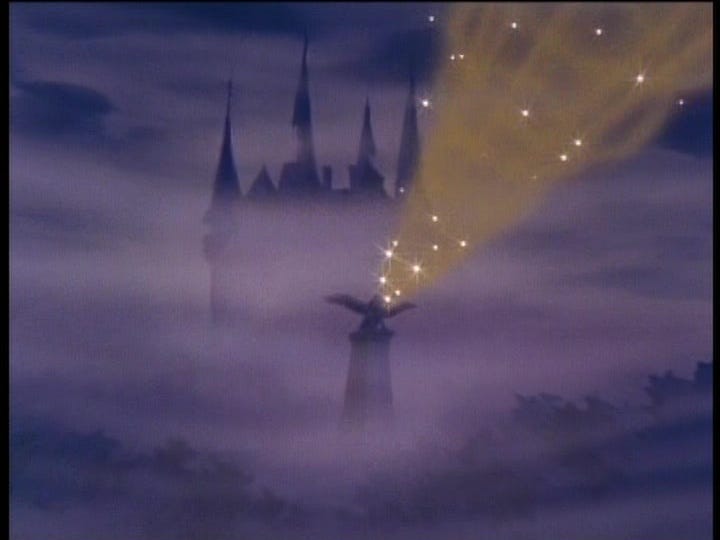
What was in that castle?
TO BE CONTINUED
The term kami in the original Japanese has no gender, but I translate it here as “goddess” because this kami was drawn as female and given a female voice. There is a gendered term megami ‘female kami’: i.e., ‘goddess’, but the gender-neutral term kami can be used in contexts where English speakers would use goddess.
I can’t tell if squad leader Kogane Asahi is wearing a futuristic astronaut uniform or a tracksuit.
Man the OG version was metal.