
Jury
Fearing my peers

In “Binary” a couple of days ago, I quoted lily357 ‘s “The Terrarium and the Borrowed Mirror”:
They [Russian expats] are trying to prove to an imaginary Western jury that they recognize their sins, that they are “self-correcting,” and that they are therefore worthy of being welcomed into the civilized fold.
I wrote,
I was trying to prove to an imaginary Japanese jury that I recognized my sins of un-Solarity, that I was ‘sunshifting’, and that I was therefore worthy of being welcomed into the One Civilization.
Tonight I still see parallels between me and those Russians. But I also need to point out a major difference.
I belong to the Japanese diaspora. I wanted to think of myself as a “throwback” to my ancestors. I wanted to ‘reunite’ with ‘my people’. People who would judge me to be worthy of being among them. I saw them as more than people - as superior Solar beings. Sun gods. The children of Amaterasu ‘heaven-shine’.
Russian expats are not under that kind of self-inflicted pressure. Not just believing They Are Better but also believing I Am One of Them. No Russian expats have delusions of being displaced Westerners returning to their homeland.
I wasn’t delusional about my Japanese ancestry. That is a fact. The problem is - where do I go from there?
This passage by Dmitry has stuck with me for the past year:
If you are from a Russian family which relocated to the US when you were very young and you were raised in the US, you’ll discover that there is very little, if anything at all, Russian in you. You will feel like a complete stranger, an alien who simply doesn’t fit.
I think Olga Khazan would agree. Born in Leningrad, she had moved from the USSR to the USSA when she was a child. In Weird, she wrote,
I wanted to determine whether I should try to fight my way back into the Russian tribe or just accept the fact that I was just like any other American, and would probably remain that way forever.
But when I met up with other Russians, I was surprised at how little we had in common. When I first moved to L.A., I lived next to a house full of recent Eastern European immigrants who all clung together in a cologne-drenched gang. But because my Russian is so rusty and they didn’t obsessively listen to Slate podcasts, I didn’t have much to talk with them about.
[...]
I even went to Russia a few years ago without my parents in an attempt to learn more about my identity. I felt anything but at home. My vocabulary had degraded so much I accidentally dropped some swear words in a fancy bakery and struggled to explain to a family friend why I couldn’t come to his house. At one point, I ducked into a bar near my childhood home, wiping away tears of frustration and ordering in English.
[...]
I might return to Russia again, but if I do I’ll probably speak English.
[...]
I was—dare I say—proud to be an American. I’ve been an American almost my whole life, and no matter how much I dabble in Russian culture, I’m going to remain one for good.
On the one hand, I’m even less connected to Japan than Khazan is connected to Russia. My family has been in Hawaii for over a century (though my Hawaii-born grandfather did return to Japan and enter an elite university there before dropping out and moving back). Japanese probably ceased to be our household language during World War II.
On the other hand, I could make the opposite case.
All my known ancestors are Japanese, whereas as you could probably guess from her Hebrew surname, Khazan is not ethnically Russian. Her father is Jewish (he “looks like Saddam Hussein”) and her mother is a Finn whom her father met in the Estonian SSR. Leningrad is where she happened to be born. It wasn’t her ancestral homeland. (Not that she has any interest in Israel or Finland.)
Moreover, I spent my childhood trying to master Japanese, whereas Khazan and most transplants from Russia in the Waste don’t seem to try much to maintain or improve their Russian. (I have known a couple of exceptions to that rule.) I grew up watching Japanese TV and reading Japanese books, and I consume Japanese media to this day. It’s easy to live in a quasi-Japanese environment in Hawaii the way that Khazan’s parents live in a quasi-Russian environment in Texas:
[… M]y parents subscribed to a service that would deliver Russian television to our house. Gradually, it became practically the only TV they watched. That’s still true. They also only eat Russian food, and they almost exclusively read Russian news sites. They essentially live in Russia, in the U.S.
YouTube recently recommended this video to me.
I haven’t played it past the first four seconds, though I did scan the transcript. I might write a post about it and what might be a sequel later. For now, I’ll just say it’s possible for Japanese here to function perfectly without assimilating. There are lots of young Japanese who ostensibly come here to learn English, but many of them hang out with each other, defeating the purpose of flying 3,800 miles (6,200 km).
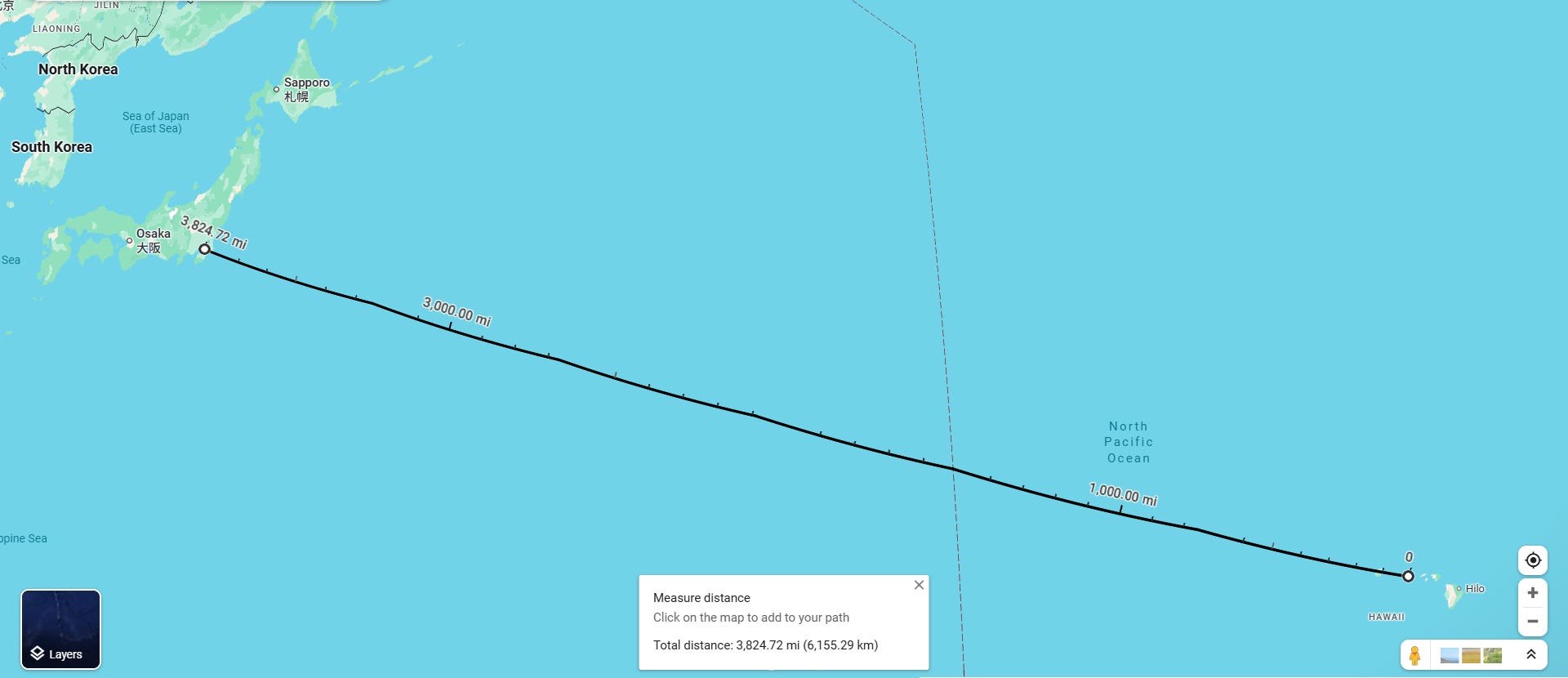
So as ridiculous as this may sound, when I went to Japan for the first time (see “Suncoming” and “Address”), I had less of a culture shock than when I moved to the Mainland, as people in Hawaii call the continental USSA. I had seen Tokyo countless times on TV. I understood almost everything around me. I was even able to attend regular university classes - read textbooks, write papers, and participate in class entirely in Japanese.
Solar status seemed almost within reach. But my journey to that goal seemed to slow down. My Japanese skills plateaued in my teens with only marginal improvements since then.
When a native speaker friend told me I sounded foreign when I read from a book in Solarese … I can still feel the punch in my gut over a decade later.
The jury had decided I was non-Solar. Subhuman.
So stupid. So cringe. It’s taken me hours to write this post because this topic is so painful.
I can’t remember a time before I knew Japanese, and I still speak it poorly.
I could try to make myself feel better by pointing out that few foreigners could read that Japanese book out loud. The Japanese script is the most difficult in the world today. Yes, the Chinese use more characters, but those characters almost always have only one reading, and even when they have two readings, those readings are usually similar. The Japanese use ‘only’ two thousand-plus characters, but those characters have multiple readings which are often unrelated, and in combination they can have readings that are not the sum of their parts: e.g., 大和 Yamato ‘Japan’ is a combination of 大, read dai by itself, and 和, read wa by itself.
Still, I read the book with - OMG - an accent.
I’m haunted by an episode of the Japanese detective show 特捜最前線 Tokusō saizensen (Special Investigation Frontline) that I saw in the eighties.
It was about a rural Japanese guy who moved to Tokyo, was mocked for his accent, and lashed out in violence.
He sounded just like the Tokyo-based detectives to me!
Years later, I was outside of Tokyo, and an elderly man was talking about his regional accent.
Again, I couldn’t detect any difference from the standard.
I am not saying I am totally oblivious to regional differences: e.g., Kansai ōkini instead of standard arigatō for ‘thank you’. I am talking about pitch differences when speaking the standard language: e.g., pronouncing kawa ‘river’ the Kansai way with a high-pitched first vowel and a low-pitched second vowel - the opposite of the standard way with a low-pitched first vowel and a high-pitched second vowel. To me, they’re both kawa. To the NHK (Japan Broadcasting Corporation), only the standard way is worthy of inclusion in their pronouncing dictionary.
I’ve seen Japanese language learners buy into the idea that they MUST master the NHK accent. Which is not the natural accent of many (most?) Japanese. I would advise those learners to work on everything else instead unless their goal is impersonating the ‘ideal’ native speaker. Which was my goal. Which was impossible given my inability to hear accents in Japanese.
I ask my readers who learned English as a foreign language - do you care if you don’t sound native? I have known nonnative speakers of English who sound more American than me and most people in Hawaii. I have also known nonnative speakers of English with strong foreign accents. I don’t really care either way. Well, yes, I am impressed - even intimidated - by impersonation-level speaking, but if people can’t do that, whatever. I don’t even care if people can’t get the and a(n) right (I’m not 100.0% sure when to use them myself) or make other grammar errors. I can’t expect people to do with English what I can’t do with Japanese.
I don’t want to be their jury. Their super-enemy.
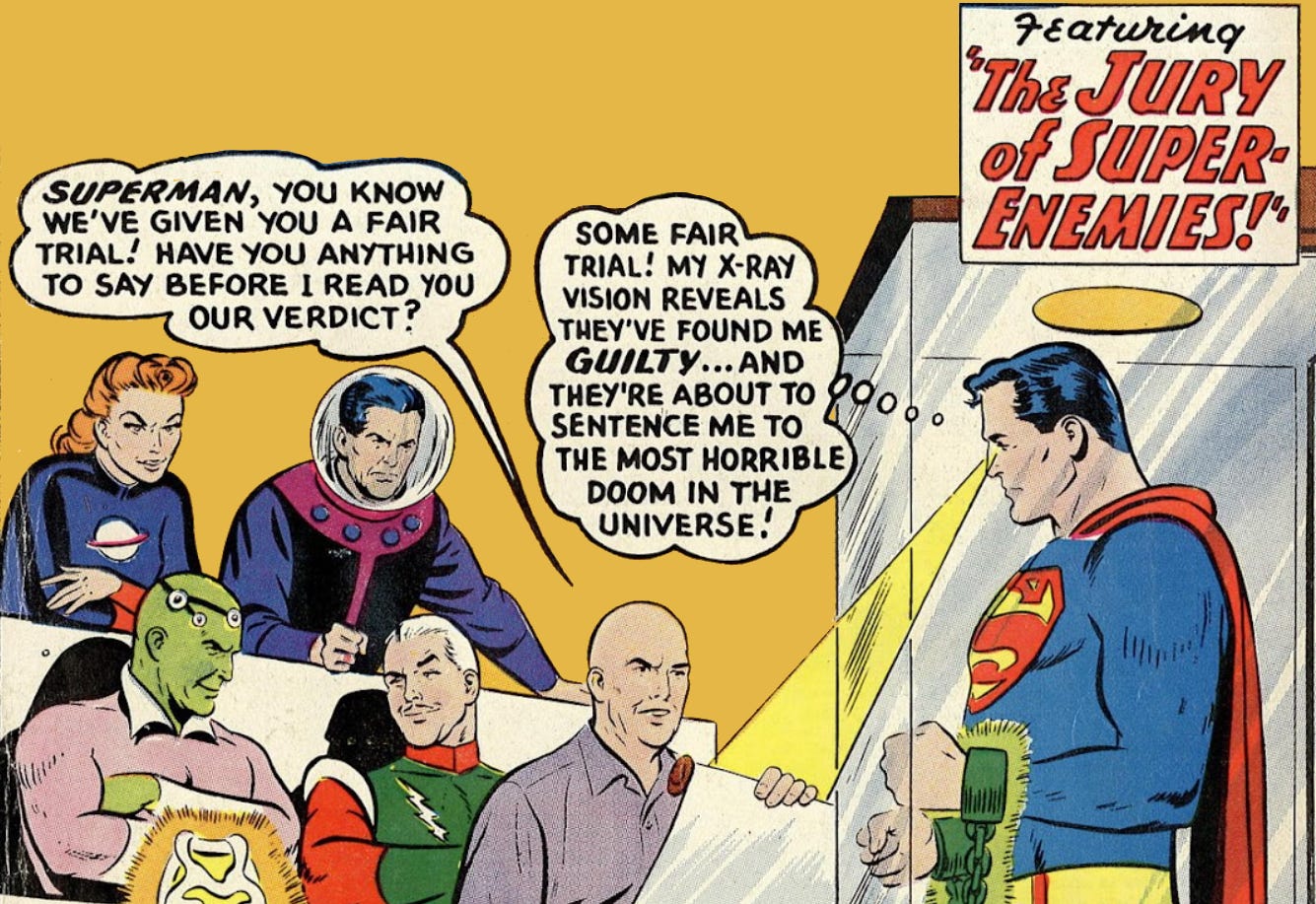
There are no juries. No sentences. Just individual people who may or may not like you for whatever reason. Including stupid reasons. Maybe they give you free points because of a fetish. Maybe they reflexively hate you because they’re bigoted. Every social interaction is a gamble.
I never liked gambling. I have literally never gambled in the strict sense of the word. I went to Las Vegas for the architecture and Cirque du Soleil.
Talking to people I don’t know is terrifying. Even just replying to comments on Substack is terrifying. I’m even scared to write to people I know. People whom I’m certain won’t roast me.
So when I had the chance to reconnect with a distant relative in Japan over Line (the Japanese equivalent of WhatsApp) … I didn’t. I struggled to write a polite opening message and gave up. (Japanese has a very elaborate formal style.) I chose silence over the possibility of offense.
Maybe this is cope, but the odds that person has anything in common with me are practically zero. Why take the risk?
Yes, I still fear Solar Judgment. Yet even if Solarity is taken out of the picture … I haven’t messaged another distant relative I recently discovered on the Mainland. I had a nice in-person chat with them. What else do I have to say to them?
I have a lot to say in general. What makes it to Substack is only 1% of what’s on my mind. I think much faster than I can type.
I don’t feel like saying it to people I know. It’s too alien for them. Most come from what I call mono backgrounds. I’ll explain that in another post. I might as well be speaking in a foreign language to them. They’re not just mono; they also have a command craving coupled with sotericism. A need for authority and saviors. They can’t take me seriously because I’m not ‘anointed’. They don’t want to listen to me because I don’t offer salvation. They are suckers who love scammers.
Juries love being fooled.
They love status. I don’t have it. Another reason I don’t want to socialize. I didn’t just fail to be Solar; I failed to (insert long list here).
And that doesn’t matter on Substack. Here people with zero status can pitch their ideas. My income, my job title - all that status stuff is unnecessary. Irrelevant. I am judged by what I write, not who I am. So I’m not Solar? So what?
Substack is as close as I can get to a world of ideas, and I love it.
I can’t live here, though. A website is not a real “here”. I live in the real world, and I have to face the reality that the Belcher parents described in the season 12 finale of Bob’s Burgers:
Bob: People are always gonna find a way to judge other people. To write that you're poop or crap on the bathroom wall of your restaurant, which makes you cry a little bit when you clean it up, but, um yeah.
Linda: You got to find a way to live in a world that's gonna judge you. Even if I want to find everyone who makes you feel bad and hit 'em with a bag of oranges.
Obligatory jury nullification reminder here :P
A courageous and honest post.
*"Talking to people I don’t know is terrifying. Even just replying to comments on Substack is terrifying. I’m even scared to write to people I know. People whom I’m certain won’t roast me."*
Get over it. Say it, get roasted and be damned. You can always apologise if you are misunderstood. You can always thank someone for an alternate view. Just do it.