
Suncoming
The fortieth anniversary of my first trip to Japan

This is my five hundredth post on Substack. I’m writing it forty years after my first trip to Japan.
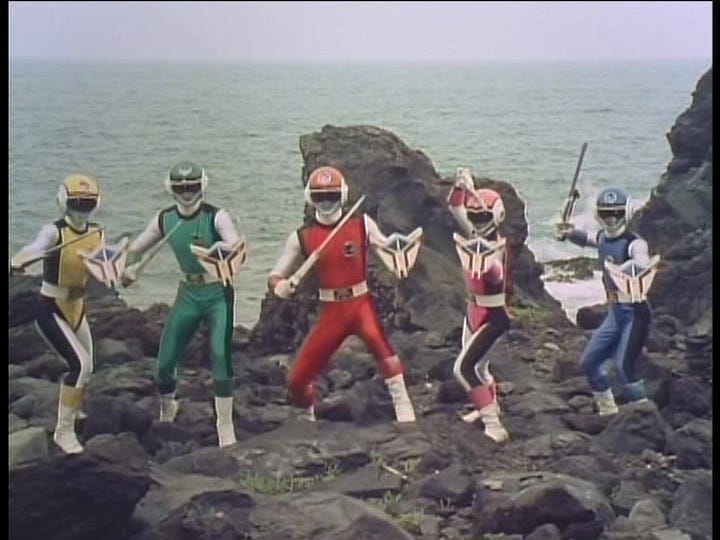

In Japanese, there is a special word for non-Japanese coming to Japan: 来日 rainichi, literally ‘come’ (来 rai) plus ‘sun’ (日 nichi, written as a drawing of the Sun). Suncoming.
‘Sun’ of course refers to Japan, which in Japanese is either Nippon or Nihon, both spelled 日本 ‘sun-origin’1.
Major countries have one-character codes in Japanese. While reading the Japanese Wikipedia a couple of days ago, I came across the word 訪伯 hōhaku ‘visiting Brazil’ with 伯 haku as an abbreviation of 伯剌西爾 Burajiru ‘Brazil’2.
When Japanese come back to Japan, that’s 帰国 kikoku, literally ‘return’ (帰 ki) plus ‘country’ (国 koku). Return to the country.
Just now I noticed that the Japanese Wikipedia article about Yoko Ono initially refers to her 帰国 kikoku when she returned to Japan up until she was thirty or thirty-one in 1964. When she returned to Japan in 2000 at age sixty-seven, the Japanese Wikipedia called that 来日 rainichi - a non-Japanese coming to Japan. She lost her Japanese status during her lifetime!
Another sign of that status is how her name is spelled in Japanese. She was born 小野 洋子 Ono Yōko with her name legally spelled in kanji (Chinese characters used in Japanese). But over time her name came to be respelled in the katakana script as オノ・ヨーコ. Names in katakana are almost always non-Japanese names. Not-Us names. I suspect the Japanese press respelled her name after she got married to ジョン・レノン Jon Renon: i.e., John Lennon, whose name is of course also in katakana. Her association with Lennon, coupled (pun unintended) with her many years abroad, ‘de-Japanized’ her.
Japan is very picky about who is Japanese. Even a native speaker of Japanese with only Japanese ancestry born and raised in Japan like Yoko Ono is no longer quite Japanese anymore. Her Japanese Wikipedia entry does state upfront that she is 日本の ‘of sun-origin’: i.e., Japanese, and that is apparently legally still the case, but its spelling of her name indicates her de facto de-Japanized status.
Legality, shmegality. In theory anyone can become Japanese … on paper. For free (at least as of 2022)! turning-japanese.info can walk you through the process of becoming Paper-Solar. Quite a few famous people have done so.
But becoming Really-Solar is impossible for most naturalized citizens. Looking, acting, and sounding Solar is a high bar. And even that might not be enough.
A few years after my first trip to Japan, I was waiting in a government office with other foreigners. They were 在日 Zainichi ‘located-sun’ Koreans who had been located in the Solar Land for generations. They looked, acted, and sounded like any other Japanese person. They probably even used Japanese aliases. No one on the street could guess who they were really were. But legally they were not Japanese. And even if they legally became Japanese, they still wouldn’t be Really-Solar.
Let’s look at the English and Japanese Wikipedia entries for a famous Zainichi Korean, 孫正義 Son Masayoshi, founder and head of SoftBank.
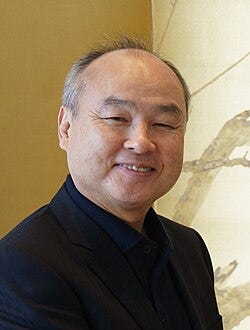
孫 Son is a Korean surname. His 通名 tsūmei 'through-name’ (legal alias) was 安本正義 Yasumoto Masayoshi, a completely Japanese-sounding name. When he moved to the USSA for high school, he ditched his fake Japanese surname and went by Son. At some point he later got Japanese citizenship through the 帰化 kika ‘return-ization’ process and kept his Korean surname even as a Paper-Solar. There is now nothing un-Japanese about him other than his ancestry.
And yet unlike the English Wikipedia, the Japanese Wikipedia does not start by saying Son is “Japanese”. In its first paragraph, it gives
his Korean name: 손정의 Son Chŏng-ŭi
his birthplace: 鳥栖 Tosu in 佐賀 Saga Prefecture
his 本貫 pon’gwan ‘(Korean) clan’: the 一直孫氏 Iljik Son clan
The Japanese reader knows that Saga Prefecture is in their country.
That reader will also know that Son is Korean.
The word ‘Japan’ does not appear until paragraph three which mentions how Son became a Japanese citizen using his Korean surname.
Yes, the sidebar mentions that he has Japanese citizenship, and the text refers to his return to Japan after graduating from the University of California at Berkeley as 帰国 ‘returning to the country’ like a Japanese rather than 来日 ‘coming to the sun’ like a non-Japanese. Nonetheless the initial impression of him as Korean rather than as Japanese remains. The Really-Solar don’t have Korean names or pon’gwan.
I don’t have a Korean name or pon’gwan. I do have Japanese ancestry as far as I know.3 So I had that much going for me. I thought I had more.
I was wrong.
Next: Tofu.
Ironically 日本 Nippon or Nihon ‘sun-origin’ is composed of Chinese roots. The irony may go even further, as the name might have originally been coined by the Paekche, one of many lost peoples of the Korean peninsula, to refer to their own country. After the fall of that country to Shilla (the country that became Korea), Paekche elite refugees came to Japan. Presumably playing the continental elite card (‘we’re from Over There, and we know better’), they got the local elite to adopt ‘sun-origin’ as a name of the archipelago that had become their new home. I imagine it took some time for the new name to filter down to the peasants.
Okinawan way down south never got the memo. ‘Japan’ in Okinawan is Yamatu from the native Japanese name Yamato ‘Japan’ with the -o > -u shift characteristic of Okinawan.
伯 has the special reading Bu- in the word 伯剌西爾 Burajiru ‘Brazil’ but is read as haku elsewhere.
A third-century Chinese chronicle indicates that the archipelago now known as Japan was once highly diverse. How the many peoples of the islands became one - with the exception of the Ainu of the north - is a mystery due to macroamnesia.
Congratulations on your 500th post!
"She lost her Japanese status during her lifetime!" XD XD Japan is collectively a salty Beatles fan.