
Throwback
Catch the sun

My last post was about my grandfather. He was a success story for the Japanese language education system in Hawaii. His immigrant parents and others of their generation sent their children to private Japanese-language schools after public schools. The language schools were intended to maintain Japanese identity 3,800 miles (6,200 km) away from the Solar homeland.
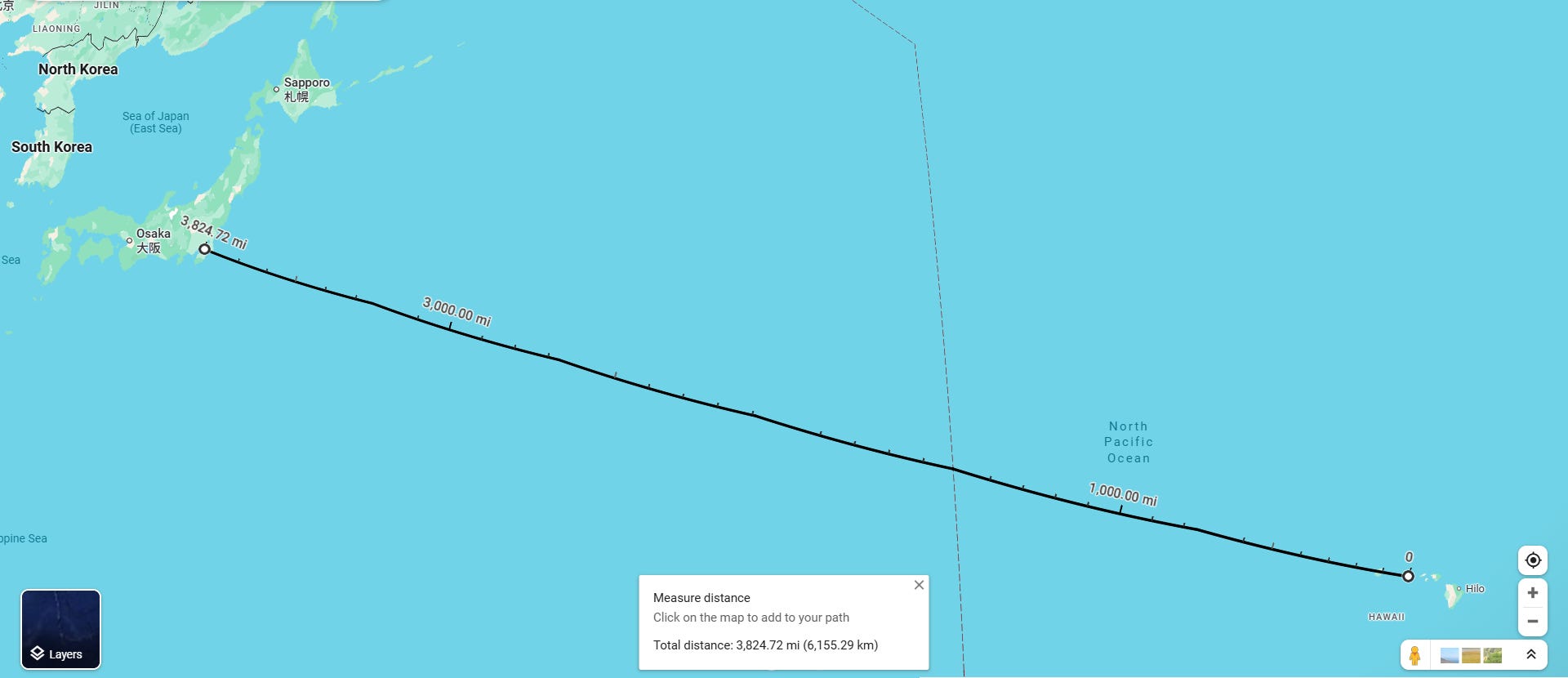
The schools taught reading and writing - an elaborate multiyear process that couldn’t be done at home.
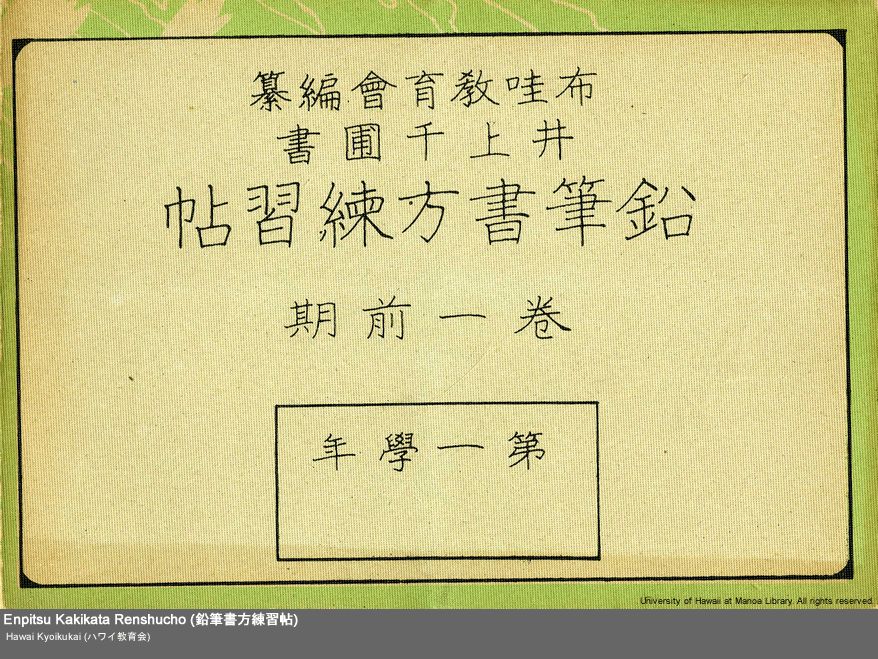
In the nineteenth century, Native Hawaiians became literate almost overnight because their alphabet was simple (only 13 letters) and their spelling was completely phonetic, but Japanese literacy is at the other end of the difficulty scale. Japanese has the most difficult script still in use. And it was even more difficult before a massive orthography reform in 1946: e.g., nowadays Hawai ‘Hawaii’ is only spelled phonetically as ハワイHa-wa-i, but in my grandfather’s youth, it was also commonly spelled 布哇, a combination of 布 fu and 哇 wa or ai pronounced Hawai, not the logical Fuwa or Fuai. (I explained the torturous reasoning behind that spelling in a footnote in my last post.)
The schools also taught 修身 shūshin ‘cultivation’ (i.e., Japanese ethics). Right and wrong, Solar style.
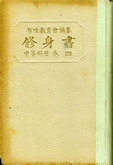
The second generation of Japanese in Hawaii could not be as Solar as the first, but the language schools kept 98% of them as close to the sun as possible.
Still, close would not have been enough for my grandfather to take an elite university entrance exam straight off the boat in the thirties. He must have crammed like crazy for a year to bridge the gap between the functional literacy his Hawaii school gave him and the high-level skills demanded by the exam: e.g., Classical Japanese as well as modern Japanese and even Classical Chinese. Neither of those languages were covered in Hawaii’s schools, but I’d be surprised if they weren’t on the exam. Elite Japanese were expected to be acquainted with both.
Hawaii’s schools were just supposed to get Japanese kids somewhere near the level of the average Japanese. That alone was a daunting task. I seriously doubt the vast majority of second-generation Japanese in Hawaii attained full average native speaker-level competence in their home language even with schooling. There was only so much that could be done after English school. There was just no way those hours could produce the same results as 24/7 living in Japan. Just making the kids 80% Solar would be an accomplishment.
My grandfather somehow made the leap between 80% competence to 120% competence1 to beat native speakers and get into an elite Japanese university. Having attended both a Japanese language school and an elite Japanese university like he did, I am aware of the gap between the two. I had to cross it myself - and I had more time than he did. Plus I didn’t have to take an entrance exam. I doubt I could pass one.
My grandfather never mentioned that he did. He never mentioned his past in Japan at all. He put Japan behind him. I never heard him speak Japanese. He didn’t read a Japanese newspaper like my other grandfather.
The only Japanese books in his house were mine.
I spent a lot of time in his house as a child. There I watched a lot of Japanese TV shows like Kikaider (1972-1973).
Kikaider was a megahit in Hawaii, capturing the interest of children far beyond the Japanese community. It is still fondly remembered today. Here’s lead actor Ban Daisuke (in the thumbnail above) signing his autograph in Honolulu in 2023, almost fifty years after the show premiered here in 1974.
I watched so much Japanese TV that the first word I spoke was Japanese. That word was violent, reflecting the content I was immersed in. The mid-seventies were the golden age of Japanese superheroes amd robots on Honolulu’s KIKU-TV. Those shows were all that I cared about.
Having taught myself to read English, I read the English subtitles and made connections between them and the Japanese dialogue.
I taught myself to read hiragana and katakana and a few kanji - the most common ones in the superhero and robot books in my collection.
I couldn’t stop there. So I was enrolled in a Japanese language school.
Like my parents’ generation before me. The difference, though, was that I was motivated.
Unlike their parents, the Boomer Japanese in Hawaii had no interest in Japanese, the language of the losers of the war. Barely any Boomer Japanese know more than a few words of Japanese. Enrollment in Japanese language schools fell after the war, and those who attended weren’t necessarily learning. They were often there just because they needed a place to stay between the end of English school and the time their parents came home.
By the 1970s, the language schools had even begun to lose their function as de facto daycare. I recall a full-ish classroom when I started at my school. By sixth grade, I had only three classmates.
I was the only student in my grade after that.
There must have been a lot of students like me before the war. But in the 1980s, I was an isolated anomaly. A boy out of time. A throwback.
One of the definitions of throwback at Wiktionary is:
A person similar to an ancestor, or something new similar to what already existed
My teachers became tutors intent on reconnecting me to my ‘ancestral’ language.2 They all tried to make me approach a Really-Solar level of skill. Everything I was assigned was for native speakers. No more textbooks customized for students in Hawaii. I struggled with a grammar workbook. I failed to get far with my first novel. I made much more progress with history textbooks - the same ones used by students a year or two younger than I was in Japan. Complete with a government-approved narrative of Asian history that was … selective.
I think my teacher-tutors saw me as if I were slightly retarded - a couple of years ‘behind’ where I should have been.
Where I wanted to be. I wanted to “catch the sun” (1:02 in the video below) so badly.
In third grade, I got Florence Sakade’s A Guide To Reading & Writing Japanese (2nd ed., 19613) which indicated when Japanese students learned certain kanji.
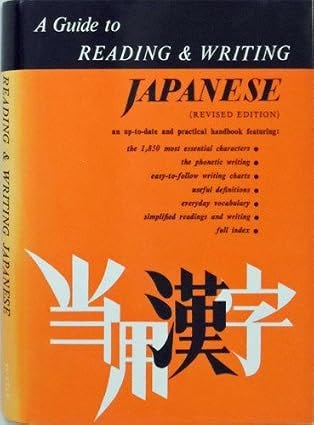
I’d look at, say, the sixth grade section of the book, and see the kanji there:
律 #877 ritsu ‘law’
率 #878 ritsu ‘rate’; sotsu ‘to lead’
略 #879 ryaku ‘abbreviation’
臨 #880 rin ‘to face’
論 #881 ron ‘argument’4
I’d find one or two that I recognized, and think, ‘I know what a sixth grader knows! Yay me!’
I picked up kanji by reading kids’ books which had the pronunciations of kanji indicated with furigana - phonetic training wheels. If you see a kanji with furigana over and over again, you eventually associate the kanji with its reading, and then you don’t need the furigana anymore.
I wasn’t able to read without furigana until shortly before my Suncoming - my first trip to Japan.
Looking back, that was a sign. I was ready to go!
Next: Arrival and beyond.
Addendum: The social preview image for this post is from the cover of Maurene Goo’s Throwback (2023).
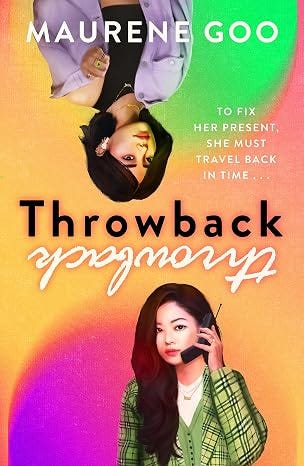
I picked that cover not only because it had a logo I wanted for my post title but also because it’s for a novel about Asian-Americans - albeit Koreans rather than Japanese. The title refers to time travel back to the 1990s rather than to the main character reverting to her roots.
These percentages are arbitrary guesses in the dark.
I put ‘ancestral’ in square quotes because the reality was that the Japanese I was learning was the modern Tokyo-based standard, not the rustic dialects that my ancestors had been speaking. But at the time I was only dimly if at all aware of Japanese dialects. So to me there was just ‘Japanese’, and surely my ancestors knew the same ‘Japanese’ that was in the mass media and the classroom. Nope.
There is a modern edition, but I don’t know how much it resembles the one I have which is now very dated.
These are the last five kanji in the sixth grade section. Unfortunately, most of the remaining kanji in the book are in a long list ordered by how many strokes they have because the government did not specify any grades or sequential learning order for them.
"That word was violent," No detailed break down of which word and why? :) I would have expected some specificity hehe.