
Thakre
All is vanity

In my last post, I wrote about how Moby-Dick might not have been included in Encyclopaedia Britannica’s Great Books of the Western World.
The nine men - OMG NO WOMYN - who determined what went into the first edition, were (in the order they appeared on the title page of the first volume)
Robert Maynard Hutchins (BA, LLB, Yale)
Mortimer J. Adler (PhD, Columbia)
Stringfellow ‘Winkie’ Barr (Oxford University [Rhodes Scholar], University of Virginia, University of Paris; can’t find what degrees he got)
Scott Buchanan (PhD, Harvard)
John Erskine (PhD, DLitt, Columbia; DLitt, Amherst)
Clarence Faust (PhD, University of Chicago)
Alexander Meiklejohn (PhD, Cornell)
Joseph Schwab (PhD, University of Chicago)
Mark Van Doren (PhD, Columbia)
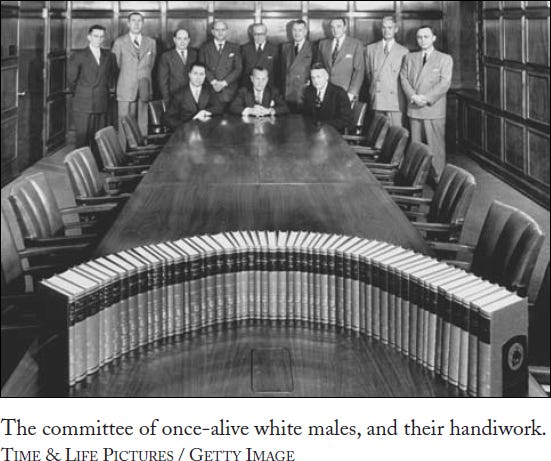
The caption is from Alex Beam’s A Great Idea at the Time (2008). I acknowledge more diversity than he does: Adler was Jewish. Apart from that, though … they were all presumably cishet (sick!) and - more seriously - Americans. Not even North Americans - there was no Canadian representation. Worst of all, no European representation. Who needed most of the West to choose the best of the West?
Second-in-command Adler laid down five criteria for a ‘Great Book’:
Be important in itself and without reference to any other; that is, it must be seminal and radical in its treatment of basic ideas or problems;
Obviously belong to the tradition in that it is intelligible by other great books, as well as increasing their intelligibility;
Have an immediate intelligibility for the ordinary reader even though this may be superficial;
Have many levels of intelligibility for diverse grades of readers or for a single reader rereading it many times; and
Be indefinitely rereadable. . . . It should not be the sort of book that can ever be finally mastered or finished by any reader.
In A Great Idea at the Time, Beam shed light on the selection process - which did not seem to have much to do with the five criteria, judging from his quotations.
Erskine regarded Moby-Dick as being “[o]f no such size, beauty, importance as [Walt] Whitman” but was outvoted six to one. (I guess not all nine had to vote.) Whitman didn’t make it.
Nor did Dickens, despite Erskine being “violently for” him along with Van Doren. Schwab wrote him off as “boring”.
Schwab also dismissed Rousseau as “crap”, but The Social Contract, A Discourse on the Origin of Inequality1, and A Discourse on Political Economy2 were included in volume 38 along with Montesqieu’s The Spirit of the Laws.
Schwab opposed Twain, who wouldn’t be included until the second edition of the Great Books, two years after Schwab’s death in 1988.
What was Schwab for? Duns Scotus. Adler said, “Nobody knows about Duns Scotus.” I do recognize the name, but didn’t know anything about him until I looked him up tonight:
John Duns Scotus, “Duns the Scot”; c. 1265/66 – 8 November 1308) was a Scottish Catholic priest and Franciscan friar, university professor, philosopher and theologian. He is considered among the most important philosopher-theologians in Western Christendom during the last part of the medieval period, together with Thomas Aquinas, Bonaventure and William of Ockham.
Duns Scotus has had considerable influence on both Catholic and secular thought. The doctrines for which he is best known are the “univocity of being“, that existence is the most abstract concept we have, applicable to everything that exists
… a doctrine that I doubt appeals to Innomen, unless I misunderstand it and/or his Experiential Empiricism.3
I doubt Schwab was for Burnt Njal, which was unknown to me until I saw Beam’s reference to
the gruesome tale of Bergthorsknoll farmer Njal Thorgeirsson, whose enemies incinerate him and his family in their home. “‘Burnt Njal’ is exceedingly important,” Barr told the committee. His colleague Buchanan “pointed out that it was the source of English common law,” according to historian Hugh Moorhead [PhD, University of Chicago; did the English really pay that much attention to Iceland?], “and Van Doren made a case for its extraordinary contemporaneity, witness the Dumbarton Oaks conference,” which in the fall of 1944 was trying to create the United Nations [while The Nine were trying to choose the Great Books].
Beam regarded Burnt Njal as among the nominated “works that draw a complete blank for the twenty-first-century reader.”
Another such work was William Makepeace Thackeray’s The History of Henry Esmond, Esq., A Colonel in the Service of Her Majesty Queen Anne (1852). The what? I had heard of Thackeray and his Vanity Fair (1847-1848) but not this:
The book tells the story of the early life of Henry Esmond, a colonel in the service of Queen Anne of England. A typical example of Victorian historical novels, Thackeray's work of historical fiction tells its tale against the backdrop of late 17th- and early 18th-century England, and utilises characters both real (but dramatised) and imagined. It weaves its central character into a number of events such as the Glorious Revolution, the War of the Spanish Succession, the Hamilton–Mohun duel and the Hanoverian Succession.
[…]
American publisher and writer James T. Fields, in his autobiographical Yesterdays with Authors, said of the book, and of his friend Thackeray:
To my thinking, it is a marvel in literature, and I have read it oftener than any of the other works.
Henry Esmond was once “oftener” cited than Moby-Dick until 1920, shortly after the latter ‘rode the van’.
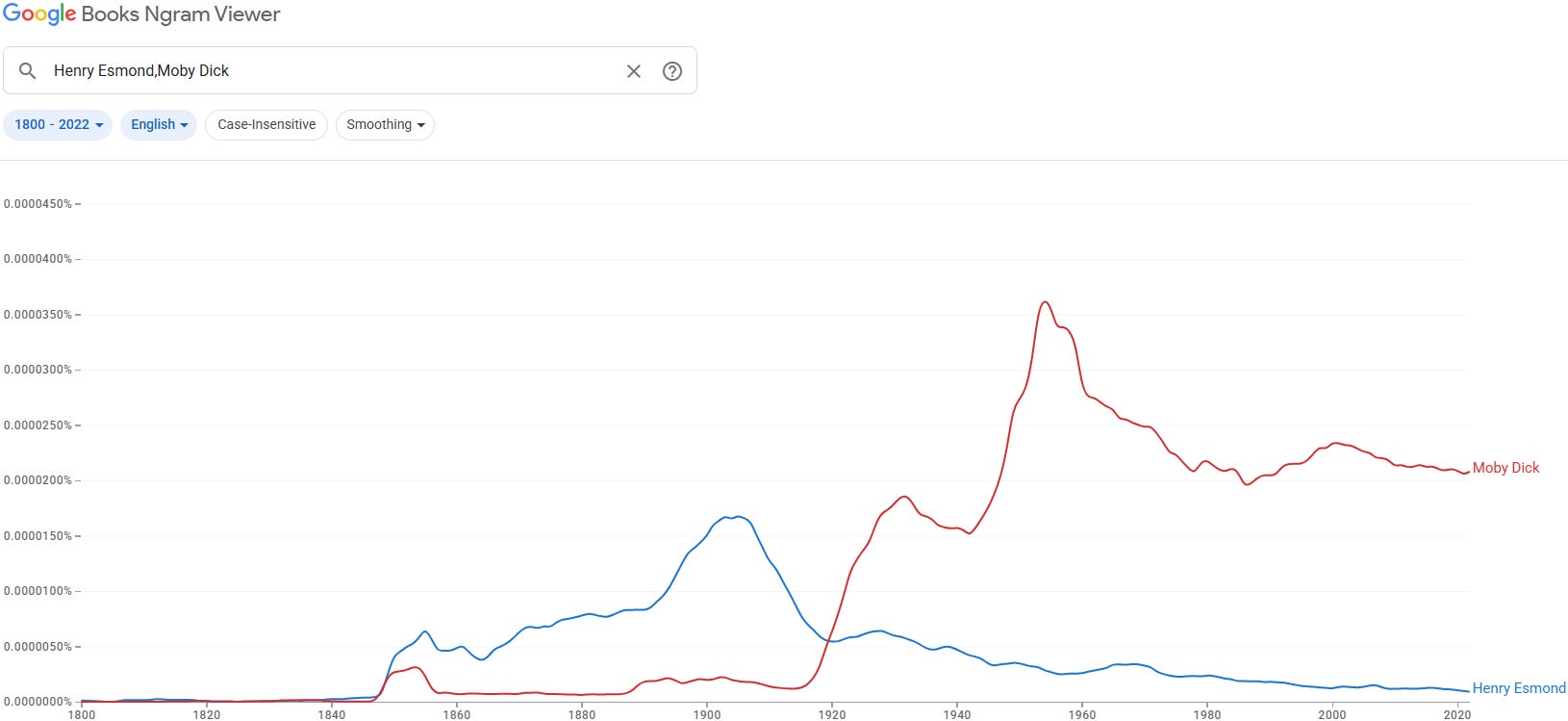
At its peak in 1905, Henry Esmond was mentioned nine times more than Moby-Dick in Google Books’ corpus. It even beat Duns Scotus for years:
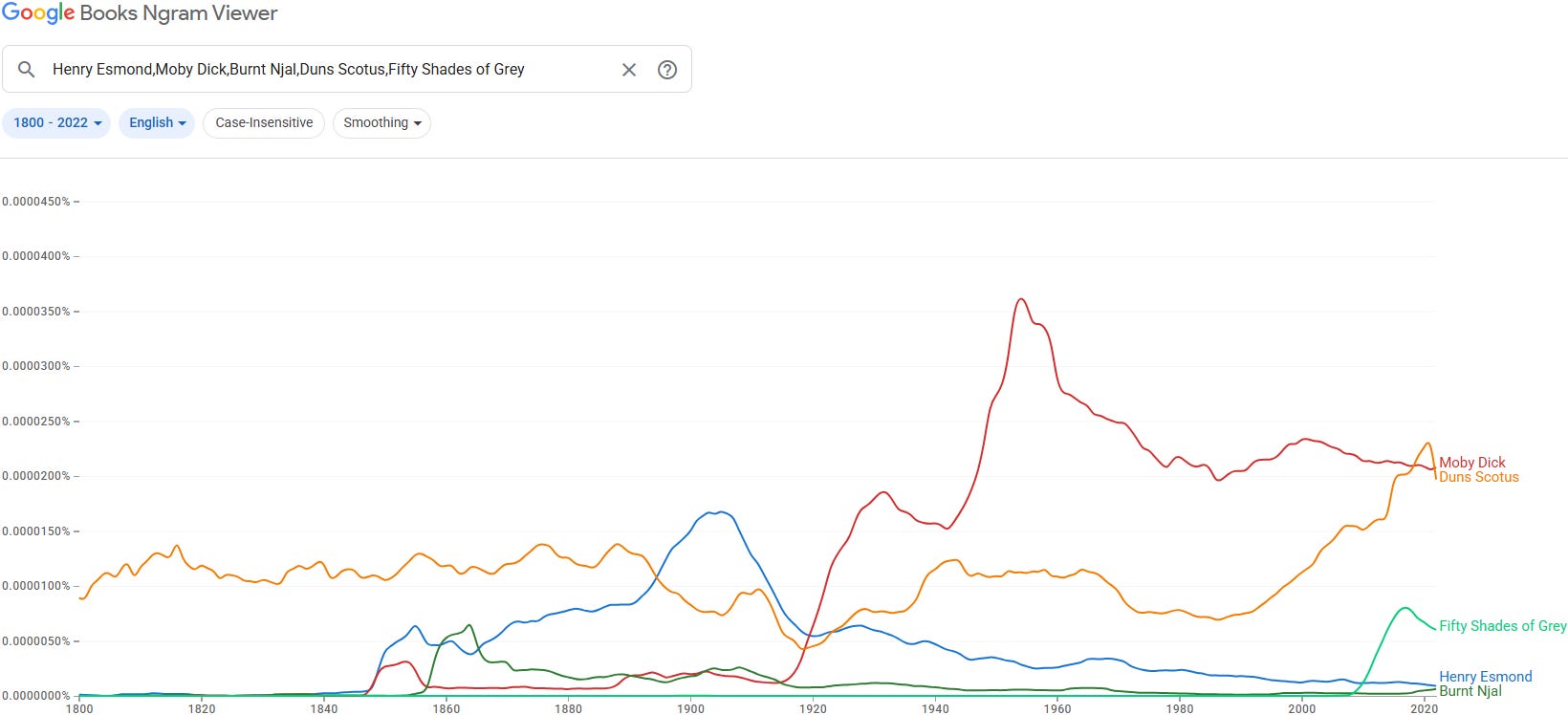
But then came the van, and Moby has overtaken Duns ever since except in 2019-2021 for some reason.
Henry Esmond has been in decline for a century, though its author was once
ranked second only to Charles Dickens, but he is now much less widely read and is known almost exclusively for Vanity Fair.
I didn’t know he wrote Vanity Fair. If I saw his name together with Vanity Fair, I failed to link them in my memory.
In Thackeray's own day some commentators, such as Anthony Trollope, ranked his History of Henry Esmond as his greatest work, perhaps because it expressed Victorian values of duty and earnestness, as did some of his other later novels. It is perhaps for this reason that they have not survived as well as Vanity Fair, which satirises those values.
Thackeray’s reputation had been so great that his admirer केशव सीताराम ठाकरे Keshav Sitaram Thakre respelled his surname in the Roman alphabet as Thackeray. (The Devanagari spelling of his surname [ठाकरे] remained unchanged.
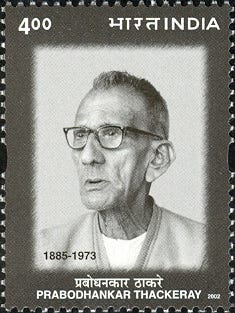
The similarity of Thakre and Thackeray is coincidental; the Marathi name is from Sanskrit ṭhakkura- ‘deity, object of reverence, man of rank, chief’.4 Thakre/Thackeray
was an Indian social reformer, writer and politician. He campaigned against superstitions, untouchability, child marriage and dowry. He was also a prolific author.
He was one of the key leaders of the Samyukta Maharashtra Samiti which successfully campaigned for the linguistic state of Maharashtra. He was the father of Bal Thackeray, who founded the Shiv Sena, a pro-Marathi leader. He is also the paternal grandfather of former Shiv Sena chief and Chief minister of Maharashtra Uddhav Thackeray and Maharashtra Navnirman Sena chief Raj Thackeray.
I find ironic that a family committed to Marathi identity uses a spelling from the language of their former colonial overlords. The number of Korean nationalists using Japanized names - or Vietnamese nationalists using Gallicized names - is zero.
Is there a Filipino nationalist with an Anglicized name? English has planted deep roots in the subcontinent and in the Philippines that remain long after the British and Americans respectively left. When I was in Manila, I was amazed by a local taxi driver with perfect American English. An outlier, I’m certain, but still … over eighty years after Philippine independence,
Philippine laws and court decisions, with extremely rare exceptions, are written solely in English. English is also used in higher education, religious affairs, print and broadcast media, and business. Most well-educated Filipinos are bilingual [or multilingual if Tagalog is not their first language] and speak English as one of their languages. For highly technical subjects such as nursing, medicine, computing and mathematics, English is the preferred medium for textbooks and communication. Very few would prefer highly technical books in either Filipino or the regional language. Movies and TV shows in English are usually not dubbed in most cable channels except a few such as Tagalized Movie Channel.
Meanwhile, in India,
English is one of the two languages used by the Government of India for communication, and is enshrined in the Constitution of India. English is also an official language in eight states and seven union territories of India, and the additional official language in five other states and one union territory. India has one of the world’s largest English-speaking communities. Furthermore, English is the sole official language of the Judiciary of India, unless the state governor or legislature mandates the use of a regional language, or if the President of India has given approval for the use of regional languages in courts.
[…]
As a multilingual country, English is the lingua franca among different regions of India. Writing for The New York Times, journalist Manu Joseph stated in 2011 that, due to the prominence and usage of the language and the desire for English-language education, "English is the de facto national language of India. It is a bitter truth." In his book, In Search of Indian English: History, Politics and Indigenisation, Ranjan Kumar Auddy shows that the history of the rise of Indian nationalism and the history of the emergence of Indian English are deeply inter-related.
So the irony goes even further than the Thakre/Thackeray family. I should check out that book.
Until then, I’ll just turn to another part of what was once British India.
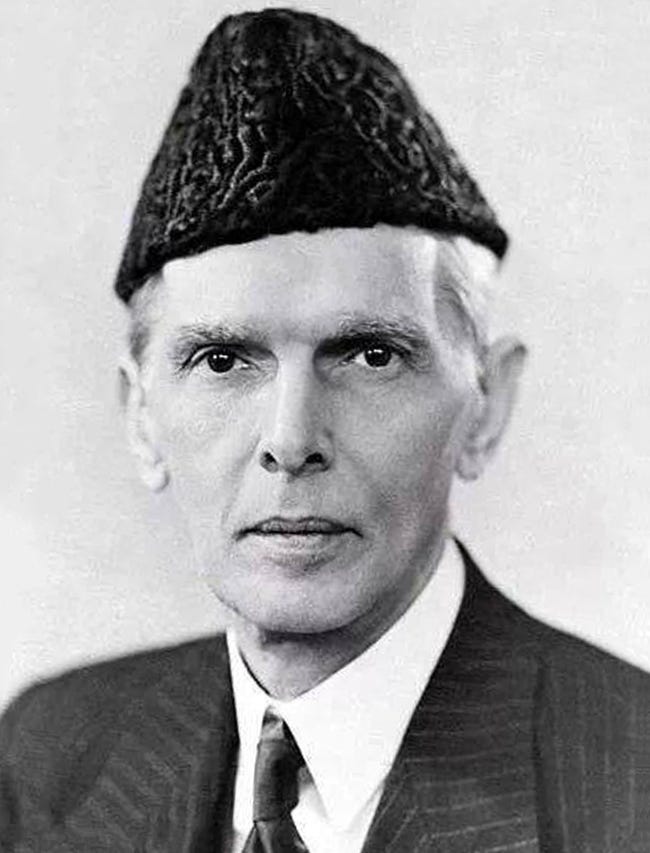
محمد علی جناح Muhammad Ali Jinnah, the father of Pakistan,
was not fluent in Gujarati, his mother-tongue, nor in Urdu; he was more fluent in English
… which is one of Pakistan’s official languages:
English language continues as the language of power and is also the language with the maximum cultural capital of any language used in Pakistan. It remains much in demand in higher education in Pakistan.
[…]
Many street signs, shop signs, business contracts and other activities use English. All documents used by government and court also include English, despite a 2015 order by Pakistan’s Supreme Court to replace English at an official level with Urdu [the other official language which only 9% of Pakistanis speak natively; the other 91% speak about 80 languages].
[…]
Pakistan boasts a large English language press and media. All of Pakistan’s major dailies are published in or have an edition in English.
English is the language of information on the subcontinent, judging from the brevity of most subcontinental-language articles I’ve seen on Wikipedia. The Marathi article on Keshav Sitaram Thackeray and the Urdu article on Muhammad Ali Jinnah do have only slightly fewer lines than their English counterparts, but I’d expect articles of local interest to be long. Conversely, the Marathi article on विल्यम मेकपीस थॅकरे William Makepeace Thackeray is the first Wikipedia ‘article’ I’ve seen with no content whatsoever!
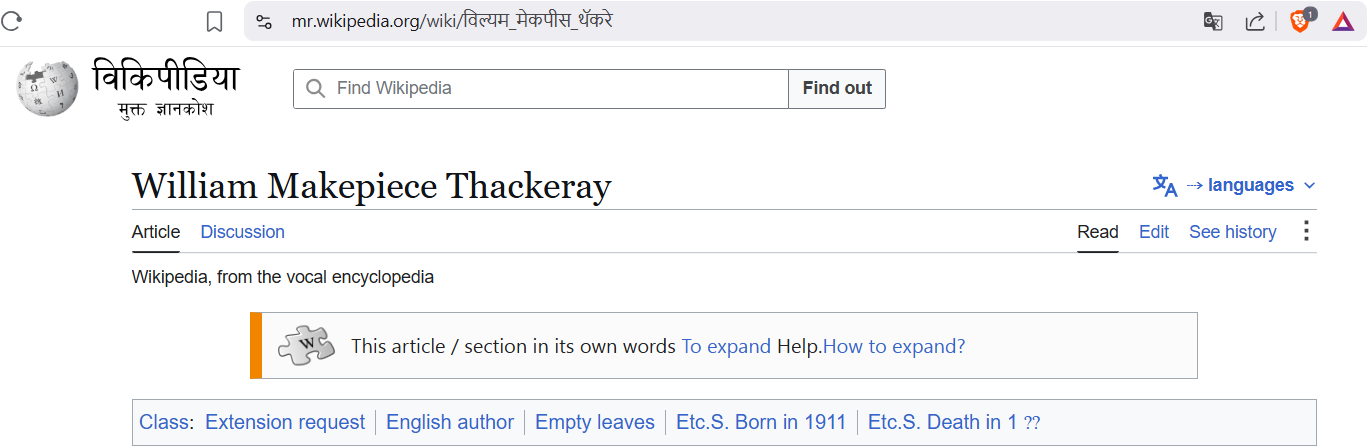
If a Marathi wanted to know about the man whose spelling Keshav Sitaram Thackeray adopted, they’d be out of luck if they could only read their native language. They don’t need English rule, but they might need English information.
I don’t know what this is.
Also new to me. The absence of an English or even French Wikipedia entry is telling, though it has a French Wikipedia entry.
Innomen’s book The Butlerian Setup made me reject the primacy of ‘existence’ of “mind-independent material reality”:
The Three-Step Argument: Why Mind-Independent Matter Violates Burden of Proof
Step 1: All evidence comes through experience. Step 2: Every piece of evidence for mind-independent material reality comes through experience. Step 3: Therefore using experiential evidence to prove the existence of something supposedly independent of experience is circular reasoning. This violates burden of proof.
রবীন্দ্রনাথ ঠাকুর Rabindranath Tagore bears the Bengali version of that surname (ঠাকুর Thakur) which he spelled as Tagore in Roman letters. In theory the Marathi could also call him टागोर Thakur or even translate his name as ठाकरे Thakre, but the Marathi Wikipedia calls him टागोर Tagor based on the English spelling minus the final silent -e.
Your guess is correct. Duns Scotus's univocity of being treats existence as a single abstract concept that already covers mind-independent material reality. Experiential Empiricism withholds assent from that move because every datum offered for an independent external order arrives through present experience, so the inference is circular. The three-step argument you quoted identifies the exact point of divergence. No misunderstanding on your part.
I must say this makes me optimistic. I swear I'm not trying to sound snide but does this mean you understand EE? Would be great to stop being the only one XD
I feel dumb for being proud of english being everywhere. I think part of me it just happy I don't have to learn another. But also it's beyond that, something like nationalism. A leftover of grade school training no doubt.
People love hats. Thinking about that how an alien might is fun. Kinda weird how we don't have more functional hats. Like cargo hats with actual pockets, or hats that doos stuff requiring a battery. I kinda hoped covid masks would kick off cyberpunk helmets, but we missed the opportunity. Masks add to anonymity. No one noticed the opportunity. It just became "face diaper" or "omg plauge."
I was like, "Noice! No need for fake smiles!"