
Proximate
Care about your mates, not proxies

I have been writing a lot about the forgotten American writer James T. Farrell lately. I can relate to him because he and I both
share a dim view of our respective peoples
started out on the Left
moved Rightward
became neoCON-adjacent (in his case) or full-blown neoCON (in my case)
supported distant foreign wars (Vietnam and Iraq)
were emotionally invested in distant foreign lands (the Soviet Union in his case; Japan and Iraq in mine)
The last two points are characteristic of soteric externals: people with their eyes fixed on abstract ‘saviors’ way out there (which in fact are really fantasies in their heads). Although I’ve never been to Iraq, it was the sun around which my neoCON blog orbited for a couple of shameful years before I woke up.
Farrell did eventually get his eyes off the USSR, but he then began what his editor Jim Henle called a “love affair” with the UAW (United Auto Workers).

Robert K. Landers’ An Honest Writer (2004) described that affair:
He [Farrell] followed its internal struggles closely, attended many subsequent conventions, and became a fervent advocate of trade union educational efforts.
Of course, Farrell was not himself an auto worker. He had been the first of his proletarian family to go to college, and as far as I can tell, he spent his entire adult life as part of the literary elite. While I would argue that his muh-UAW phase was healthier than his muh-Trotsky phase, it was still a form of externalism. It wasn’t as if Farrell lived in Detroit and were concerned about his literal neighbors. I doubt he actually knew any auto workers.
What would it be like for an auto worker to see that High Lord descend upon his convention to show that He Cared? Is it how people in the Third World feel when they see White church members show up for a weekend or whatever to help in a form of altruistic tourism?
Ugh, I’m almost out of time already, and I’ve squandered this post on criticizing Farrell again instead of getting to my point - my positive alternative to soteric externalism. Which isn’t as radical as Innomen’s experiential empiricism because it’s something that could work for people who are still external in the broader sense of being materialist, religious, etc.
That alternative calls for people to be proximate.
To stop investing in distant, abstract proxies one does not know through personal experience. Significant personal experience, not tourism. No, attending a UAW convention didn’t make Farrell an auto worker. No, having a conversation with the great Trotsky once as Farrell did (in English!) didn’t make them acquaintances, much less friends - at least not in the way I use that word.
Invest instead in your mates. Not celebrities you met once. Not social media stars you have parasocial relationships with, but people you have real relationships with. Your friends. Your family. If you have neither friends nor family - and even if you do - invest in yourself too. And by invest I’m not talking about the stock market. Beyond that, I can’t be more specific because I don’t know you.
I do know what works for me. Investing in what’s beyond my own sphere is a distraction.
That sphere ends at the edges of Hawaii. I’m most concerned about what happens on these tiny rocks, not the White House and not the Kremlin. Because what happens here directly affects me.
I am not advocating total ignorance of the outside world. Living in an American colony, I am acutely aware of the effects that faraway titans can have on us. I’m not saying “don’t look”; I’m saying “prioritize - by proximity”. Learn who rules your region. Who shapes the world you and your loved ones - if any - live in. Whose decisions impact you firsthand.
The only metric that’s actually real is experiential impact, the impact on suffering.
- Innomen
Update (20 July 2026): I finally got around to coming up with an image to symbolize this post - a Chinese character to symbolize proximate:
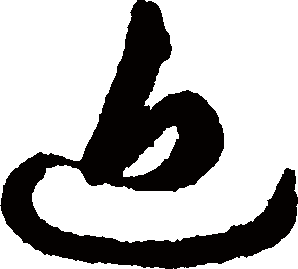
That’s the Chinese character 近 ‘near’ reduced to a single stroke in the cursive of Ming dynasty calligrapher 祝枝山 Zhu Zhishan (1461-1527).
I just realized that cursive simplification not only looks like a logo but also resembles the long-extinct letter ꞗ once used to write a v-like sound in 17th century Vietnamese. That letter has been replaced by v in modern Vietnamese.