
Judge
Why look up to lottery winners?

I almost used this as the social preview for my last post, “Jury”.

That excerpt from the cover of X-Men #37 (October 1967) depicts the team1 (right) being judged by the Mutant Master (left) and a jury of their peers - other mutants. The sentence? “Utter oblivion” for betraying their own species - Homo superior!
Obviously, the X-Men didn’t deserve that sentence - and did survive it.
What wasn’t so obvious was the Mutant Master’s identity. Beneath a helmet that reminds me of Britain’s Judge Dredd from a decade later (below) …

… and inside a costume was … a green octopus!?
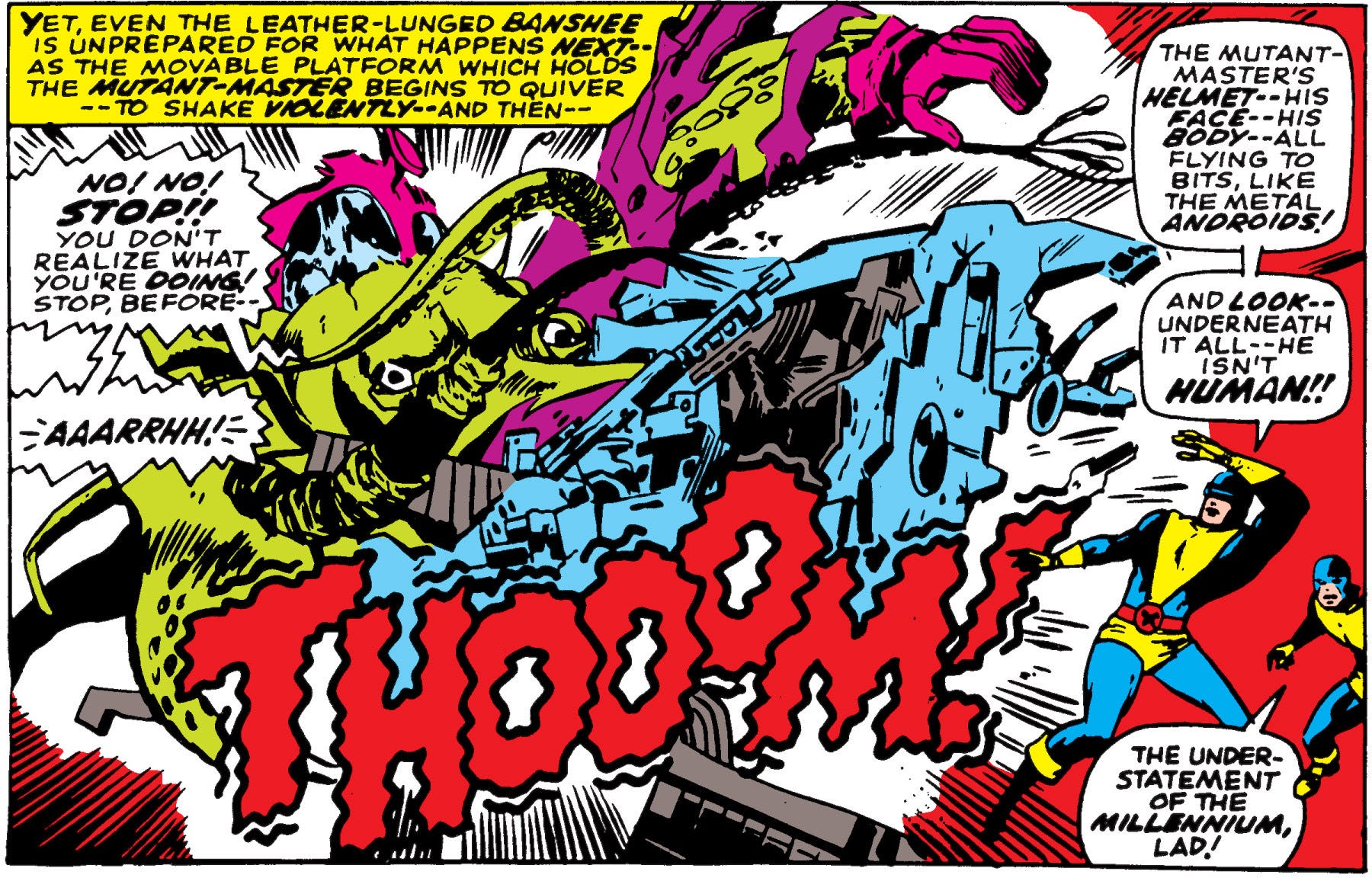
A green alien octopus!
As for the jury, they consisted of four of the X-Men’s old foes.
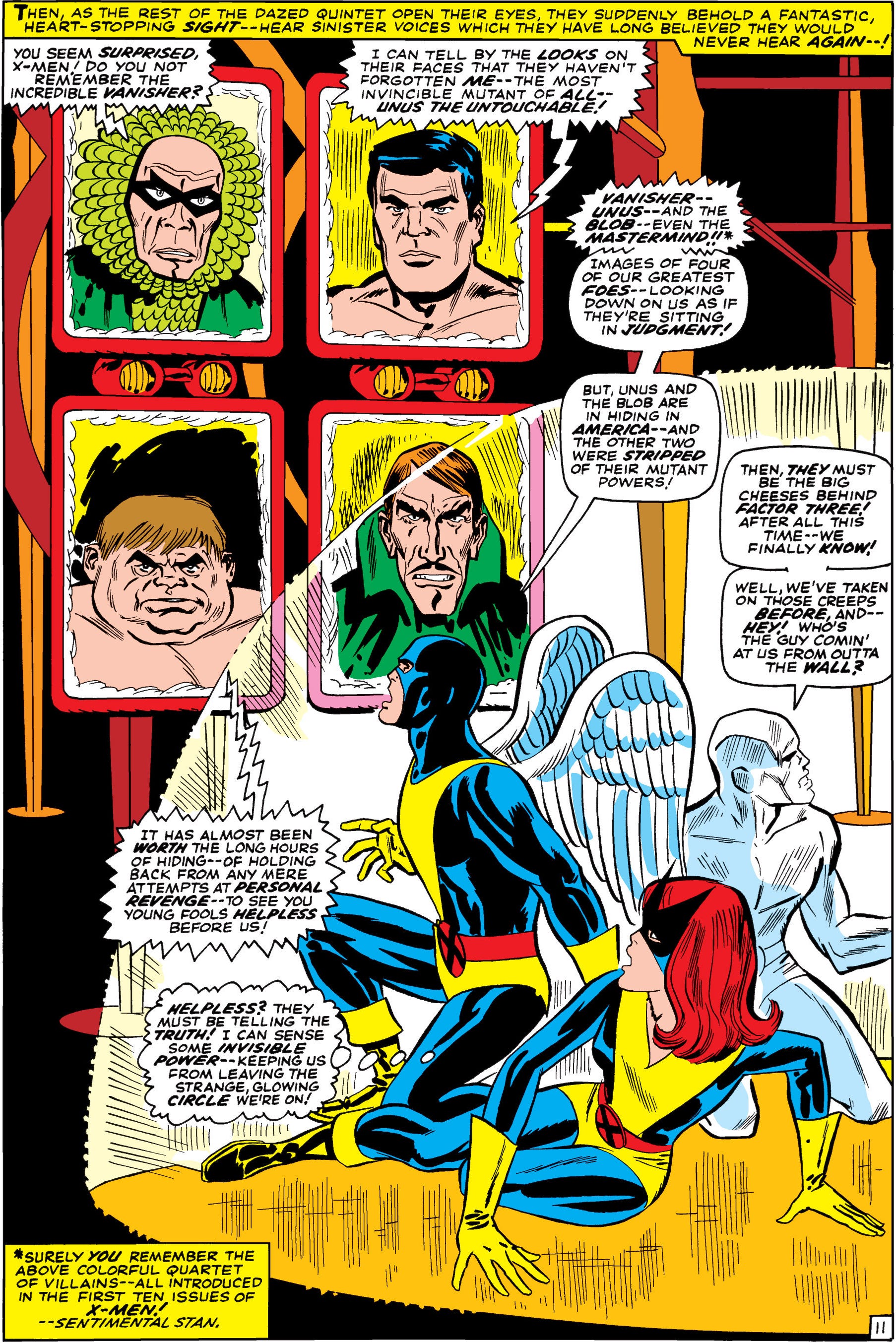
What qualified those evil mutants to determine the fates of heroes?
Nothing.
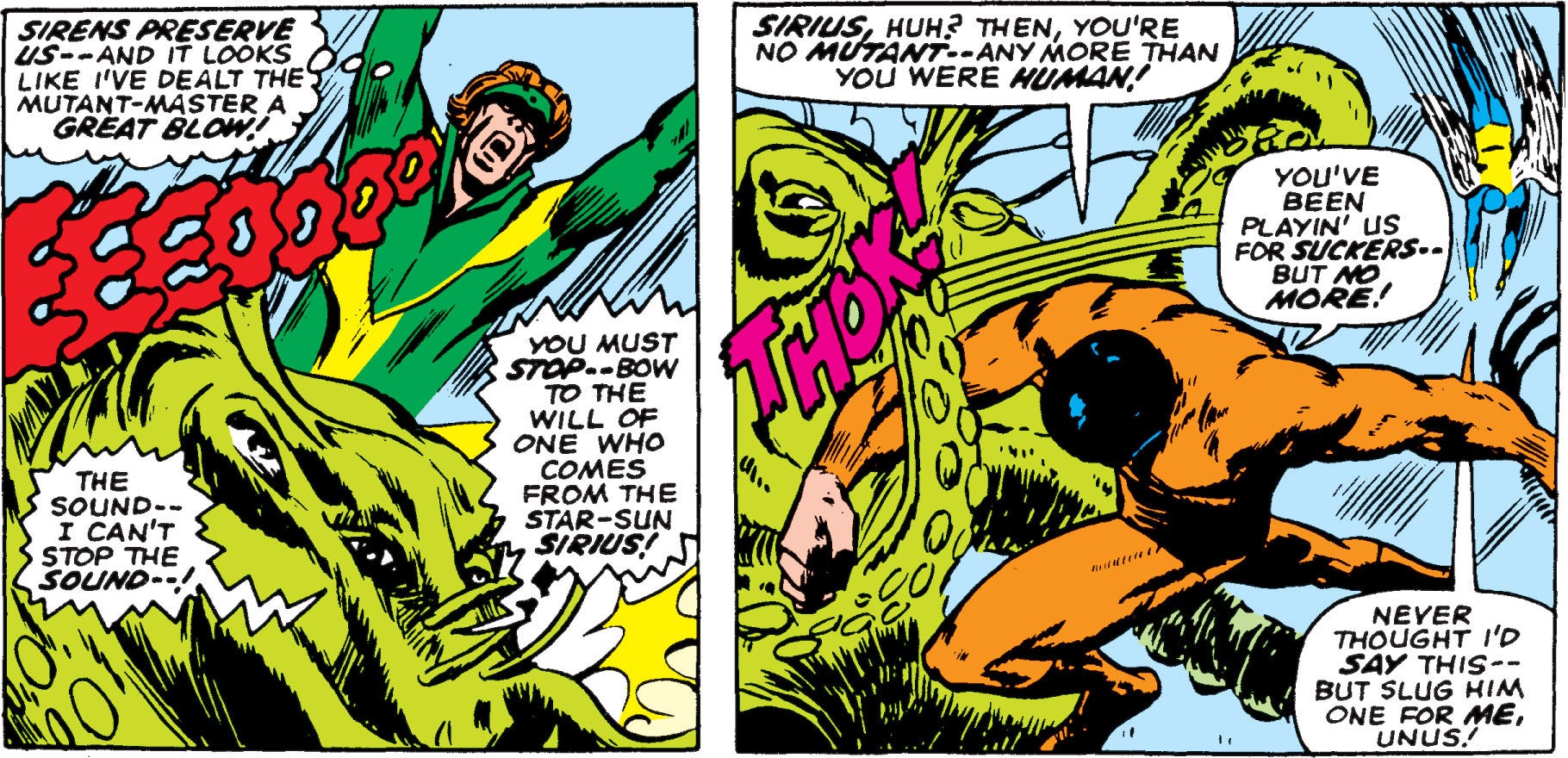
What qualified a creature from Sirius to pretend to dispense justice on Earth?
Nothing.
The imaginary juries that haunt me and Russian expats in Belgrade aren’t supervillains, much less extraterrestrials. They’re people.
Not gods.
Not kami sitting atop Mount Fuji. Or whatever the equivalent for the Russian expats would be.
I have been judged by real Japanese people.
Similarly, the Russian expats are judged by real Westerners once they reach “Lisbon, Madrid, or Berlin”.
The judges aren’t villains. Again, they’re people. Just like we the judged. Who also judge others … despite our own flaws.
I can’t pretend that I don’t judge people. It’s a survival instinct.
In Hawaii, I encounter the homeless almost every day. As I approach them, I always ask myself, do I walk right past them, or do I go around them somehow? The screamers get the second treatment. As do the people who block the sidewalk. I’m not going to step over them - to treat them like inanimate objects. Notice I call them people. Not a ‘problem’ to be ‘solved’.2 Or condemned.
I try to live by what I’ll call the Golden Rule of Judgment. Judge as you would want others to judge you.
I used to be way more judgy. Full of myself. Feeling ‘qualified’ to look down on others. Like the Mutant Master looked down on the X-Men.
Then I got off my pedestal. And I stopped putting Japanese people on a pedestal.
A friend told me in Japan something that has stuck with me for decades: A hundred twenty million people3 speak Japanese. Tonight I learned Japanese is the eighth most common first language in the world behind Russian.
The point? There’s nothing special about knowing Japanese.
I used to think my knowledge of Japanese made me special in Hawaii. No one else in my social circle knew Japanese. I translated a lot of anime for others. But you know what they say about the one-eyed in the kingdom of the blind.
And outside that kingdom … in the Solar Empire (Japan), a hundred twenty million knew the language of the gods … and I thought that made them special.
However, a professor of Japanese pointed out that even idiots know Japanese.
Idiots are among the hundred twenty million. As are the mediocre, the exceptional, and every other kind of human being. Good, bad, or in between, all those people just happened to be born and raised in Japan, where they picked up the language around them. Effortlessly except for its script, the most complicated on Earth.
Japanese ask tons of “how do I read …?” questions online.
I didn’t know that before the Internet. Though back then I did meet a native speaker who didn’t know how to write the characters for ‘kirin’/’giraffe’: 麒麟.
Just now I found a page of Japanese words that many people can’t write even though they’re written with characters that sixth graders are expected to know: e.g., koma ‘top’ (the toy) is written as 独楽, a combination of 独 ‘alone’, normally read doku, and 楽 ‘enjoy’4, normally read raku. A 独楽 top is a toy that can be 楽 enjoyed 独 alone.
I have an app on my phone for native Japanese speakers who have trouble reading their own language. I’m on level 1, part 6, and I’m being asked how to read the character 袖 for … sode ‘sleeve’. Are there seriously Japanese over the age of fourteen5 who can’t read the word for ‘sleeve’? If they can’t read it, they probably can’t write it either.
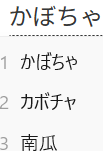
I confess I got the next word wrong: 南瓜 kabocha ‘pumpkin’, written as a combination of 南 ‘south’, normally read nan, and 瓜 ‘melon’, normally read ka. I’ve only seen the word spelled phonetically in hiragana as かぼちゃ or in katakana as カボチャ. To write ‘pumpkin’ in Japanese, Microsoft’s input method allows me to type “kabocha” in romanization and then choose among three possible spellings in order of frequency: hiragana, katakana, and kanji (Chinese characters).
Here’s a post by screenwriter 今井雅子 Imai Masako about a discussion she had with her husband about how to read 南瓜 ‘pumpkin’. Could it be read nankin as well as kabocha? Spoiler: Yes! I had no idea, though I shouldn’t have been surprised. In Japanese, it is common to have synonyms share a spelling even if they sound completely different.6
A Japanese person who had lived in the USSA for years asked me to proofread their Japanese because they had faith in my knowledge of Japanese spelling. Yikes. Fortunately, I didn’t have to correct anything.
No one in their right mind would have faith in my knowledge of Japanese pitches. I can’t hear them unless I really try. Which isn’t possible when people talk at normal speed.
Yesterday, I mentioned an episode of the Japanese detective show 特捜最前線 Tokusō saizensen (Special Investigation Frontline) in which a rural guy got harassed for his accent in Tokyo and murdered his tormentor. I couldn’t hear his accent! Which was just the pitches of his speech.
I don’t remember him using regional vocabulary like nankin (the Osaka word for ‘pumpkin’) instead of kabocha (the Tokyo and hence standard word for ‘pumpkin’). Imai’s husband from Tokyo had never heard of nankin. Nor had I until I read Imai’s article.
I don’t feel bad about not knowing dialectal words in Japanese - or English. I can’t be expected to know every word in the forty-nine other states, Canada, Ireland, the UK, South Africa, Australia, New Zealand, etc.
I have seen a White Japanese language ‘jock’ on YouTube who prides themselves on their mastery of the local dialect as well as the standard. I never wanted to go that far.
I have never seen any adult move to Hawaii and master the local accent. Which I myself have been told I don’t have. I have also been told I don’t have a normal American accent either.. Apparently my accent is some gray zone thing. I did have a nonnative speaker of English (a polyglot who sounded like an American native speaker) tell me that my accent is perfect for nonnatives to understand. I don’t know what that means. Can you tell I have a hangup about this?
I can empathize with 誠直也 Makoto Naoya, one of the actors on the cop show I just mentioned. A few years earlier, he played the title character on the superhero show ファイヤーマン Fireman (1973).
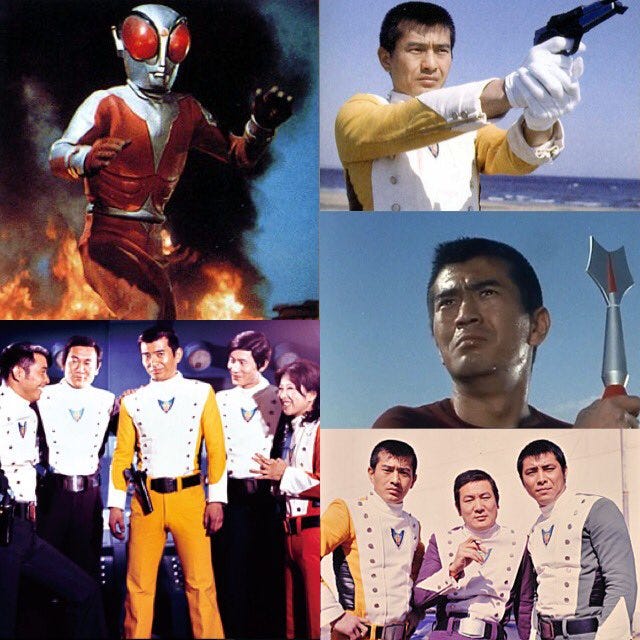
His costar 岸田森 Kishida Shin would constantly halt filming because Makoto was using his native Saga pitches7 on the set, despite the fact that all dialogue would be recorded later8.
![20090530160351[1].jpg](https://substackcdn.com/image/fetch/$s_!JkKm!,f_auto,q_auto:good,fl_progressive:steep/https%3A%2F%2Fsubstack-post-media.s3.amazonaws.com%2Fpublic%2Fimages%2F28de58fb-ecb1-44e0-8be4-72933e53149f_450x300.jpeg "20090530160351[1].jpg")
Makoto had a rough time but was grateful for Shin’s guidance.
I should point out two things:
First, Shin was a native speaker of the standard Tokyo dialect, so he didn’t have to consciously maintain it the way Makoto did.
Second, Japanese culture is very much into The One Right Way of Doing Things. That may explain why I was told that a Japanese professor I once met was self-conscious of their pitches. As you can guess, they weren’t from Tokyo, The Place with the Right Pitches. Since I am oblivious to pitches, I thought they spoke standard Japanese until I heard otherwise.
I just found this paper mentioning how a student in rural Kōchi regards Tokyo speech as “socially superior” and quoting another article:
First-graders are taught “that there is often a single right way of doing things”9 in their school activities
But why is that way “right”? Or ‘better’ or whatever?
As I age, I see how arbitrary such value judgments are. Makoto’s Saga pitches are not inherently ‘worse’ than Shin’s Tokyo pitches. (Whether the former are appropriate on the set is another issue.)
Shin lucked out by being born into an environment with the ‘right’ pitches.
Japanese people lucked out by being born into an environment with the ‘right’ language - according to my old biases.
Why did I look up to lottery winners?
Why did I dread their judgment?
The problem isn’t them; it’s in me.
This is my favorite incarnation of the X-Men: the original team from 1963. As far as I can tell, the X-Men in other media are based on the new team from 1975. I don’t really know because my X-knowledge pretty much ends in 1992, when I gave up on American comics. I saw the first three X-Men movies and a few episodes of the cartoons but otherwise have no firsthand knowledge of TV or movie adaptations of the team.
Some commenters at Honolulu Pravda have proposed chilling ‘solutions’ for the homeless that would get them banned if such ideas were proposed for racial, ethnic, or religious groups.
Or whatever the number was at the time. I wish I could remember the exact wording.
In theory, 袖 sode ‘sleeve’ is among the 1,110 characters that are supposed to be taught in Japanese middle schools according to the Japanese Ministry of Education, Culture, Sports, Science and Technology.
Kabocha ‘pumpkin’ and nankin ‘pumpkin’ are respectively from Portuguese Camboja ‘Cambodia’ and Nanking. I guess pumpkins - 南瓜 ‘southern melons’- came to Japan via Cambodia and Nanking, both south of Japan (barely in the case of Nanking).
I wasn’t there, so I can only assume that Makoto was pronouncing the standard Japanese in his scripts with his native pitches. I find it hard to believe that he was converting his lines into his native dialect on the spot: e.g., saying basaraka instead of ooi for ‘many’. Doing so would be unacceptable because his mouth movements wouldn’t match the standard Japanese dialogue that would be recorded later. I think the problem was that he was saying standard ooi with Saga pitches, not that he was saying basaraka.
I.e., it wouldn’t matter because as long as Makoto’s mouth movements matched the final recording in which Makoto would say his lines with standard pitches, there would be no problem. His pitches would leave no traces on camera.
Page 195 of Tsuchida I., and Lewis, C. (1996), “Responsibility and Learning: Some Preliminary Hypotheses about Japanese Elementary Classrooms”, in T. Rohlen and G. LeTendre (eds.), Teaching and Learning in Japan, Cambridge: Cambridge University Press, pp. 190-212. I haven’t read that book, but I recommend Rohlen’s book Japan’s High Schools (1983).