
Canon
Is traditionalism just counter-Wokism?

In my last post, I wrote,
[…O]bviously conservatives aren’t Woke. I realize now that they have their own ways of signalling they’re not Underwhites. I’ll go into those ways in an article I’ll write about the ‘canon’ and focus on Wokeness here.
This is that article. I had it in mind ever last month when I read this Note by ☭ Slavlander☭ (formerly Rurik):
All these slop purveyors posting about the new Odyssey movie but never actually say anything of interest about the Odyssey or the Iliad.
It’s all performative.
They only like “the classics” because it seems high status to do so.
Just as the Woke push luxury beliefs … “because it seems high status to do so.”
Also, the conservatives pushing “the classics” view them as counter-Woke. Old. White. Western. Not new and brown like I, Rigoberta Menchú (1983; five stars at Amazon!)
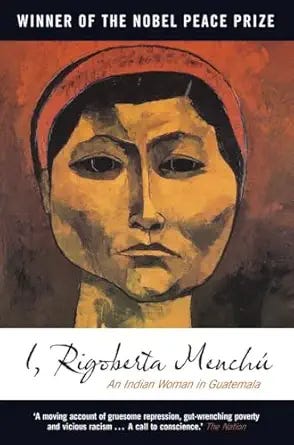
“The classics” are also Hard, and Hard Is Good. Suffering builds character, dontcha know? And Underwhites - lazy losers! - don’t read Hard books. Unlike us smahhhht conservatives. We’re better than both the Wokies with their bogus duh-grees in feminist Marxism and the proles who have no degrees at all! WE ROCK.
Such ‘superiority’ is often shallow. Conservatives are in love with the form of “the classics”. But what about the content?
They don’t connect to, resonate with or understand the Odyssey/Iliad for what it is — a tale of primordial sorcery and chieftain warfare. If they had read any of it, they’d feel deeply uncomfortable about the superstitions of the ppl who wrote it.
And wouldn’t those superstitions offend their Christian sensibilities? But I guess paganism is okay as long as it’s in a weapon aimed at their class and ideological enemies.1
Because they themselves, as moderns, simply cannot engage honestly with it.
The past is a foreign country.
Reading The Tale of Genji - mostly in translation, because the original is HARD - I didn’t see the Japan I loved at the time. Its eleventh century court setting might as well have been on another planet. It had nothing to do with what my peasant ancestors were doing back then.
Reading the Rig Veda and the Br̥hadāraṇyaka Upaniṣad in the original Sanskrit, I find that their concepts can be even more foreign than their language.
Even more recent Indic texts like the Buddhist text Aṅguttaranikāya in the original Pali have puzzling passages. I wrote in my notes for Aṅguttaranikāya, “THIS WORD SALAD MAKES NO SENSE". (I was referring to a specific part. Most of it does make sense to my modern mind. I had to fish a bit in my notes to find my complaint.)
I don’t trust English translations of ancient works because translators can smooth over the rough spots. When people who can’t read originals praise translations, they are saying those translations are what they hope those relics are.
All they can do is defend the status of the work as a cultural relic. This, to them, is “elite-coded” and the text itself is secondary.
Wokeness is similarly “elite-coded” to their enemies on the Left. Just as Communism was “elite-coded” to me on the Left decades earlier. I wasn’t actually enthused by Marx and Engels’ Manifesto because … “the text itself is secondary.”
I am not saying nobody reads “the classics”. I myself did read The Communist Manifesto2. I am sure conservative darling Victor Davis Hanson has read the Greek and Latin in the original. I am saying that the real function of holy texts for most is status assertion.
Are the muh-Odyssey folks really so different from champions of Diversity!™ in American comics who post about how much they lurve non-White and nonhet superheroes … but don’t seem to actually buy comics about those characters, judging from how such comics get cancelled.
The text itself is secondary.
Status is primary.
Conservatives and liberals can agree on that, though they will never admit that. They just disagree on what is “elite”, not on the need to be “elite”.
They could agree that I am not “elite”.
And that the haykwaliti pipo (high-quality people) of Hawaii are not “elite”. The average person here is not reading The Odyssey or I, Rigoberta Menchú or … any book. The supermarkets near me stopped selling poplit novels.
I will say this in defense of haykwaliti pipo: They may be many things I object to, but they are not pretentious. They don’t care about putting on a show to ‘prove’ they are “elite-coded”. Yes, I could argue that their monster trucks and pit bulls are a show - a expression of power from the powerless. I suppose they are in search of status too - my truck, my dog is ‘better’ than yours. Still, whatever they’re doing doesn’t bother me in the same way3 as the ‘educated’ doing the Civ4 or the Prog dance.
The Civ is performed around holy texts in glass cases:
That’s all of Western civilization — culture put into a glass case at the museum. And the political divide is between people who want to smash the museums and those who want to preserve the museums. There is no third option of those who want to storm the museums to take back the culture there and reintegrate it into society.
Put another way, it is “elite” to write about the importance of preserving the old cultural relics. It is not “elite” to actually engage with this culture and integrate and share it.
The former is easier than the latter. Not a coincidence.
And ironic since “the classics” are great because they are Hard. So many conservatives take the easy way out with the Hard stuff. But not all.
Some really do read the Hard stuff. Make their kids read it. Possibly even in the original:
Classical education traditionally included study of Latin and Greek to reinforce understanding of the workings of languages and allow students to read the classics of Western civilization untranslated.
But what is the payoff of all those efforts? Besides checking off “elite” titles off a reading list? Besides being able to brag that your kids are mini-VDHs?
Let’s look at such efforts in the Netherlands, whose gymnasia sound like an American conservative’s dream:
At first glance, classical education in the Netherlands seems to be in full bloom in the early 21st century. The Dutch classical schools – the so-called ‘gymnasia’ – are nearly unique in the world in that they extensively teach both classical languages. All pupils study Latin and Greek for three years from the age of twelve onwards, with an average of two to three teaching hours a week per language. Thereafter, they can drop one of both subjects, to study the remaining language for another three years. During these years, an average of four to six weekly teaching hours are spent on either Latin or Greek (or eight to twelve on both), as well as on ancient culture, making classics the most comprehensive of all school subjects: a situation almost without parallel in the world.
Moreover, the Dutch gymnasia are extremely well attended: since the early 1990s, the number of pupils taking their finals in either Latin or Greek has risen from about 6500 to well over 10.000 in 2015 (with just over a third of pupils taking Greek). As a result, one out of four pupils in Dutch pre-university education is at a gymnasium. Many classical schools that now accommodate nearly a thousand pupils have seen their populations almost double in the last twenty years.
But …
Academic classical education does not seem to keep pace with the secondary schools. At the five Dutch universities with classics programs (Leiden, Amsterdam (2x), Groningen and Nijmegen), there has been a average total number of between 250 and 350 classics students for the last 25 years. The spectacular growth, then, is clearly restricted to secondary education.
So out of “well over 10,000” students in 2015 “taking their finals in either Latin or Greek”, how many ended up studying classics? Certainly only a fraction of the ~300 classics students in their country’s universities that year. Maybe 30 to replace 30 who graduated from the previous year? I made that number up. I don’t know. But even if - for the sake of argument - every single university classics student in 2015 was a 2015 graduate of a gymnasium - and that is certainly not the case! - 300 out of 10,000 would only be 3%.
What is the remaining 97% (in that impossible scenario, but more like 99% in reality) doing with their training in “the classics”?
The answer for the Dutch gymnasium graduates I knew is … nothing.
And it wasn’t as if they were culturally conservative either. One grad was all for Islam in their country and gave me grief for thinking that wasn’t the best idea. I bet the others would agree with them.
So I doubt gymnasia have made the elite of the Netherlands the least Woke in Europe. If that were the case, Americons (sounds like Decepticons!) would be touting gymnasia as The Answer to Wokism. Not that Americons are informed about other countries.5 There could be a Dutch conservative miracle that they (and I) don’t know about. Could doesn’t equal is, though.
Forget the hypothetical anti-Woke effects of ClassEd. How well-versed in “the classics” are gymnasia students - really?
[…S]ince many years6, around four out of ten Dutch examinees fail the Latin translation test which is part of the national final examination. Between 2005 and 2009, the average number of fail grades was even above 50%. Moreover, the vast majority of formally ‘successful’ candidates only achieve barely passing grades on their final translation, which means that their work is still gravely flawed. In other words: after six years of studying Latin, overwhelming numbers of Dutch pupils are still incapable of translating in a time span of 90 minutes, with the help of a dictionary, a Latin fragment of about 120 words which is consciously selected for its relative simplicity. Undeniably then, Dutch classical language education, is extremely inefficient and hardly seems to justify the classics’ prominent curricular position.
So what is the point of going to a gymnasium, then? Emphasis mine:
Although the Dutch gymnasia are very well attended, it would be mistaken to attribute their popularity to an increased interest in the classical languages. The recent increase mainly occurred at the so-called ‘categorale’ gymnasia, schools which offer classical education alone (as opposed to the so-called ‘scholengemeenschappen,’ where classical education is offered alongside other types of education, e.g. non-classical pre-university education and/or pre-vocational education). These often high-ranking schools offer socially safe and culturally homogeneous learning environments that are increasingly attractive to pupils and parents at times of major social and intercultural tensions.
Translation: Gymnasia are HiStatus and HiEuro in a time of increasing Diversity!™. But it may be more important that they are “high-ranking”. In Slavlander’s words, “elite-coded”. That’s the code that really matters to students. Not lingua latina. Not ἑλληνική.
The rest of the article I quoted deals with the debate of how to improve Latin and Greek education in the Netherlands. Not the bigger question of what the point of such education is.
I am reminded a bit of the rhetoric about Chinese characters in modern South Korea.
In premodern Korea, literacy was restricted to the elite who read and wrote in Chinese. Chinese characters have always been “elite-coded” in Korea.
Prior to the invention of the Korean alphabet in c. 1443, Korean was torturously written in Chinese characters, a script that was a poor fit for the language. Only a couple of dozen Old Korean poems survive in Chinese characters. No one knows for certain how to pronounce them.7
But even after the invention of the Korean alphabet, literacy rates did not skyrocket. Three decades of schools built under Japanese colonialism resulted in a literacy rate of … 22% by 1945.
After Japanese rule ended that year, North Korea dumped Chinese characters and went alphabet-only, while the South Korean education system couldn’t make up its mind about Chinese characters. Today many South Koreans argue in favor of Chinese characters, but almost no one actually uses them very much. Almost all the Chinese characters I see in South Korean writing today are used to be eye-catching in headlines.
Here’s the top story at Dong-A Ilbo today:

In theory, several words in the headline could be written in Chinese characters:
崔泰源 “새 工場 韓國에 짓지 않을수도” 金總理 “韓서 되게 해야”
That’s what that headline might have looked like seventy years ago when newspapers still used Chinese characters at lot. Koreans only write Chinese borrowings in Chinese characters; native words are only written in the alphabet.8
Today, only two characters remain: 金 ‘Kim’ and 韓 ‘Korea’. They stand out in a sea of blocks of letters. Here I try to replicate the effect with boldface in a translation:
Ch’oi T’ae-wŏn: “Might Not Be Able to Build a New Factory in Korea“; Prime Minister Kim: “Must Make It Happen in Korea”
Almost all South Koreans can recognize the small subset of characters still used in headlines. But they may not be able to write them. And the vast majority cannot read and write the two to three thousand characters needed to fully write Korean with Chinese characters.9
A South Korean parent making their child learn Chinese characters is probably doing so only because they are “elite-coded”. Not because they expect the kids to actually use the things. If Wokism is a set of luxury beliefs - if classical education is a luxury curriculum - then in Korea, Chinese characters are a luxury script.
I imagine what it was like to be in the last generation of Korean elites before the Japanese takeover in 1910. To have been trained in reading and writing classical Chinese, the Latin of East Asia. To have a classical Chinese education … that became irrelevant in the face of Western technology and the Japanese who (ab)used it.
Even Chinese elites felt frustrated by the modern world, judging from 魯迅 Lu Xun’s short story 在酒樓上 (In the Wine Shop, 1924):
Who cares about such futile affairs anyway? One only wants to muddle through them somehow. When I have muddled through New Year I shall go back to teaching the Confucian Classics as before.
Because the narrator trained in them can do nothing else. Because they are still “elite-coded”. Their irrelevance may make them extra special to others. But not him:
In future? I don’t know. Just think: Has any single thing turned out as we hoped of all we planned in the past? I’m not sure of anything now, not even of what I will do tomorrow, nor even of the next minute …
I imagine the equivalents of such men in early modern Turkey, the last generation trained in the old Ottoman way - in Arabic and Persian. To be an educated Ottoman man was to know Arabic and Persian as well as Turkish and to blend all three in the proper way10 - a way that had little value in Atatürk’s vision for his ‘new’ country with a ‘new’ Turkish purged of old foreign elements.
What happens to the “elite-coded” when the elite isn’t elite anymore?
When their canon is obsolete?
How many modern Turks can read Arabic or Persian? The Wikipedia article on modern Turkish education mentions neither language. The top foreign language in Turkey is, of course, English. That’s now “elite-coded” there.
And what’s “elite-coded” in English-speaking America? Latin and Greek. Classical education.
Is there a Korean or Turkish equivalent of the classical education movement? Not just forcing Korean kids to learn Chinese characters they’ll never use but to read Confucius in the original. Or in Turkey, making kids read the Koran in Arabic and Ferdowsi in Persian.
I use the word “read” loosely here beause you can drag kids through The Canon!™ but you can’t make them care. I’m not counting caring about their grades as caring. By caring I mean caring about the content. Not the form that impresses people. “Look, my kid can write a 64-stroke Chinese character11!”
Social climbing - and social warfare - are about form. Appearances, not understanding. To be seen by others. To impress others. Muh gymnasium diploma. Muh canon. Muh Great Books of the Western World.


How many people who bought the set in the picture above actually read all the books? Some of them? One of them?
How many people who read the books understood them?
How many people who read the books wrestled with the content? Not just struggling to understand it, but also debating it in their heads?
When Blade Runner came out in 1982, I didn’t see it (and still haven’t seen it!12). I tried to read Philip K. Dick’s Do Androids Dream of Electric Sheep? But I was too young to understand it beyond the surface level of knowing what the words meant.
When people say they’ve read or are reading The Canon!™, are they like me reading Dick as a child? What does it mean when they check off The Titles!™ off The List!™? Where does The List!™ come from? To them it’s like something that Just Is, not something man-made that can be swept away like Chinese in Korea or Arabic and Persian in Turkey. Canons come and go.
I just thought of a great example of that - one that affected many millions, many more than in Korea or Turkey. Imagine you were a brahmin in a part of India that was becoming Islamic and would one day belong to Pakistan or Bangladesh13. The Vedas that you learned to chant mean nothing in the new order. If only you were a hafiz, one who had memorized the text that mattered now: the Koran!
The symbol of the people in power.
Take over, and your texts become the texts.
Does the ‘intrinsic’ value of the texts really matter?
To revere one canon or another is to assert one’s allegiance to one center of power or another. To show one is Good according to the definition of one’s favorite authority. Canonism is about tribalist moralitarianism, not aesthetics or profundity. A canon may indeed be artistic and deep, but those traits are secondary compared to its high social value - its elite-coding.
Artistic and deep texts without the approval of authority don’t count. The conservatives I know who swoon over VDH do not care about the Asian classics (no quotation marks!) I read because they aren’t Approved.
Anything outside their Judeo-Christian-Greco-Roman universe of Western Civ doesn’t matter to them.
I could stick my nose up in the air because they can’t read the ऋग्वेद, the 論語, or القرآن. They won’t even read them in translation. No socvalue.
Authorities determine socvalue. New authorities can spring up overnight. Ukraine because its own country with its own education system. One that removed Russian and Soviet works from the curriculum. Is studying Ukrainian literature - ukrlit - really about what’s in it as opposed to what it is not - Russian?
Are Ukrainians better or worse off if schools force them to read ukrlit instead of ruslit?
Do canons matter?
Next: Firing the canon (sic).

I have not heard conservatives present this more sophisticated defense of the persistence of pagan writing among Christians:
What these eminent men desired was not so much the separation but the combination of the treasures of profane literature and of Christian truth. Jerome recalls the precept of Deuteronomy: “If you desire to marry a captive, you must first shave her head and eyebrows, shave the hair on her body and cut her nails, so must it be done with profane literature, after having removed all that was earthly and idolatrous, unite with her and make her fruitful for the Lord.” Augustine uses another Biblical allegory. For him, the Christian who seeks his knowledge in the pagan authors resembles the Israelites who despoil the Egyptians of their treasures in order to build the tabernacle of God.
[…]
But this concession presupposed that pagan studies were subordinate to Christian truth, the “Hebraica veritas”.
Which is in volume 50 of the Great Books of the Western World. I have a cheap paperback edition. (As if there were an expensive paperback edition?)
It does bother me because a monster truck ignoring traffic lights could run me over. And a pit bull could bite me.
I.e., Western civilization.
Especially not Russia, which they view either as USSR II or as an Orthodox theocracy about to defeat NAFO any moment now.
“Since many years” is a literal English translation of Dutch sinds vele jaren.
金完鎮 Kim Wan-jin’s 鄉歌解讀法研究 A Study of the Method of Decipherment of Village Songs (1980; Old Korean poems are called ‘village songs’ in Korean) contains seven scholars’ conflicting ways to read each Old Korean poem in Chinese characters. Is, for instance, 去隱, the first word in 慕竹旨郎歌, pronounced kan or kanăn in Old Korean? Six voted for kan and one for kanăn. Later scholars have deciphered those poems in yet other ways. I was aware of none of that when I first encountered those poems decades ago in Peter H. Lee’s English translations which must have been based on someone’s decipherment - but whose?
Note how the title of Kim’s book is entirely in Chinese characters. Koreans not specializing in philology are likely to be unable to pronounce it.
The practice of writing native Korean words in Chinese characters has been extinct for about a century.
I.e., to write all borrowed Chinese roots in Korean with their original Chinese characters.
The textbook of Ottoman Turkish that I keep putting off studying has a lot of sections on Arabic and Persian grammar because Ottoman Turkish - the variety written by the elite rather than the peasants’ speech - would be unintelligible without a knowledge of those other two languages.
I’m being facetious here. 𪚥 ‘verbose’ (pronounced chŏl in Korean) is a real Chinese character, but it’s a useless trivia item that no ‘serious’ Chinese characters advocates in Korea would care about … or so I hope.
I will probably never see it because it seems to be a movie worthy of my full attention, and I can never give a movie my full attention because it is almost certain that it will make me fall asleep. I fall asleep almost every day when I try to watch TV.
I had no idea both countries were modern creations until I took mandatory Indian history in school.