
Lei GBTQ
Supermarket surprise

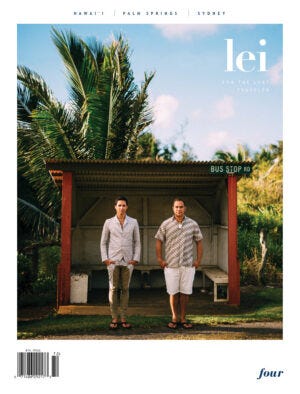
Today I was waiting in line for the cashier at the supermarket. A magazine I had never seen before caught my eye in the rack to the left of the conveyor belt or whatever the thing in front of the cashier is called. Between REAL SIMPLE and Pokémon (in front of a Taylor Swift coloring magazine) was … lei.
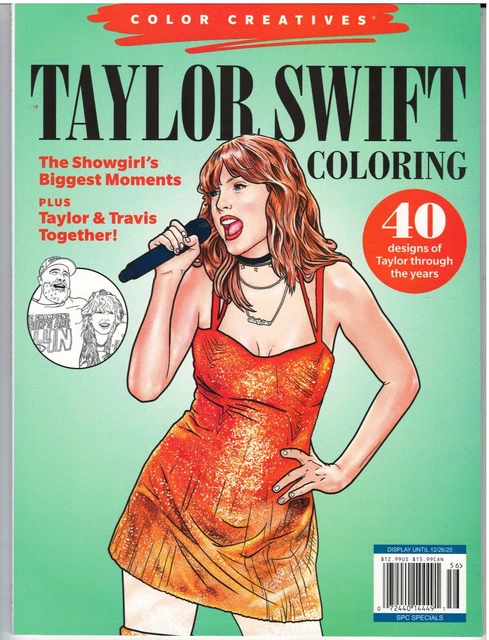
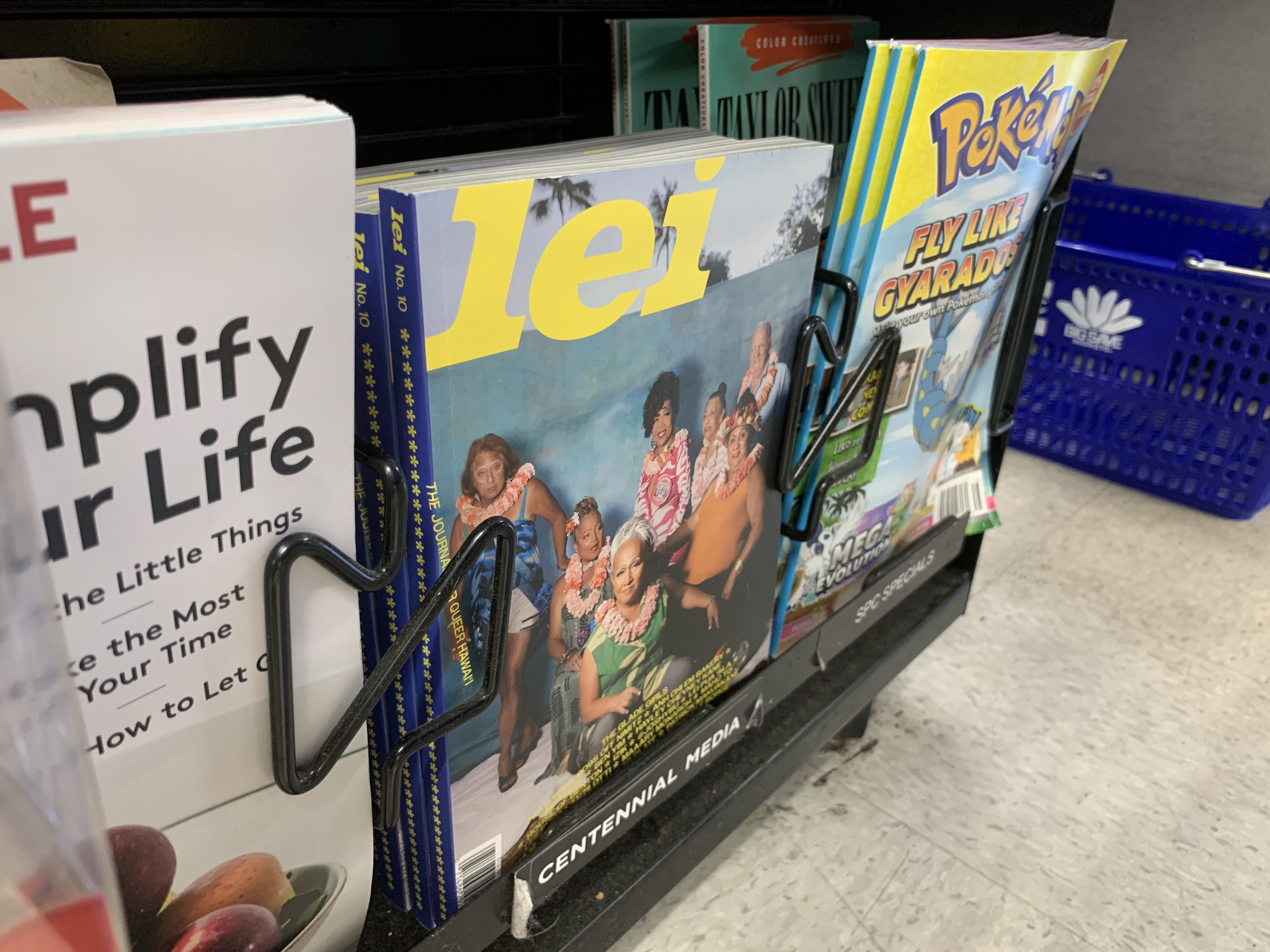
I have never seen a local magazine in that rack before. I haven’t seen a local magazine in a long time. As far as periodicals are concerned, print almost always equals import1.
I initially assumed that lei was aimed at Hawaii residents in general like HONOLULU (ALL CAPS!) Magazine:
In 1888, when Hawai‘i was still a monarchy, King David Kalākaua commissioned a magazine under royal charter to be Hawai‘i’s ambassador to the world. That magazine was Paradise of the Pacific. For nearly a century, Paradise of the Pacific promoted local business and tourism by assuring citizens of the United States that the Islands were civilized. In 1966, Paradise of the Pacific became HONOLULU Magazine and shifted focus dramatically. No longer would it be Hawai‘i’s ambassador to the outside world. Instead, it became a magazine by and for the people of the Islands.
HONOLULU is among the handful of publications in the U.S. that have chronicled the events of an entire century. It is, in fact, the oldest magazine in the state of Hawai‘i. In 2013, HONOLULU celebrated its 125th anniversary. Now more than 160,000 local residents [this number sounds way too high for 2025] turn to the pages of HONOLULU for discerning dining features, revealing profiles, in-depth features, informed commentary and the most trusted “Best of” lists.
A quality, four-color magazine, it reaches Hawai‘i’s best educated and most affluent residents [i.e., the propaganda class], as well as its most sophisticated visitors [do any visitors even know the magazine exists?]. Each month the magazine takes an unblinking look at contemporary issues. [translation: A blindfolded Goodthinker take on The Current Thing.] HONOLULU writes stories that matter [so much my subscription lapsed ages ago]—and stories that celebrate the unique culture, heritage and lifestyle of the Islands. It’s the only magazine in Hawai‘i that does both.
Might lei disagree with that?
My delusion that lei was a HONOLULU-wannabe in lowercase dissipated when I noticed the words near its spine:
The Journal for Queer Hawaiʻi
I didn’t have time to look inside lei. And I didn’t want to buy it. Not for $14.95. Magazines are expensive these days. So I left it on the rack, did my business, and looked it up on my phone on my way home.
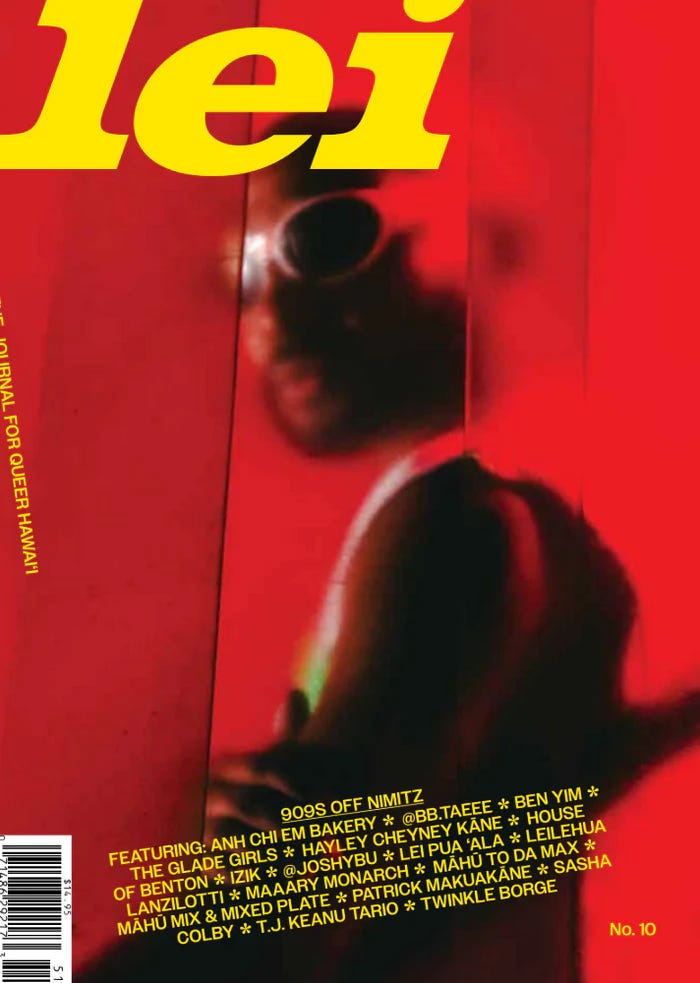
nativebookshawaii.org describes that particular issue of lei:
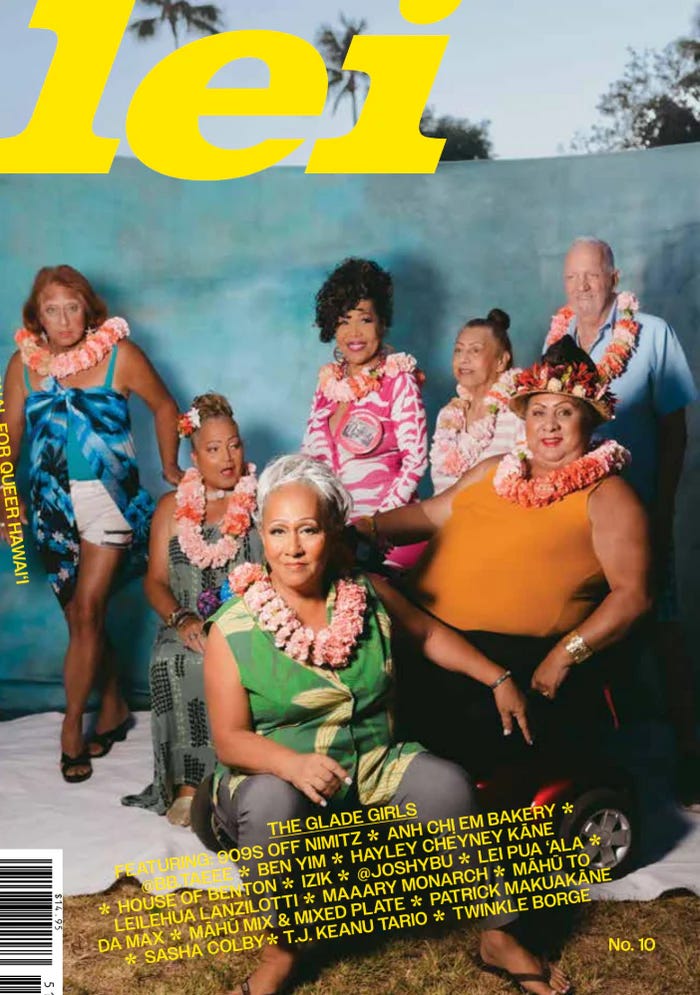
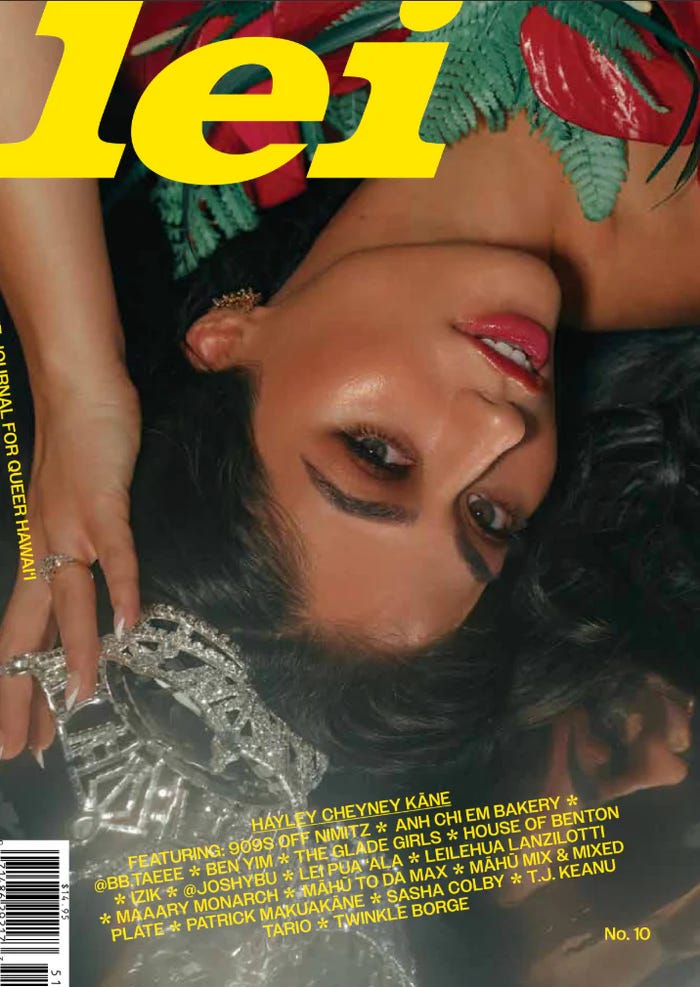
Lei Issue 10 marks a vibrant rebrand to “The Journal for Queer Hawaiʻi,” honoring the islands’ LGBTQ community. This anniversary issue celebrates the living legacy of The Glade [who?], spotlights Hayley Cheyney Kane [who?], Hawaiʻi’s first openly out Miss Hawaiʻi, features social media influencers @joshybu [who?] and @bb.taeee [who?], and includes a photo essay about street style at the Merrie Monarch Festival [finally something I recognize!]
The issue has three covers. Collect ’em all!
This April 2022 press release (I’m guessing2) makes it sound as if lei was originally Hawaiian in name only:
NMG Network is expanding the reach of Lei, a leading LGBTQ-focused travel media brand, in Summer 2022, to explore the world’s most welcoming destinations through the unique lens of LGBTQ communities. As an elevated omnichannel lifestyle brand, Lei will profile trendsetters, influencers, and thought leaders who proudly identify as LGBTQ in their personal, public, and professional lives and serve as role models for others. Lei fully supports Pride 360, and spotlights locales, brands, and organizations that support the LGBTQ community year-round.
Lei derives its name from the traditional Hawaiian symbol of love, friendship, appreciation, and aloha, and amplifies the inspiring voices of individuals who reflect those attributes of kindness, compassion, and acceptance, which seamlessly aligns with what many lesbian, gay, bisexual, transgender and queer travelers seek when traveling.
[…]
Lei’s print edition will now recommend the top cities for queer travelers to visit each year and advocate for the best experiences in each destination.
[…]
Lei launched in 2014 as the first nationally distributed publication by NMG Network, the leading creator of custom media experiences for luxury and leisure travel, hospitality, and premium residential partners with clients that include Marriott Residences, The Little Nell, Shutters on the Beach, Halekulani and Hawaiian Airlines.
[…]
Lei TV features original and curated programming and is available online, in more than 23,000 hotel rooms, and via inflight and other travel channels. Its series of video franchises include “The Lei Over,” “Lei Escapes,” “Lei Exchanges,” “Lei at Home,” and “City Pride.”
Among its sponsored events, Lei is an annual platinum sponsor of Honolulu Pride and co-produces “Shaka [the archetypal hand gesture of Hawaii] and Shine,” its annual televised special each October.
Lei was one of the fastest-growing LGBTQ media brands in 2021, reaching more than 4 million people across its print, digital, and video channels from the world’s biggest source markets. It has already expanded that audience by more than 400% in 2022 and aims to connect with consumers that spend around $1 trillion on global travel each year.3
But the covers of back issues of lei make it seem as if Hawaiian content had been in the magazine for some time:
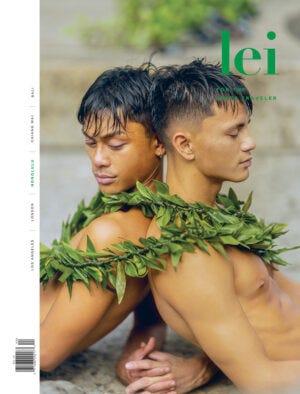
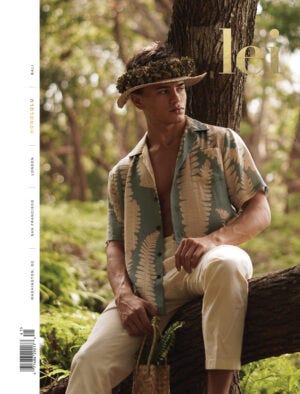
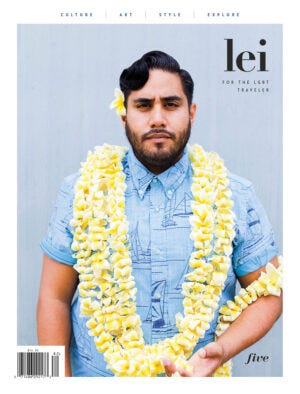
Perhaps the Hawaiian-ness of earlier issues doesn’t go deeper than their covers. Not going to spend money to find out.
I thought lei was the latest in a long series of Mainland transplants.
Mainland Transplants Big and Small

Cars lined up in the parking lot of Hawaii’s Aloha Stadium to get free food during the USSA government shutdown.
But I was wrong. lei’s publisher is based in Honolulu!
Which makes lei’s placement in a less-than-glamorous local supermarket all the more puzzling. Surely lei would know my neighborhood doesn’t have a lot of residents, cishet or Godsex4, who can afford expensive vacations.
Have you seen LGBTQRSTUVWXYZ publications by the cashier at your local market?
By “import” I don’t mean ‘outside the USSA’. I mean ‘outside Hawaii’. Hawaii is ‘legally’ a part of the USSA (a loud minority here will disagree), but in my mind is de facto another country. An occupied country.
The style is self-promotional, and the byline “Vacationer Staff” makes me think someone merely copied and pasted whatever lei sent to Vacationer.
Are the “consumers that spend around $1 trillion on global travel each year” LGBTQRSTUVWXYZ? That figure is five times this figure (emphasis mine):
The LGBTQ+ travel market worldwide is significant. The World Travel & Tourism Council (WTTC) and International Gay & Lesbian Travel Association (IGLTA) estimate it at well over $200 billion a year. In the U.S. alone, it accounts for more than $65 billion.
I thought $1 trillion could be the figure for all travellers, but that would mean one-fifth of travel spending comes from LGBTQRSTUVWXYZ which seems too high. A Brave preview of this paywalled Statista page says (emphasis as in original),
In 2023, global travel and tourism spending exceeded six trillion U.S. dollars, growing sharply over the previous year but remaining below pre-pandemic levels.
Might lei … optimistically believe that the LGBTQRSTUVWXYZ travel market is one-sixth of that six trillion: i.e., five times bigger than the International Gay & Lesbian Travel Association’s estimate of $200 billion (which itself is probably optimistic)?
“Godsex” is easier to type than “sexual minority” or “LGBTQRSTUVWXYZ” and reflects the sacred status of the sexually different in the Waste.